

Disease is a public health issue, not a political one; it should transcend the partisanship that has bitterly divided us. In fact, however, COVID-19 and actions to subdue it are now giving rise to bitter social strife playing out along familiar red-blue fault lines.
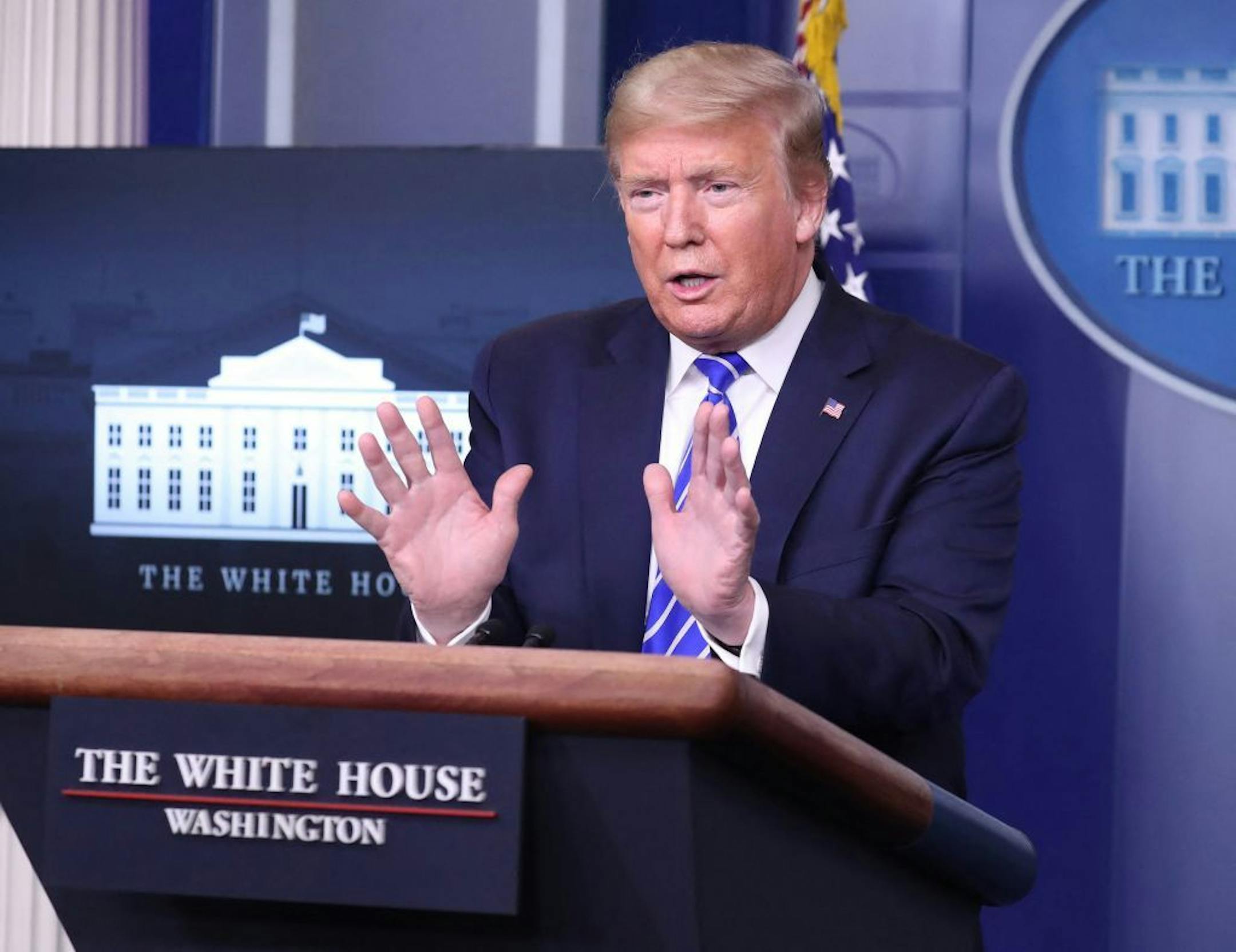
President Donald Trump is the impresario of these toxic developments. His initial pooh-poohing of the virus, with the aid of far-right media, has helped promote a striking bifurcation between the cultural camps as to just how dangerous the virus is.
In mid-April, in what may be the most reckless demagoguery ever from a sitting president, Trump instructed die-hard supporters to "LIBERATE" states with stay-at-home orders. It was no surprise that the demonstrations the president decided to tweet about, and cheer on, were in three states with swing potential — Virginia, Minnesota and Michigan.
Worse, the government agencies Trump has shaped in his image are in formation behind him, exploiting the virus to advance Trump's re-election.
One of Trump's "LIBERATE" tweets specifically exhorted citizens of Virginia to "save your great 2nd Amendment. It is under siege." The reference was to a gun law in Virginia requiring background checks, which the state's new Democratic leadership had managed to pass. The tweet was a shout-out to extreme gun-rights partisans all over the country.
It was also a back-pat to the NRA, which had already successfully lobbied the administration to amend its stay-at-home guidance to include gun stores within the exceptions for essential businesses.
Charging that "religious liberty" is under attack from secular society is another mantra Trump partisans are trotting out. Some church pastors have alleged that curtailing services under stay-at-home orders represents intentional government action against the faithful and their First Amendment rights.
"Free exercise" doesn't exempt churches, mosques and synagogues from generally applicable laws, but it does mean that religious groups can't be singled out by government rules. The basic pandemic orders we've seen ought to pass First Amendment muster in the courts because cities and states aren't burdening religious institutions with harsher lockdown rules than, say, bars and restaurants. Two such cases in federal courts in Kentucky and New Mexico have so held.


