

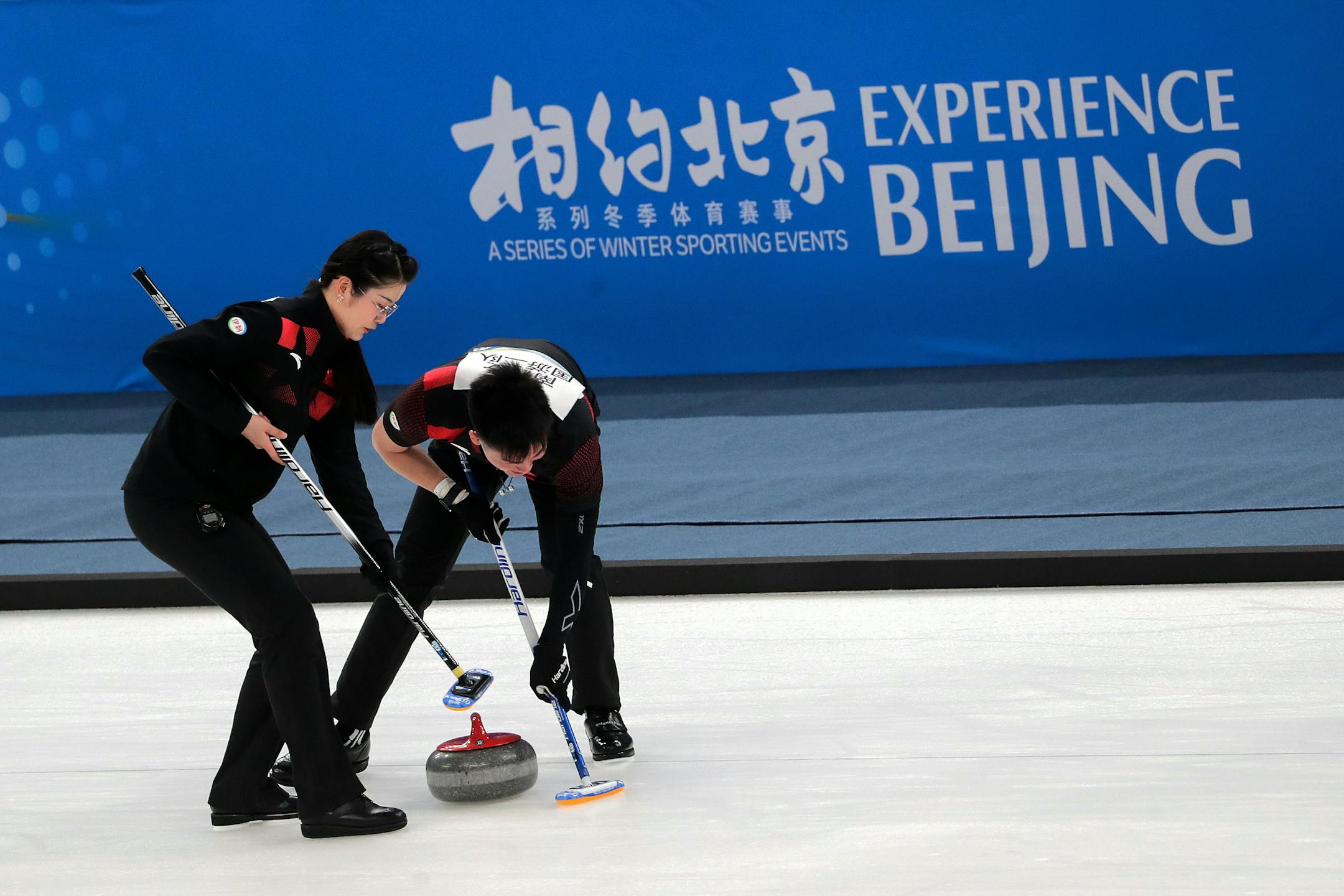
Should the United States and other democracies participate in a Winter Olympics hosted by a government that both the Trump and Biden administrations have said is engaged in genocide?
The debate over whether to boycott the 2022 Beijing Olympics is heating up, for the Games open next February. The Biden administration says it is not currently discussing a boycott with allies, but 180 human rights organizations have jointly suggested one, and there are also discussions in Canada and Europe about whether to attend.
Olympic officials and business leaders protest that the Games are nonpolitical, but that is disingenuous. Of course they're political. China's leader, Xi Jinping, is hosting the Olympics for political reasons, to garner international legitimacy even as he eviscerates Hong Kong freedoms, jails lawyers and journalists, seizes Canadian hostages, threatens Taiwan and, most horrifying, presides over crimes against humanity in the far western region of Xinjiang that is home to several Muslim minorities.
It's reasonable to wonder: If baseball's All-Star Game shouldn't be played in Georgia because of that state's voter suppression law, should the Olympics be held in the shadow of what many describe as genocide?
But first let's ask: Is what's happening in China truly "genocide"?
Journalists, human rights groups and the State Department have documented a systematic effort to undermine Islam and local culture in Xinjiang. Perhaps 1 million people have been confined to what amount to concentration camps. Inmates have been tortured, and children have been removed from families to be raised in boarding schools and turned into loyal communist subjects. Mosques have been destroyed and Muslims ordered to eat pork. Women have been raped and forcibly sterilized.
There is no mass murder in Xinjiang, as is necessary for the popular definition of genocide and for some dictionary definitions. Yet the 1948 Genocide Convention offers a broader definition that includes causing serious "mental harm," preventing births or "forcibly transferring children," when part of a systematic effort to destroy a particular group.
The upshot is that repression in Xinjiang doesn't qualify as genocide as the term is normally used, but it does meet the definition in the international convention.


