

Opinion editor's note: Star Tribune Opinion publishes a mix of national and local commentaries online and in print each day. To contribute, click here.
•••
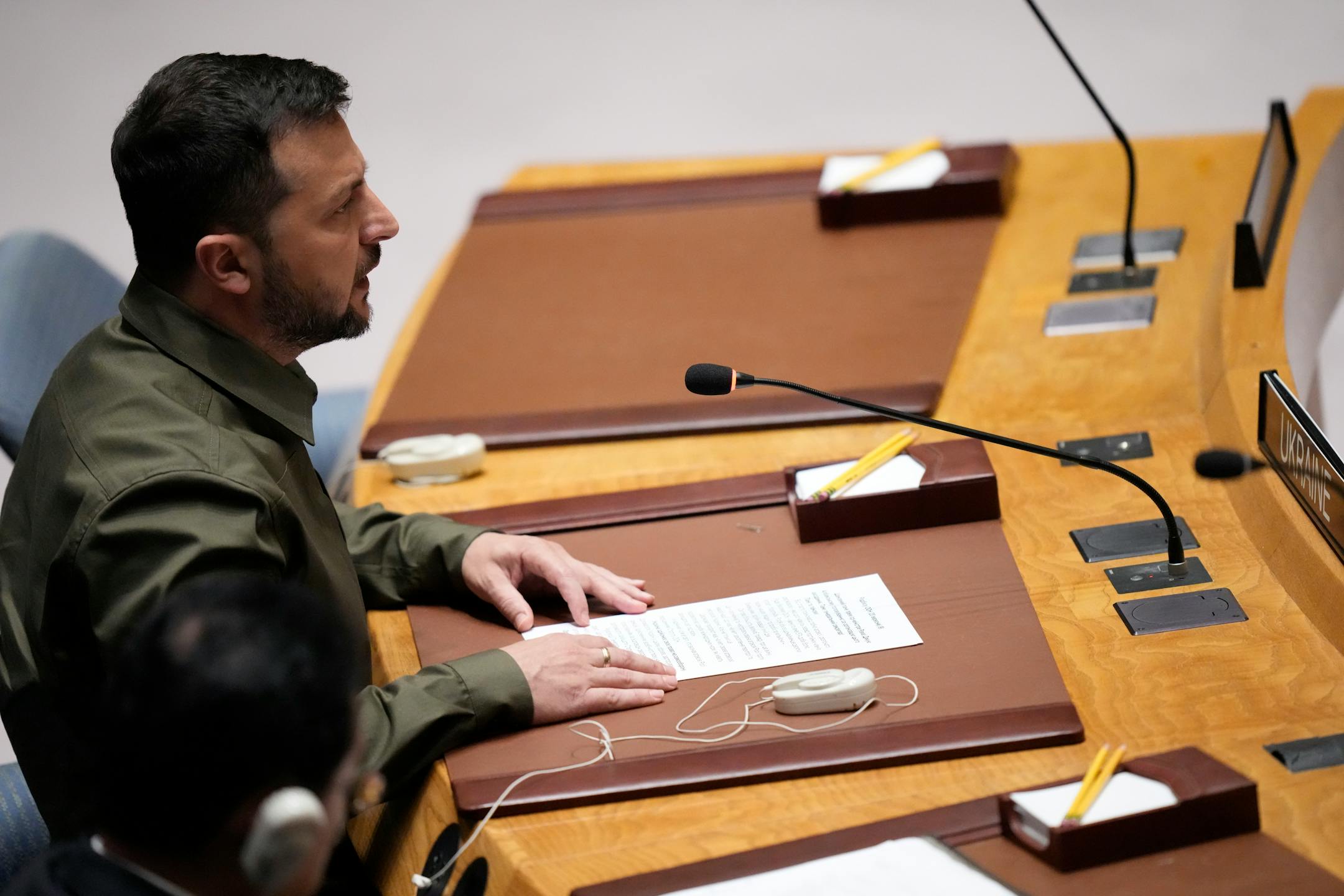
Volodymyr Zelenskyy will visit Washington this week to give thanks to the United States for its generosity — while asking for $24 billion more, which is what the Biden administration is seeking from Congress in additional military and humanitarian aid to Ukraine. That will bring the total amount of American aid to $135 billion, which so far has been $223 million a day since the war began, according to one calculation.
Maybe it's time to open a new funding source before American largess runs out — this time from Russia.
Since Russia's invasion of Ukraine in February 2022, the U.S. and our democratic partners have frozen roughly $300 billion in Russian central bank assets, amounting to a little less than half of the Kremlin's foreign currency and gold reserves. Some of us have been arguing ever since that the money should be transferred to Ukraine, both as a matter of justice and as a deterrent against this kind of aggression. As former Treasury secretary Larry Summers has put it, "Bank robbers should not expect banks to honor their safe deposit boxes."
So far, the Biden administration has disagreed. "It would not be legal now in the United States for the government to seize" Russia's assets, Treasury Secretary Janet Yellen said in May 2022. The Economist magazine has argued that such measures would violate international law, and there are worries that they would also harm U.S. economic interests as foreign countries sought to de-dollarize their economies.
But those objections are themselves flimsy. A carefully argued and exhaustively researched 184-page report circulated this week among journalists, government officials and NGO leaders by the Renew Democracy Initiative shows why.
The report's lead author is Harvard's Larry Tribe, a legendary liberal law professor with whom I disagree about many things — but not about this. (Full disclosure: I helped start the Renew Democracy Initiative six years ago and I sit on its advisory board, but I had no hand in the making or publication of the report.) The report's central conclusion is that the president has ample authority, under the 1977 International Emergency Economic Powers Act, or IEEPA, to transfer Russia's frozen assets to Ukraine.


