
How the 10,000 Laughs Comedy Festival became one of the nation’s best

Leslie Jones and Hannibal Buress will be part of three days of shows in October.

The Minnesota Star Tribune
September 12, 2025 at 11:00AM
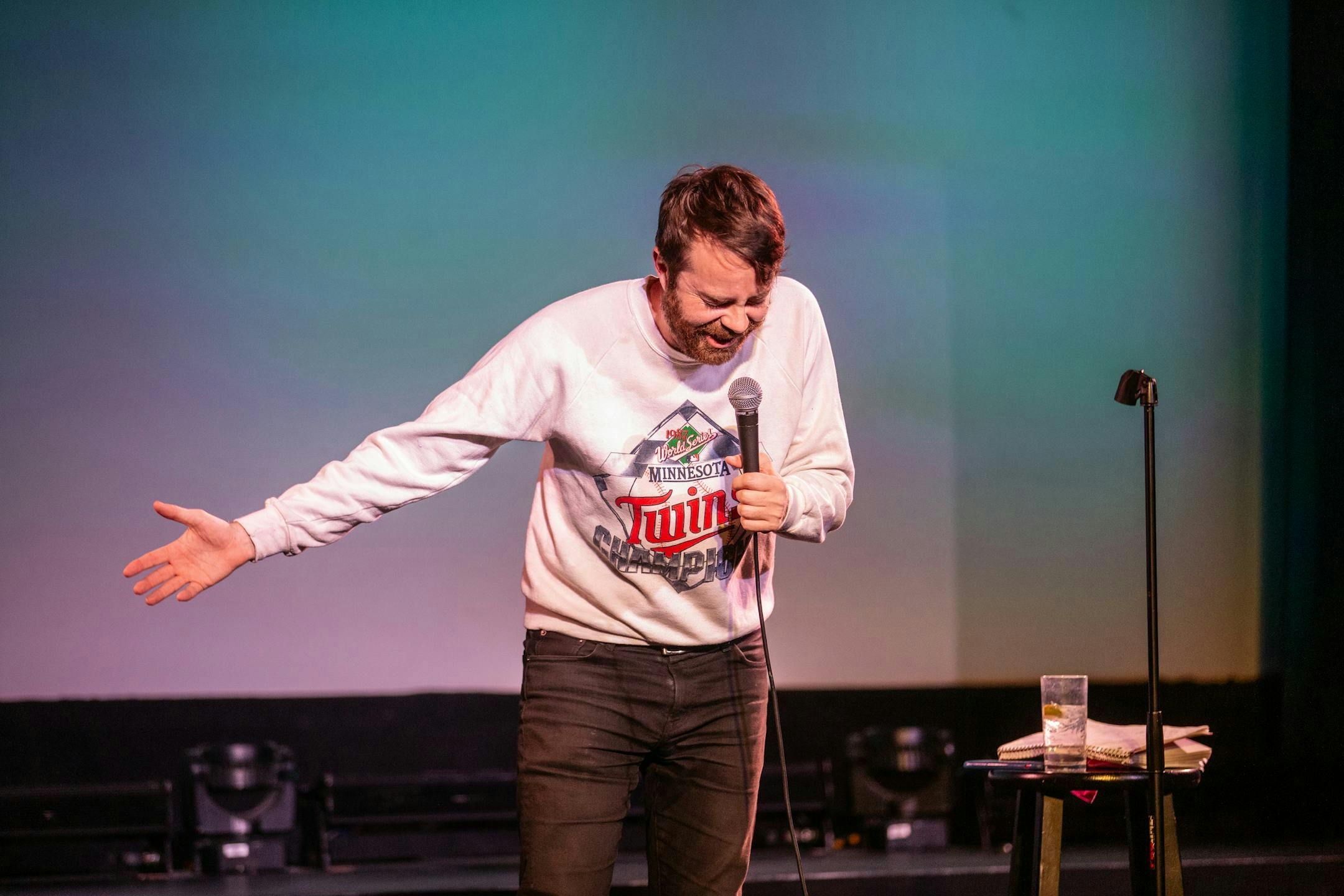
Minnesota native Geoffrey Asmus played to the home crowd during the 2024 10,000 Laughs Comedy Festival. (Ronny Sharts/10,000 Laughs Comedy Festival)

Bob Edwards, the mastermind behind the 10,000 Laughs Comedy Festival, had a crummy summer.

In July, he learned the Cedar-Riverside site where he’s championed scrappy new stand-ups for two decades was closing down. Two weeks later, he had gallbladder surgery. And on a late afternoon in August, he was struggling to figure out how to keep his Oct. 23-25 festival from crumbling without his Comedy Corner Underground as its base.

“I’ve had every American experience you could have, all at the same time,“ Edwards said, while nursing a rum and Coke with a whiskey chaser, roughly a week before the building that housed both CCU and the Corner Bar was turned over to a humanitarian organization. ”But I still have a pulse.“

Running a comedy festival has never been for wimps. During one hectic fest day in 2022, Edwards sprinted back and forth between venues, putting out one fire after another. By 8 p.m. he had logged 54,000 steps and was taking a nap in a tavern booth.

“That was probably the most stress I’ve ever felt in my life,” said Edwards, who will focus on finding a new club location after the 2025 program is over. “But losing the club is the least favorite challenge I’ve ever faced. It’s like losing part of my soul.”

Others might have simply thrown in the towel.

In the past eight years, prominent fests in Portland, Ore., New York and Phoenix have folded. The Just For Laughs Festival in Quebec, long considered the industry’s most important showcase, declared bankruptcy and took 2024 off. It returned in July with a scaled-down version.

“The key thing is to stay flexible,” said Wendy Wigger, president of Gilda’s Club Grand Rapids, which oversees LaughFest.

Since the pandemic, she and her team have cut 10 days of programming in half.

”The reality is that the comedic talent that’s available to us is not at the same price point it was 15 years ago when we started,“ she said. ”So we’ve adjusted. You have to stay in a lane that makes sense.“

Anyone who gets into the festival business to strike it rich might be better off panning for gold in a desert. Edwards estimates that since he launched 10,000 Laughs in 2011, he’s only personally pocketed $5,000.

Other festival producers say the goal is often to just break even.

“For a lot of us, it’s a labor of love,” Zach Gzehoviak, co-founder of St. Louis’ Flyover Comedy Festival, said during a break from his day job at a marketing company. “It’s a lot of work and if you want to keep it going, you need to figure out a way to make it sustainable.”

One area in which successful fests won’t cut corners is in the way they cater to talent. The best get a reputation for treating both fresh faces and national headliners like royalty.

At LaughFest, which raises money for people with cancer, all entertainers get picked up from the airport by volunteers and have a driver available to them for errands that could range from getting a haircut to picking up toothpaste at the drugstore.

Comics have gotten free headshots at Indiana’s Limestone Festival, a service that can often cost up to $500. Free grub is a major plus.

“Young comics don’t have a lot of money, so paying for every meal is really tough on them,” said Mary Mack, who has saved lanyards from nearly 30 festivals and will be hosting a variety show during 10,000 Laughs.

“It’s also great advertising for sponsors,” Mack said. “I would have never heard of Voodoo Doughnuts if they hadn’t been at a festival I did in Portland. Now, I go there every time I’m in town.”

Only the big names at 10,000 Laughs — Hannibal Buress and Leslie Jones — will make a handsome profit with contracts that guarantee them the lion’s share of their ticket sales. Locals who serve as showcase hosts get up to $100 per show, while club headliners can make anywhere between $200 to $600 a night.

All of the more than 60 out-of-towners get a free hotel room. The biggest perk might be one-on-one time with industry insiders who book talk shows and represent talent agencies.

“You might not get an agent or get booked on ‘Jimmy Kimmel’ tomorrow, but you build foundations,” said Minneapolis comic Bryan Miller, who has become a father figure at 10,000 Laughs. “You become friends with other comics and that can lead to recommendations to club owners. I’ve done that for people and others have done it for me.”

Miller said secondary festivals don’t do enough to stress fellowship.

“I did one in Boston that was cool, but we didn’t really have lodging and good luck knowing where you’re going,” he said. “Sometimes, they just feel like a fancy open mic in a different town. Just thinking that someone cares is rarer than it should be.”

Maddy Smith, a promising new voice based in New York, said the Minnesota festival’s reputation for being talent friendly is growing.

“For three days, I’ll get a chance to just hang out and meet other headliners and friends I haven’t seen in a long time,” she said. “I’m super excited.”

Another common oversight is ignoring the local stand-up community.

In 2019, the Minneapolis Comedy Festival arrived with great expectations, thanks to a roster that included Bob Newhart and Seth Meyers. But organizers did little to showcase actual Minnesotans. It hasn’t returned since 2022.

Lil Rhody Laugh Riot‚ which launched in March in Providence, was designed to show off the city’s stand-up scene. That’s why producers made sure that half of the 60 invited comics were locally based with opportunities to be on bills with big names like Matt Rife and Hannah Berner.

“We didn’t just do this to bring in Kevin Hart and then forget those who have been grinding it out in this market for years,” said Dan Schwartz, who spearheaded four days of activities that resulted in 18,000 ticket sales.

As the 10,000 Laughs Comedy Festival has grown, it has lost some of its charm. In the early days, you could walk to almost every venue. This time around, Twin Cities fans will have to drive or use public transportation to see more than one show a night.

But the event’s reputation for showcasing diversity and ambitious new names remains intact.

“I get sick of going to festivals where everybody looks and sounds the same,” Mack said. “10,000 does a better job of mixing it up than any other festival in the country.”

10,000 Laughs runs Oct. 23-25 at various Minneapolis venues. For updated information and tickets, visit 10000laughs.com.

about the writer

about the writer

Neal Justin

Critic / Reporter

Neal Justin is the pop-culture critic, covering how Minnesotans spend their entertainment time. He also reviews stand-up comedy. Justin previously served as TV and music critic for the paper. He is the co-founder of JCamp, a non-profit program for high-school journalists, and works on many fronts to further diversity in newsrooms.

See Moreicon

More from Stage & Arts

See More
card image
Raging Art On at Gamut