
How seniors are confronting the dizzying world of AI

They have lived through huge leaps in technology like smartphones and the internet. Now they’re trying to understand generative artificial intelligence.

The Washington Post
October 13, 2025 at 11:00AM
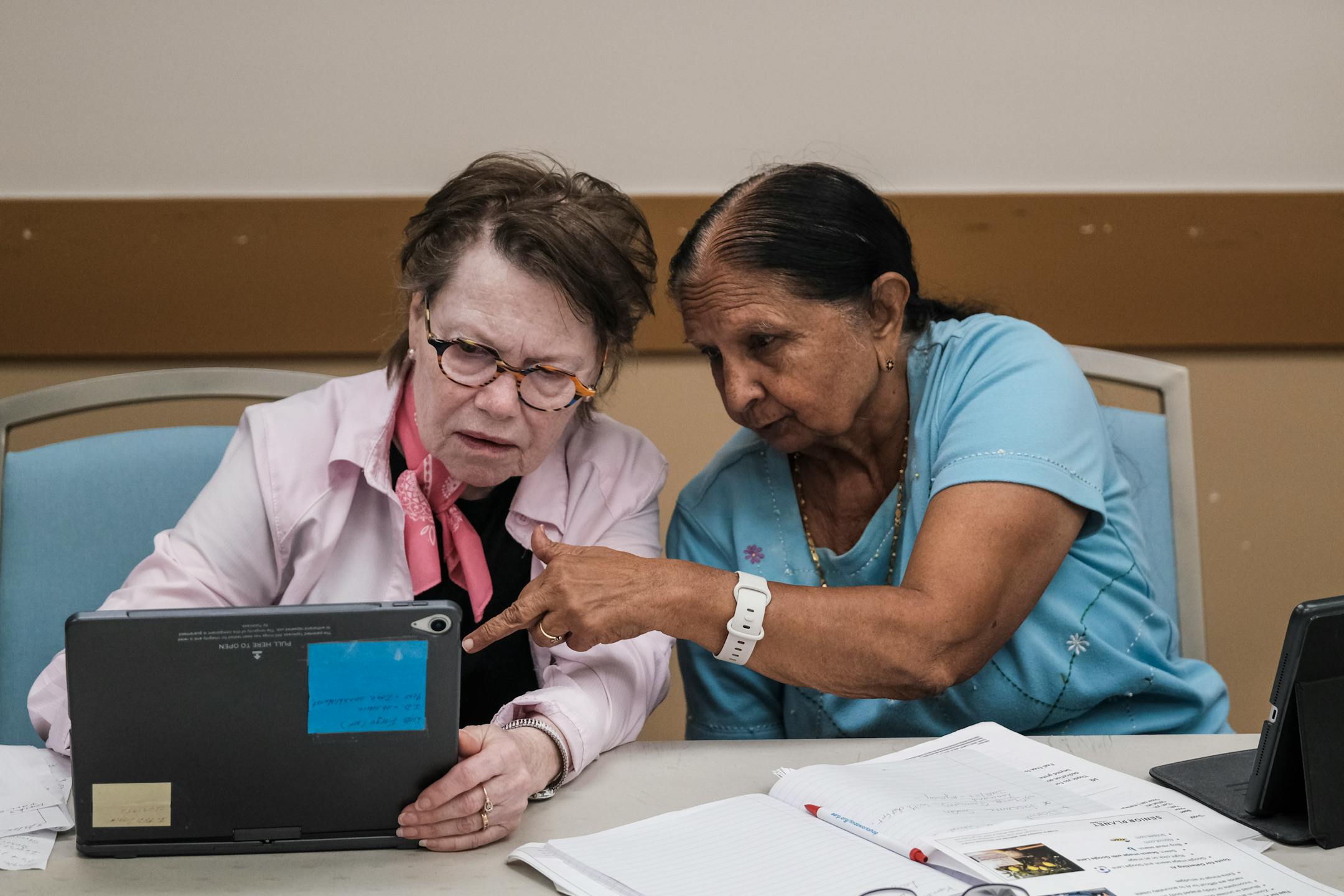
Barbara Suhrie, left, and Vandana Kharod participate in an AI class in Gaithersburg, Md. “We were very much impressed” with AI's capabilities, Kharod said. “At the same time, we were afraid.” (Michael A. McCoy/For the Washington Post)

The dozen or so seniors in a Maryland classroom faced a simple challenge. Tomba Kambui, their instructor, pointed to a pair of photos on a computer screen. He asked the room: “Which one is the AI-generated image?”

The first set was easy; someone quickly noted that a woman’s head was distorted in one photo. So was the second — there were two Eiffel Towers in a tourist’s selfie. Then Kambui scrolled to a third pair of photos.

“How about this one?” he said. “This one’s a little harder.”

The room fell silent. Everyone squinted and leaned in to look closer. The two photos of women typing at computers were startlingly lifelike, without any obvious tells of AI distortion. Kambui finally pointed out the smallest oddity in one woman’s fingers.

“When it comes to identifying AI images … look at digits, fingers, arms, teeth, earlobes,” Kambui said. He paused.

“But it’s getting harder and harder to tell,” he added. The class murmured in agreement.

America’s seniors, who have lived through leaps in technology like the advent of personal computers and the internet, are now confronting the dizzying advance of generative artificial intelligence. Some are just catching up to the smartphone era. Now they must also learn to navigate an online world increasingly shaped by AI.

AI has in turns delighted and unnerved them, seniors and instructors who run technology classes for older adults said. For some older adults, chatbots have become convenient assistants for making travel plans or writing letters and books.
But AI has also upped the potency of scams and misinformation that already target older Americans. They are encountering AI-generated content as it pervades platforms like Facebook and YouTube. In classes like this one at a Gaithersburg, Md., senior center, students are startled to learn how difficult it can be to tell AI-generated fakery from reality.

“We were very much impressed,” said Vandana Kharod, 84. “At the same time, we were afraid.”

The quiz on AI-generated images that Kharod puzzled through last week was part of a 10-week course offered by Senior Planet, a nonprofit affiliated with the senior-citizen lobbying group AARP that produces educational resources and runs training programs.

Senior Planet and other groups that run tech lessons for seniors are adding AI to their curriculums as a small but growing proportion of America’s older adults are encountering the technology. Ten percent of Americans age 65 or older said they had used ChatGPT, OpenAI’s chatbot, according to a Pew Research Center survey from this spring. The Washington Post has a content partnership with OpenAI.

But whether they’re familiar with the technology or not, seniors are also encountering AI through family members and news coverage. Some are accessing AI tools without realizing it as tech companies install chatbots, like Google’s Gemini, directly into their devices.

“Eighty percent of all my seniors use Android devices,” said Adrian Sutton, who coordinates technology lessons run by D.C.’s Office of the Chief Technology Officer for seniors in the city. “The ‘Hey Google’ command is changing to Gemini, automatically in their phones. Some of them hate it.”

AI is also reaching seniors in the form of scams and hoaxes. Fraudsters have used AI tools to fake the voices of family members and real estate agents to scam victims out of thousands of dollars. The technology has also made it easier for criminals to mine the internet for personal information to better target their marks.

Study materials in an AI class in Gaithersburg, Md. (Michael A. McCoy/For the Washington Post)

It’s an intimidating new frontier for older adults, even those who have been tech-savvy from the start. Kharod, who attends the Gaithersburg AI course, said she’s been interested in keeping up with new technology since the 1970s, when she used a Univac computer — one of the earliest commercial computers developed after World War II — as an “old-timer programmer.”

“It is useless today,” she chuckled. “My grandchildren laugh at me.”

Marlene Shemelynec, 76, also signed up for the Gaithersburg lessons. She remembers buying an IBM electric typewriter for college, then quickly abandoning it for the campus computer lab and turning in coursework on a floppy disk. She had a Blackberry, then a smartphone. But those changes didn’t seem as sudden as the emergence of AI, which she feels like she hears about “every day” in the news.

“It feels a little overwhelming, truthfully,” Shemelynec said. “And that’s why I decided to take this class.”

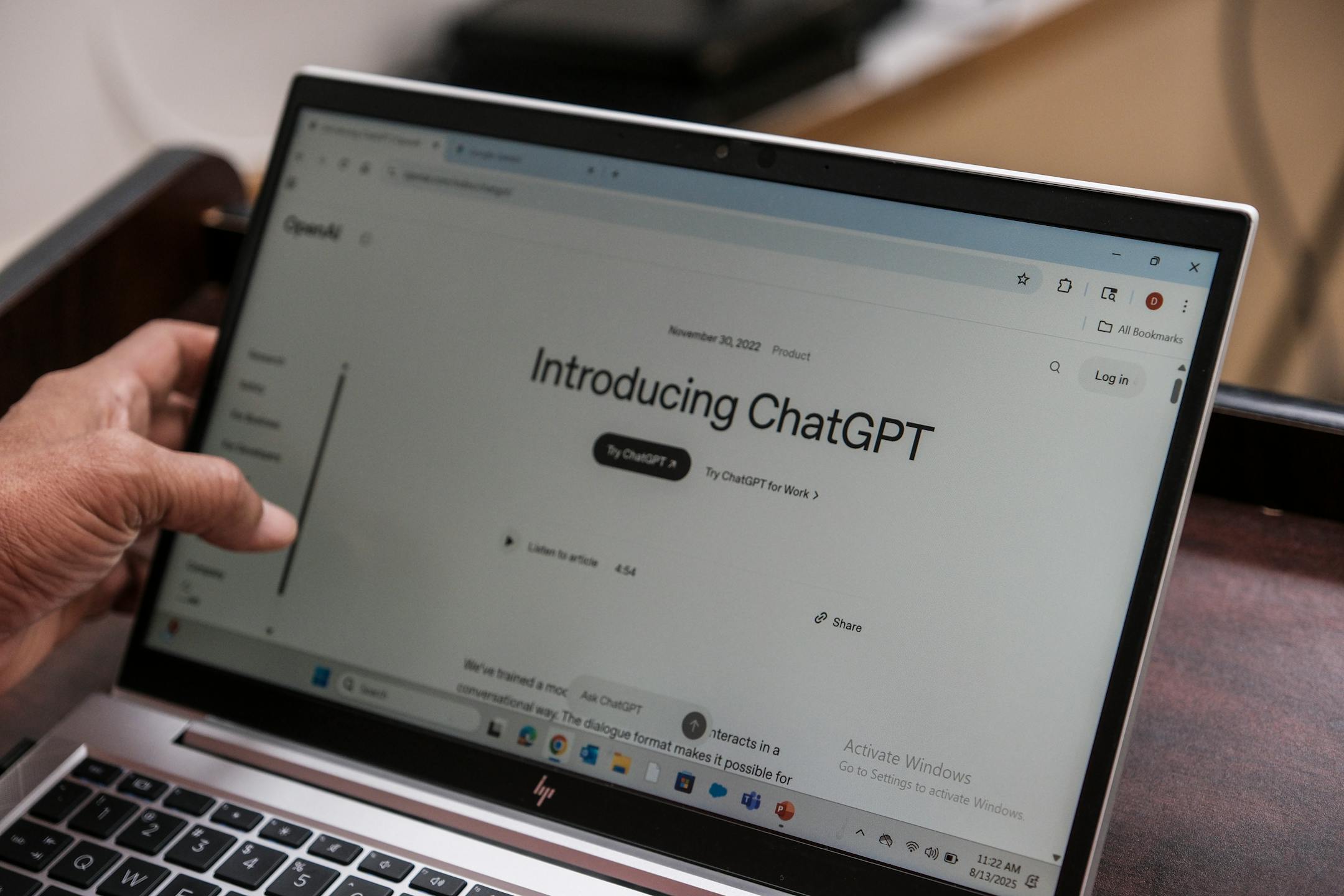
In Gaithersburg, Kambui, the Senior Planet instructor, showed the class how to access ChatGPT and passed out handouts for recognizing AI writing (“unoriginal and predictable” or with a “tone that doesn’t match the content of the text”) and chatting with AI (“often faster than a basic web search”).

At times, the senior center classroom sounded like a college seminar. Kambui explained terms such as “hallucinations,” the mistakes and falsehoods AI chatbots can sometimes generate, and “machine learning,” the process of training computer systems to predict results from data that powers AI.

“If you know this, you’re way ahead of the teenagers,” he joked.

Kambui and instructors in other programs around the country said they emphasize the potential dangers of AI scams and the importance of checking the information chatbots produce. But they also want to empower seniors to use AI safely.

“Initially, they’re scared,” said Torrence Mack, a Miami-based instructor who teaches technology classes for seniors in Florida, Georgia and Tennessee. “But the more you talk about it and find out ways that it can be resourceful to them, then they want to try to use it.”

Mack said a participant in one of his classes used ChatGPT to write letters to a property manager to address problems with his apartment. The chatbot helped him quickly craft an assertive complaint, Mack added. Others use chatbots to write letters to their grandchildren, plan vacations or craft exercise routines.

LoriAnn Daniels, 63, took a Senior Planet AI course in Plattsburgh, N.Y., and said she is now using AI to write and illustrate a children’s book she hopes to publish. She enjoys using ChatGPT to research historical topics, she said, and how the chatbot prompts her to continue conversations and ask additional questions about a subject.

“ChatGPT, I think, is very user-friendly,” Daniels said. “It just opened up more creativity, more questions … I find I’m going into ChatGPT more than Google.”

As she tucked into her lunch at the Gaithersburg senior center after a class, Kharod said she tried using ChatGPT once to write a thank-you letter for a teacher. But she’s not sure she’ll make it a habit. She said she’s worried about children like her granddaughter losing their writing skills if they rely too much chatbots.

“She should write using her brain,” Kharod said. “Times are changing.”

about the writer

about the writer

Daniel Wu

More from The Good Life

See More
card image
Michael A. McCoy/For the Washington Post

They have lived through huge leaps in technology like smartphones and the internet. Now they’re trying to understand generative artificial intelligence.

card image
card image