
How one park explains downtown St. Paul

The expansion of Pedro Park will open next week, but the park’s 15-year history exemplifies dashed hopes for downtown development.

The Minnesota Star Tribune
September 2, 2025 at 11:00AM
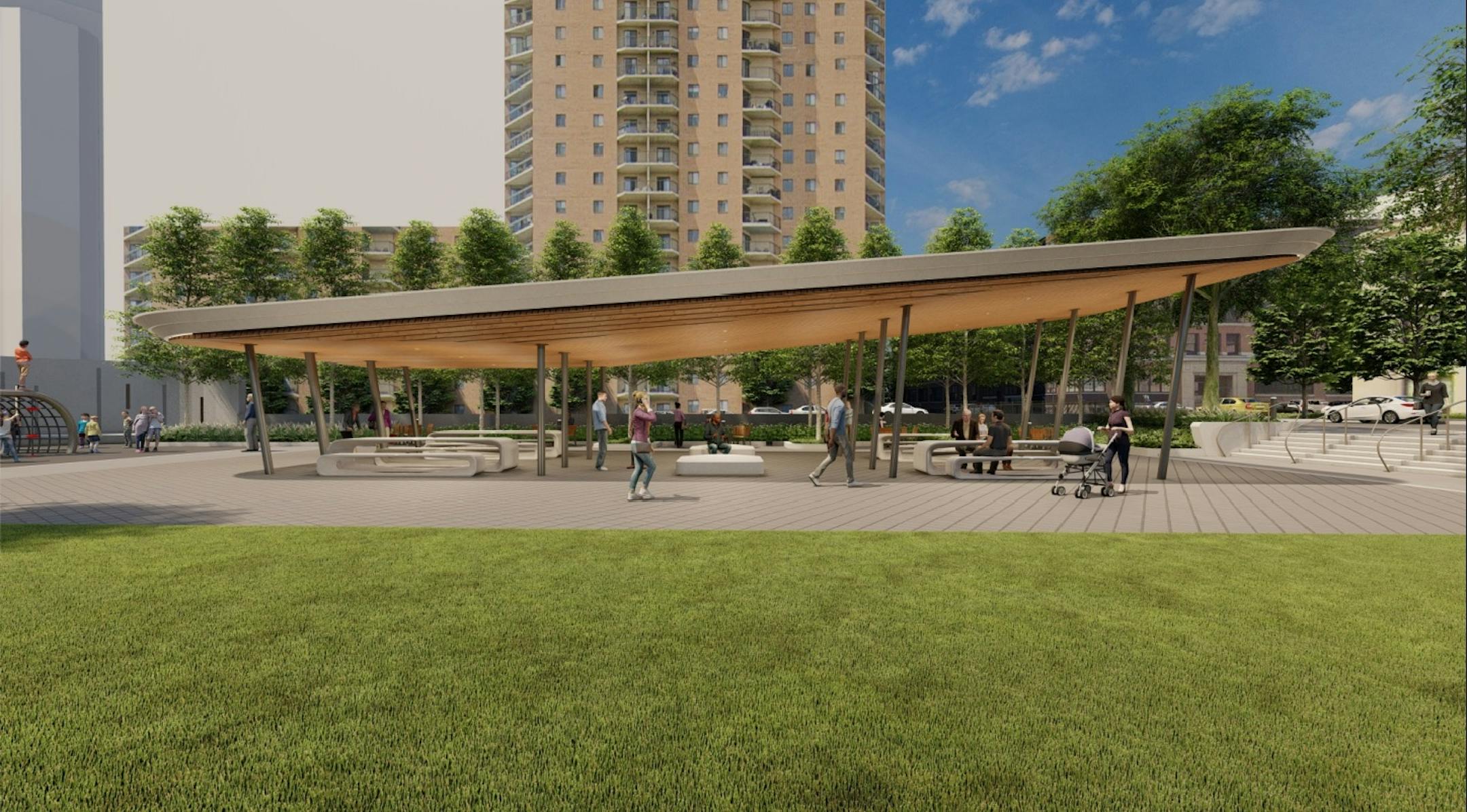
A rendering shows the pavilion in the expanded Pedro Park in downtown St. Paul.

Pedro Park in downtown St. Paul is reopening this week, following a multimillion-dollar expansion and after a saga that shows how the downtown revival has long been just around the corner and yet just out of reach for the capital city.

From manufacturing and retail, to government buildings and hopes for high-end offices, and finally to a public plaza that could anchor a neighborhood, the story of Pedro Park — built on one demolished building and now expanding into the footprint of another — follows the fits and starts that have defined the last decade of St. Paul’s downtown.

Now, with the $7 million park expansion set to open Thursday, doubling Pedro Park’s size and adding new gardens and a picnic shelter, city leaders are pinning their hopes for downtown on this new iteration of the corner of 10th and Robert Street.

That’s a lot of baggage for the little park at the site of a former suitcase factory.

Pedro Luggage legacy

Two generations of the Pedro family ran the family business that started in 1914 with an Italian immigrant who arrived in St. Paul less than a decade earlier, making his way in the booming turn-of-the-20th century St. Paul of James J. Hill.

Pedro Luggage saw the downtown shift from factories, warehouses and wholesalers to shopping and dining, and the business shifted, too.

At its height, the Pedro Luggage building of more than 80,000 square feet made and sold suitcases, handbags and special cases for firearms, and repaired luggage for airlines.

Pedro Luggage, shown in 2005. (JOEY MCLEISTER)

Pedro Luggage closed in 2008, with the retirement of the second generation of family owners. In 2009, the family gave their building and downtown land to the city on the condition it would become a park.
The heyday of downtown retail was long gone by then, with shoppers flocking to suburban malls and increasingly shopping online. There would be no new department store or apparel maker to fill the Pedro building.

When it was conceived at the end of the 2000s, the future park represented a stake in the ground, marking progress toward downtown St. Paul’s rebirth as a neighborhood where people could live.

High hopes last decade

Coming out of the Great Recession, the corner of Robert and 10th in downtown St. Paul exemplified the city’s sky-high aspirations.

By 2012, a major city investment had catalyzed the transformation of the old police headquarters into a high-end apartment building — The Penfield — with a grocery store — Lunds & Byerlys — at the ground level. A hip coal-fired pizza restaurant opened next to Keys Cafe. And a new park was under construction on the site of the old Pedro Luggage building.

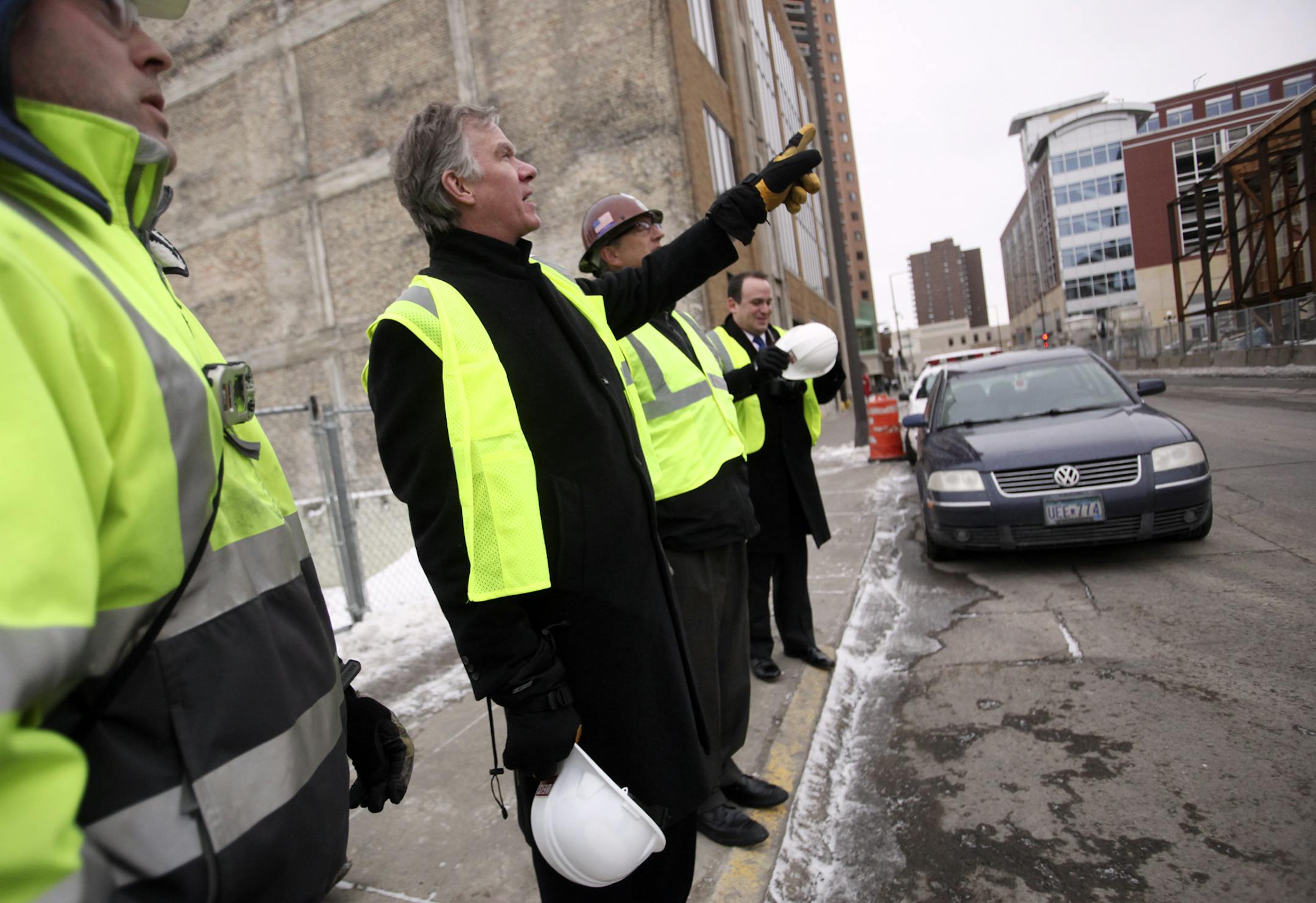
S.t Paul mayor Chris Coleman prepared to don a hard hat for a tour of the Penfield project in downtown Wednesday, Jan. 30, 2013, in St. Paul, MN. (DAVID JOLES/STARTRIBUNE) djoles@startribune.com A day in the life of Mayor Coleman. For a longer profile of Coleman planned for mid-month, on what he's accomplished and what he still hopes to do as he prepares to run for a third term as St. Paul's mayor.
Former St. Paul mayor Chris Coleman prepared to don a hard hat for a tour of The Penfield project across from Pedro Park in St. Paul in January 2013. (The Minnesota Star Tribune)

The 2010s felt boom-like for downtown and Lowertown St. Paul, riding high on the success of new attractions like the St. Paul Saints’ CHS Field and the Palace Theater and the bars that popped up around them, and the blossoming arts scene in Lowertown’s renovated loft spaces.

Pedro Park opened in 2014, with a bright-red outward-spiraling mural echoed in the park’s landscaping. The city eyed expansion of the park into the neighboring Public Safety Annex, a city-owned building that had fallen into disuse.

Then St. Paul started wondering if there was a developer who could bring the Public Safety Annex back onto the city’s tax rolls.

A request for proposals returned a big promise from a developer in 2017, who spun visions of a high-end office-and-retail complex and pledged to maintain Pedro Park for the next 20 years. Neighbors who wanted to see Pedro Park expand sued to stop the development.

But like too many big projects in St. Paul, the funding never quite came together, and the developer pulled out.

Starting over

From one angle, the corner of 10th and Robert looks bleak these days. The Lunds grocery store sits empty, as does the former Black Sheep pizza. The bar and restaurants that remain are rarely bustling.

But city leaders think the next renaissance is just ahead, and they hope the expanded Pedro Park will bring people downtown to hang out and start dreaming about what life might be like in an apartment nearby.

After the pandemic, St. Paul tore down the Public Safety Annex and proceeded with the park plan.

Funding suddenly became available after the state Department of Employment and Economic Development awarded St. Paul a grant for the North End Community Center, which opened in the spring. The city shifted $5 million in funding from that project to Pedro Park and added an $1 million from its general fund. Private fundraising aimed to kick in $1.5 million more for a playground and picnic shelter.

The In$ight St. Paul group led by former Council Member Jane Prince has been skeptical of new spending on city parks, but supports the expansion of Pedro Park.

Downtown promises to be a major election-year issue, as Mayor Melvin Carter faces his first serious challenge in eight years in state Rep. Kaohly Vang Her.

As the city considers the future of decrepit office buildings in its central business district, the prospect of demolition has become increasingly discussed. The idea that buildings such as the Alliance Bank Center could be torn down has been floated by leaders, including City Council President Rebecca Noecker.

What could be built in the superblock’s footprint? Pedro Park offers one way forward for downtown St. Paul.

Correction: This story has been corrected to reflect In$ight St. Paul's stance on Pedro Park.
about the writer

about the writer

Josie Albertson-Grove

Reporter

Josie Albertson-Grove covers politics and government for the Star Tribune.

See Moreicon

More from St. Paul

See More
card image
Shari L. Gross/The Minnesota Star Tribune

The St. Paul Downtown Development Corporation, an offshoot of the Downtown Alliance, targets distressed properties with potential for redevelopment.

card image