

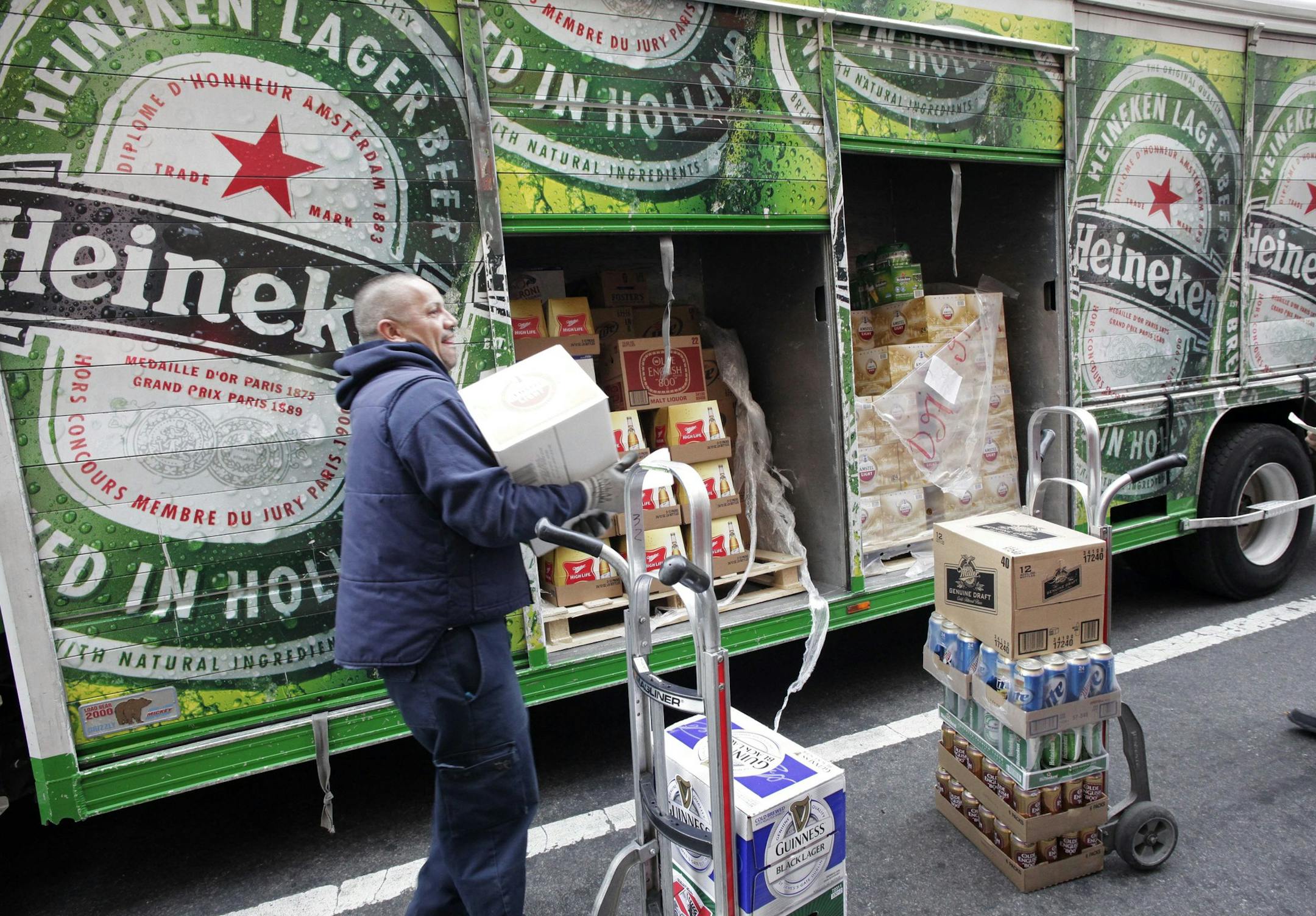
Heineken, the world's third-largest brewer, has some sponsorship advice for the International Olympic Committee: Less is more.
Too many brands can attach themselves to IOC's famous Olympic rings, says the Amsterdam-based beer company. The landscape is too cluttered, making it hard for the biggest sponsors to stand out from smaller ones.
"You can't see the difference between a global sponsor and a local one," said Hans Erik Tuijt, head of global sponsorship at Heineken, which backs the Dutch Olympic Committee. "They have the same rings, and people don't see the difference. I think they have an issue."
Some 60 brands are able to use the Rio 2016 Olympics logo in one way or another, starting with the IOC's 12 top sponsors, who paid more than $1 billion each for the current four-year Olympic cycle. The Rio 2016 organizing committee also sold three separate packages for advertisers: official sponsors, official supporters and suppliers.
This has led to a barrage of Olympics iconography. Buses advertise bug spray OFF, a latecomer to the group of sponsors, as they drive past a hotel that's been taken over by top-line sponsor Nissan Motor Co. Close to the Olympic Park, a shopping center declares itself the official mall of the Games, a privilege it acquired by offering Rio 2016 the use of its parking lot. Around the venues, fans carry stacks of souvenir cups branded by Brazilian beer company Skol.
Rio organizers needed a lot of company support, either in cash or in trade for goods and services, in order to raise 7.4 billion reais ($2.3 billion) to stage the games. Brazil's worst recession in decades didn't make it easy. "All of our sponsors are happy," said Rio 2016's spokesman Mario Andrada.
The IOC tries to keep actual athletic events clear of marketing. Swiss timekeeper Omega SA has been able to get its logo into events like swimming and track and field by displaying oversize timing devices. Replays are shown on Panasonic Corp. screens.
Tuijt's comments were echoed by Tim Crow, managing director of London-based sports advisory firm Synergy, which has advised Olympic sponsors since the Atlanta games in 1996.



