

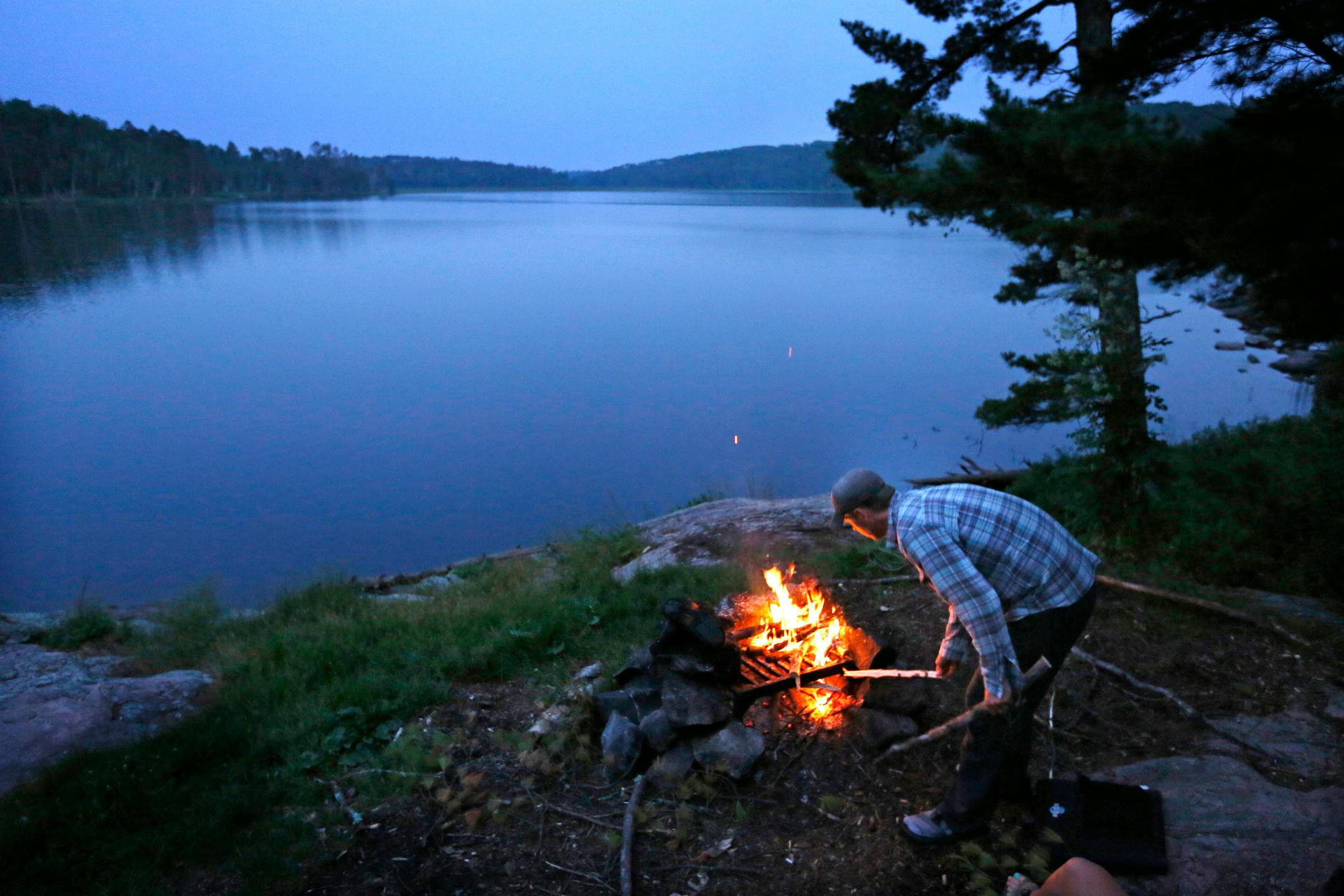
For more than a century, Camp Fire Minnesota has been gathering kids on the shores of Lake Minnewashta, in Excelsior, for a classic sleepaway experience: swimming, archery, kayaking, and, of course, campfires.
As darkness falls and the flames rise, kids sing and sway, settling like the logs.
“There is an almost overwhelming sense of comfort around a fire,” says Camp Fire’s senior naturalist, Will Toney. “It’s the easiest way to get 200 kids to be completely silent. At least until the s’mores come out.”
Across the country, however, the campfire has been flickering out, smothered by growing wildfire, climate and health concerns. Burn bans, especially in the West, are increasingly common. Three times in the last few years, Outside magazine has called for an end to campfires.
For many Minnesota campers, that prospect has prompted a kind of dark, flameless night of the soul. Who are we without fire? Is it even possible to enjoy lake country, the North Shore, the Boundary Waters, without a campfire?
And what about those s’mores?
The answers may be as unsatisfying as a snipe hunt. “Each year, there have been more and more times when we’re not allowed to host fires,” Toney says. “As something the kids expect and appreciate about camp, it’s really hard when we have to say, ‘No, sorry, it wouldn’t be safe to have a fire.’”
Minnesota has yet to restrict campfires this year, as it did in much of the state last fall. But the worst of the wildfires this spring — the Camp House Fire — was sparked by a campfire. And wildfires in Minnesota and Canada have routinely closed parts of the Boundary Waters Canoe Area in recent years.


