
Honeywell launches app that gives workers access into the office building

Honeywell app allows employees to regulate temperatures in the office and gives them building access if they forget ID.

November 27, 2016 at 6:00AM
If Honeywell’s Vector Occupant app is successful, it will generate millions in new revenue, officials said. It is the company’s latest “Internet of Things” offering. (The Minnesota Star Tribune)

The office too cold? Too hot? Forgot your office ID badge?

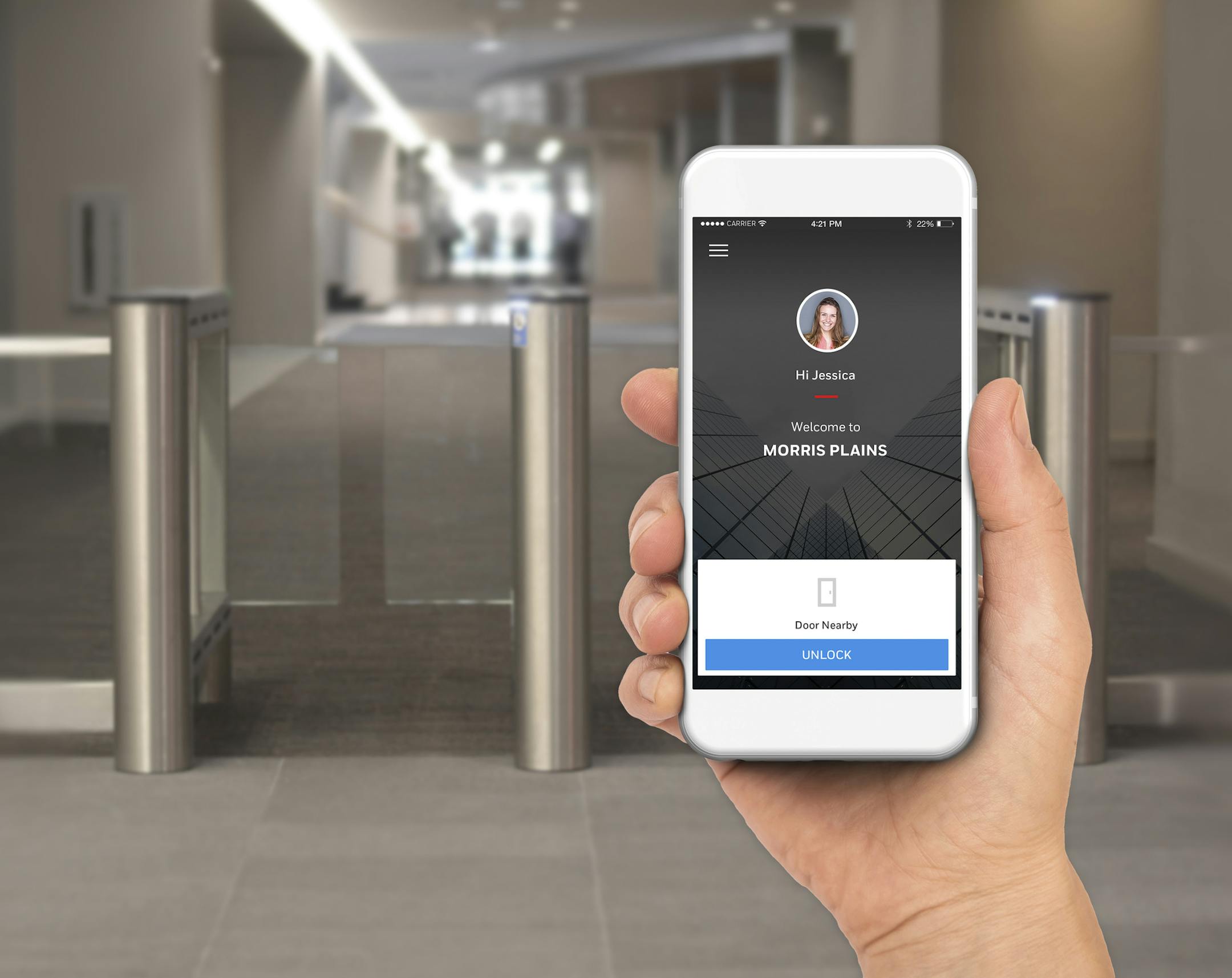
Don't sweat it. Honeywell has an answer. The company's new Vector Occupant app lets workers use their cellphones to change office temperatures or to gain access into locked buildings when they forget their ID cards at home.

Honeywell says the app is a win because it quickly gives locked-out workers access to their office without needing to call for help or replace ID badges. Employees simply hold up their phone app to the black card readers instead of their plastic ID cards. The app helps ID the worker and only unlocks doors per the employer's programming.

The technology could eliminate the need for plastic ID cards and cut replacing or reprogramming costs. It's also expected to beef up comfort, officials said.

By pressing a button, the cloud-backed app lets employees alert facilities managers when a work area is too hot or cold. The managers then press a button to acknowledge the complaint and click others to remotely change temperature settings, without visiting floors to manually adjust thermostats. The integrated system also lets the managers identify temperature patterns.

Right now, the app focuses on building access and comfort, but will eventually expand to help employees find their way around a building, officials said.

It took Honeywell less than a year and 40 software, IT and product development gurus in Golden Valley and Bangalore to bring the technology to market. There are competitors, but most are small and none are as heavily integrated as Honeywell, officials said.

The app was developed with the help of the security-badge gurus at Texas-based HID Global.

The system was initially tested using 200 Honeywell employees in Golden Valley. From there, it spread to six Honeywell buildings and then piloted at four customer sites in Chicago and London, and St. Paul and Centerville, Minn. Now it's ready for sale and making its way around to trade shows around the world.

The Vector Occupant app debuted in June at a trade show in London, and in the U.S. at another trade show in September.

"Reaction was very positive" and prompted a flurry of inquiries from architects and building construction firms looking to bring the hottest technology to building managers and tenants," said Himanshu Khurana, engineering director for Honeywell Building Solutions. The app also won inquiries from security experts wanting to make buildings secure while easing access for approved personnel.

"People see a lot of innovation and focus around getting better security that can keep the bad guys out. But they don't see enough innovation surrounding how to let good people get in easier," he said. "We're changing that."

The app is the latest "Internet of Things" offering from New Jersey-based Honeywell, a company known for its temperature control systems. Honeywell is increasingly monitoring and controlling building features with connected devices.

If successful, the Vector Occupant app will generate millions in new revenue, officials said. In beta tests, users liked that smartphones require security codes, a security feature most employee ID badges don't have. They also liked that the app can be quickly customized.

"Buildings are alive and teeming with opportunities for users to interact with them — if you can make the right connections," said John Rajchert, president of Honeywell Building Solutions unit. "Smartphones and apps continue to enhance our everyday lives, from allowing us to hail a cab to giving us direct insight into where we stand on a restaurant waiting list. We're now applying these same concepts of insight and control to how one interacts with a building."

This summer, the 22,000-member Eagle Brook Church in Centerville and Lino Lakes beta-tested the app, which gave nearly 200 employees and church leaders access to six buildings and tracked the data. Tom Tulberg, the church's information technology director, said the app helped.

"One of the biggest challenges for us, having 200 people spread across multiple locations, is that everybody has to have a scanning card. And they break. And too often people forget their badge and need another one. Because we have separate buildings with access systems that are separate from one another, the cards have to be coded for every building," Tulberg said. "So the Honeywell app is a means for us to have one central location where we can set up a user for access to any of our locations and control what portions of those buildings that they can get to."

Customer pricing will vary on building complexity and the number of employees using the app. On a per employee basis, it should be "significantly less than a cup of coffee," Khurana said.

Dee DePass • 612-673-7725

Honeywell’s Himanshu Khurana said, “Reaction was very positive” to the new app. (The Minnesota Star Tribune)
about the writer

about the writer

Dee DePass

Reporter

Dee DePass is an award-winning business reporter covering Minnesota small businesses for the Minnesota Star Tribune. She previously covered commercial real estate, manufacturing, the economy, workplace issues and banking.

See Moreicon

More from Business

See More
card image
Carlos Gonzalez/The Minnesota Star Tribune

Merchant & Gould managing director says new laws have yet to catch up to the potential impact that AI will have on intellectual property rights.

card image
card image