
Advertisement

Home sales: Little to cheer

As the housing market moves further beyond the home buyer's tax credit, new data show no sign of a turnaround.

June 11, 2011 at 4:06AM
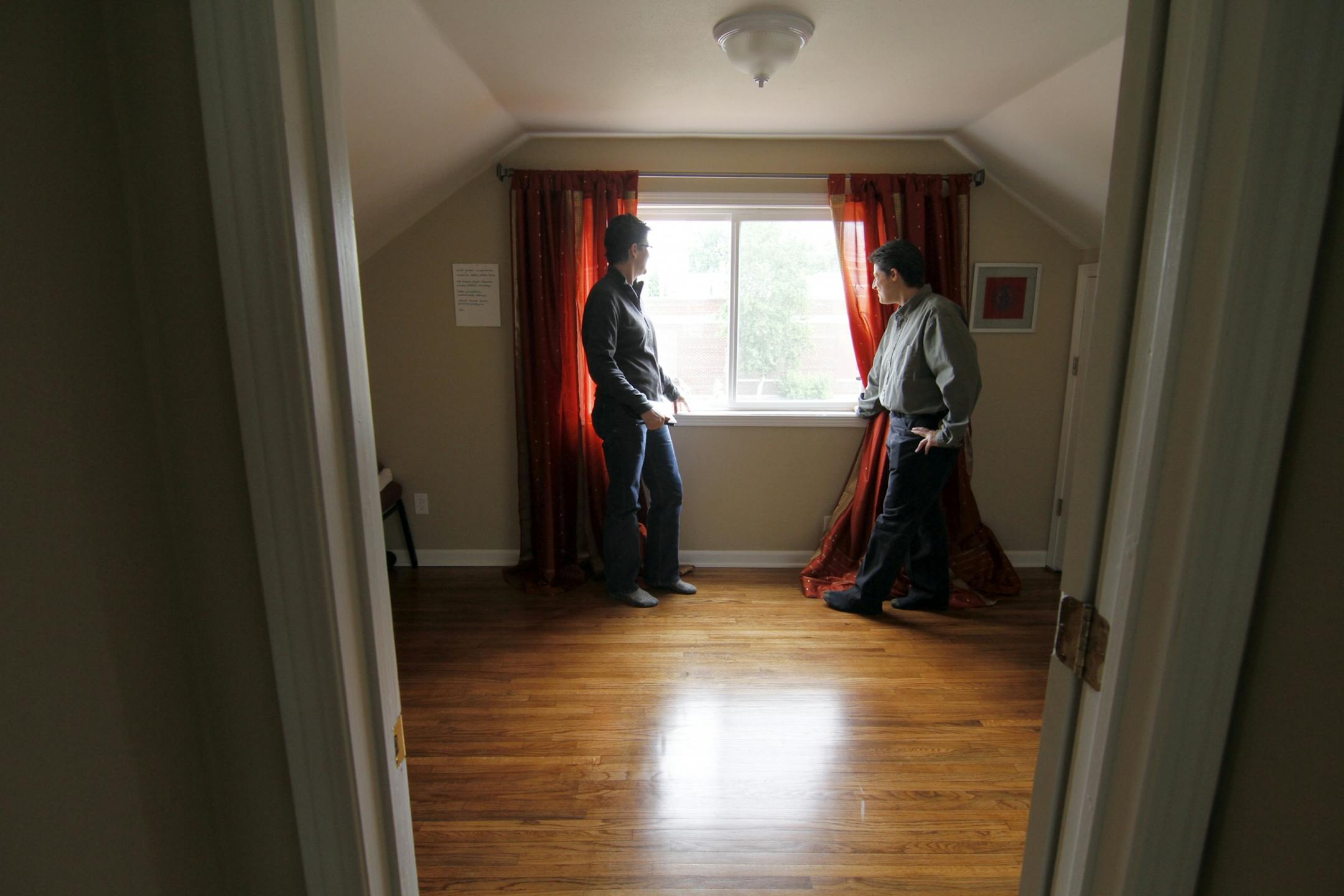
Derryn Grey ( left) and realtor Amy Ruzick ( right) checked the view from an upper level window of a home they toured in the Powderhorn neighborhood.
Derryn Grey, left, and Realtor Amy Ruzick checked the view from an upper-level window of a house they toured in the Powderhorn neighborhood on Friday. Pending home sales in the Twin Cities showed a small increase last month, but the 2010 numbers had been depressed. (Star Tribune/The Minnesota Star Tribune)
Advertisement

For only the second time in more than a year, pending home sales in the Twin Cities increased in May as the number of buyers who signed purchase agreements rose 13.2 percent.

But is this new data, which the Minneapolis Area Association of Realtors released Friday, a sign of a turnaround?

Not quite.

Sales that closed during the month were down 17 percent. Median sale prices of those deals fell 13 percent. And the spike in pending deals largely reflects the fact that May 2010 was particularly weak.

That was the first month after an $8,000 federal home buyer's tax credit expired. "The market fell off a cliff," said Marshall Saunders, co-owner of Re/Max Results.

During the final months of the tax credit buyers raced to beat the April 30 deadline, causing a spike in sales and a dearth of buyers during the following months.

For example, between the last week of April and the week ended May 14, 2010, sales were off by 44 percent. Between the last week of April and the week ended May 14 this year, sales increased 4 percent

"We're just seeing a normal year," Saunders said.

Advertisement

In fact, sales activity last month was a little less than normal. During May there were 4,428 pending sales, the third lowest May number since 2003. Buying activity was lower only in 2008, when there were 4,418 pendings, and last year.

Tax credit distortions aside, the housing market continues to suffer under the weight of too many foreclosures, cautious buyers and leery sellers.

For example, many sellers know they can't sell their house for what they think it's worth, or what they owe on the mortgage, so even though there was a 10.8 percent increase in new listings last month compared with last year, the total number of listings was the lowest since 2005.

That's good news for sellers, but not so much for buyers like Derryn Grey, who has been shopping for a house in Minneapolis for more than three months. The California transplant said she's looked at more than 100 houses, has made offers on two and is shocked that she wasn't able to buy within the first few weeks of looking. "I'm surprised," she said. "I thought it would happen more quickly."

Initially, Grey and her partner were looking at townhouses in the $100,000 ballpark, but she's had to increase their limit to $150,000 to expand the options. She said many of the foreclosures she's looked at are in terrible condition. Many of the short sales take too long. And there's a general shortage of houses that aren't distressed sales.

"I thought it would be easy to find a place, and it's not," she said.

Advertisement

Their agent, Amy Ruzick, said that after the tax credit expired last year the market slowed considerably. She used some of that downtime to process the backlog of homes that she had sold during the final months of the credit. "Last year we used a summer's worth of buyers," she said.

Shoppers are emerging

Since then, she said, the market has begun to stabilize, and an increasing number of buyers have started shopping. Many are being drawn into the market by low prices. Last month overall prices were down by almost 13 percent to $152,950, with most of the declines coming from short sales and foreclosures.

Traditional (meaning non-distressed) prices were up 1.4 percent to $200,700, while foreclosure prices fell 16.4 percent to $104,450.

Of all closed sales that happened last month, almost 42 percent were foreclosures and short sales, down from 56 percent in January 2011.

"Both the foreclosure rate and the distressed-sales rate hit seven-month lows in May." said Brad Fisher, president of the Minneapolis Area Association of Realtors.

Advertisement

"It is reassuring to have more traditional product entering the market relative to other segments, as today's new listings are tomorrow's closings."

Still, according to a report released this week by Clear Capital, bank-owned listings represented nearly 52 percent of all sales during the first quarter 2011.

Jim Buchta • 612-673-7376

Minneapolis house for sale
This is an exterior view of the house for sale in the Powderhorn neighborhood of south Minneapolis. (Star Tribune/The Minnesota Star Tribune)
about the writer

about the writer

Jim Buchta

Reporter

Jim Buchta has covered real estate for the Star Tribune for several years. He also has covered energy, small business, consumer affairs and travel.

See Moreicon

More from Business

See More
card image
Elizabeth Flores/The Minnesota Star Tribune

Waning consumer demand and volatile commodity prices have put pressure on poultry producers. Life-Science Innovations already owns other bird facilities throughout the state.

Todd Geselius, vice president of agriculture at the Southern Minnesota Beet Sugar Co-op, shows what a sugar beet looks like when it is harvested in the field on Sept. 9, 2015 in Renville, Minn. (Jim Gehrz/Minneapolis Star Tribune/TNS) ORG XMIT: 1175088 ORG XMIT: MIN1510142301350530
card image
Advertisement