

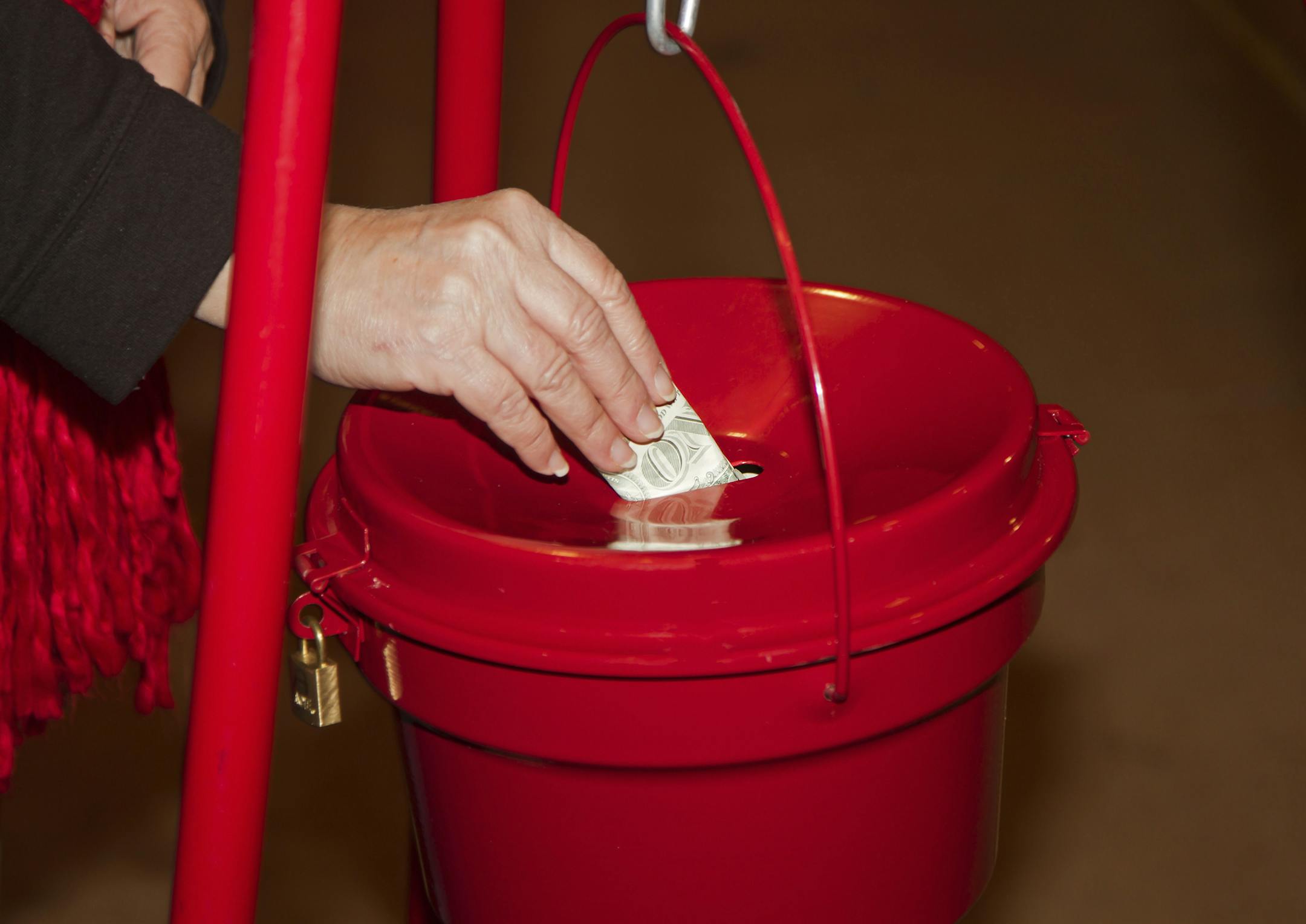
I love this time of year, except for one teeny, tiny thing: charitable giving guilt. You know exactly what I'm talking about. We've all walked past that red bucket without dropping in any money. We've all said no to those requests at the checkout counter to donate $1 to some worthy cause.
Many of us got buried under giving guilt last week on Giving Tuesday. Social media were flooded with all sorts of calls to donate. I bet at least once that day, we felt a twinge or two of guilt if we didn't hit the "Give Now" button.
A friend of mine shared a story that captures this situation perfectly. Out shopping last week, she dropped some money into one of those red buckets. Luckily, the bell ringer hadn't changed by the time she exited the store. She knew he remembered her donation. No guilt was felt. But then she went to a second store. This one had a bell ringer, too.
"There was no casual way I could mention donating at the other store," she said. "I wish they'd give out stickers saying 'I donated,' like the 'I voted' stickers on Election Day. It would take away the guilt."
Here's the thing: My friend doesn't need to feel guilty.
I know she donates regularly to a bunch of worthy causes, but like the rest of us, it's easy to get caught up in the moment. There are thousands of charities asking for our money, and many of them do great work. However, most of us have finite resources. To make the most of these resources — minus the guilt — we need to follow four simple steps. They are something I've been thinking about for years, and I was reminded of them during a Reuters chat on Twitter last week.
budget, plan, act
1. Have a charitable giving plan. We need to work out exactly how much we want to give. This can be a specific dollar amount or a percentage of our income. Once we've decided how much to give, then we need to research an organization to receive it. One great resource is Give Well. It has analyzed thousands of charities. The analysis breaks down the pros and cons — and the potential impact — of a donation. The final component of this step is to decide how often we want to give. One possibility is to make it a regular occurrence, maybe even once a month.
2. Follow the plan. The plan works only if we stick with it. If we have decided to give $100 a month to a favorite charity, we should automate it. Just sign up to have the charity receive $100 from a bank account and arrange for an e-mail receipt. We'll both feel good and have the necessary records for tax time.



