

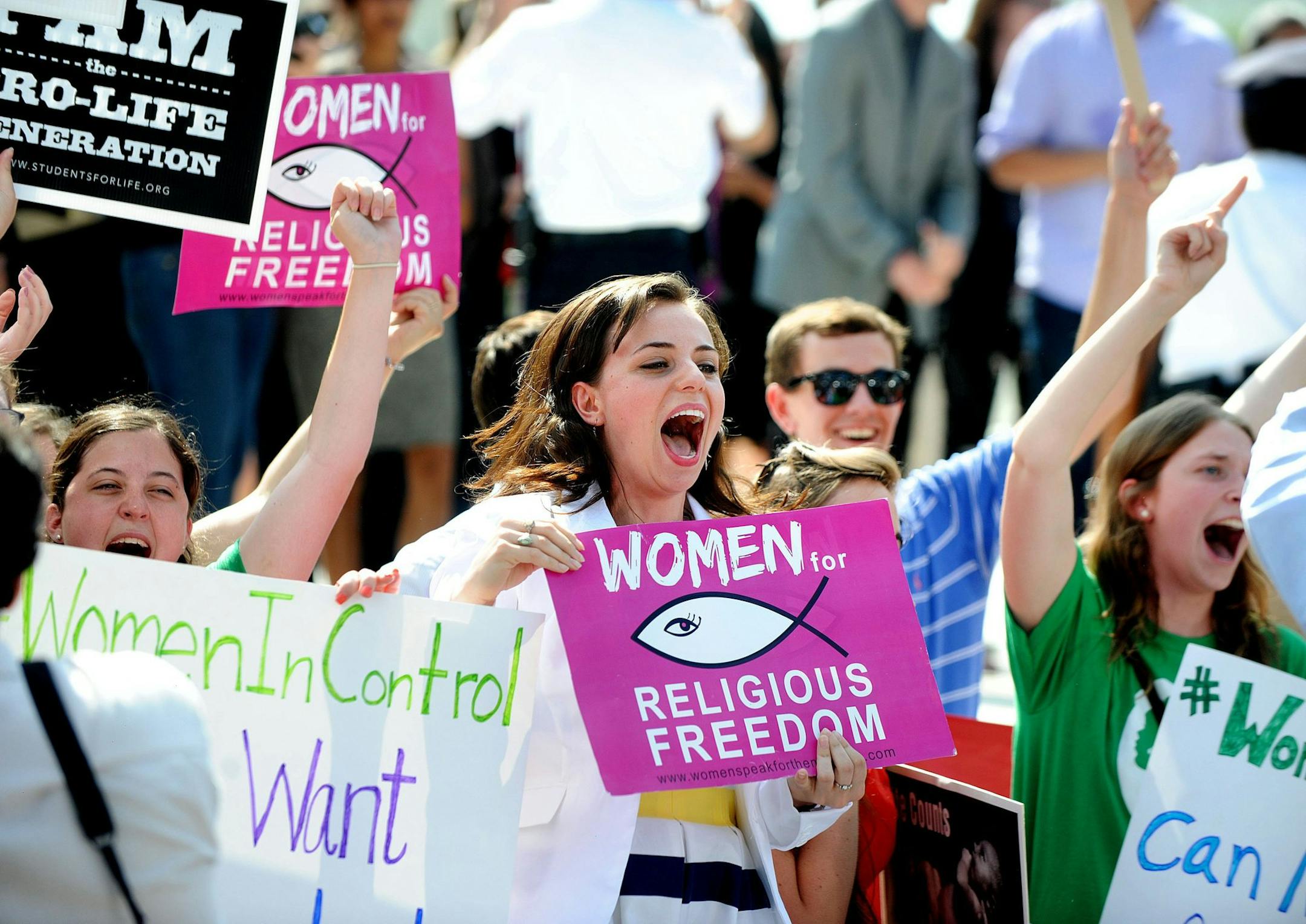
WASHINGTON – Will the religious beliefs of Minnesota business owners enable them to avoid paying for employees' birth control?
More than 200,000 of the state's companies confront that question after last week's Supreme Court ruling that sided with two private businesses with religious objections to the requirement. The 5-4 split among the justices has ignited a heated national debate about how and when principles of personal faith should trump public policies.
Legal scholars say the answer is still unclear. The decision lacked precise guidelines as to which businesses it covers, for example, or what qualifies as a religious belief.
The court's majority opinion "could lead to a lot of litigation and turmoil," said Hamline University law Prof. Carol Swanson. "The decision is generous in opening the door for companies. … I would be shocked if there were not more suits."
Lawyers involved in the battle over government dictates, women's rights and religious liberty interpret the majority opinion differently.
Minneapolis lawyer Erick Kaardal represents seven faith-based Minnesota companies suing the government to avoid paying for health insurance that includes female birth control. He believes the court's decision is narrow and will only attract a handful of new filings by believers.
"How many people are we talking about who want to work out their faith through their business?" he said.
Too many, countered Gretchen Borchelt, senior counsel at the National Women's Law Center, which is seeking federal legislation to head off the fallout. "We think there will be new lawsuits and a campaign by opponents of birth control to get employers to drop coverage," she said.


