

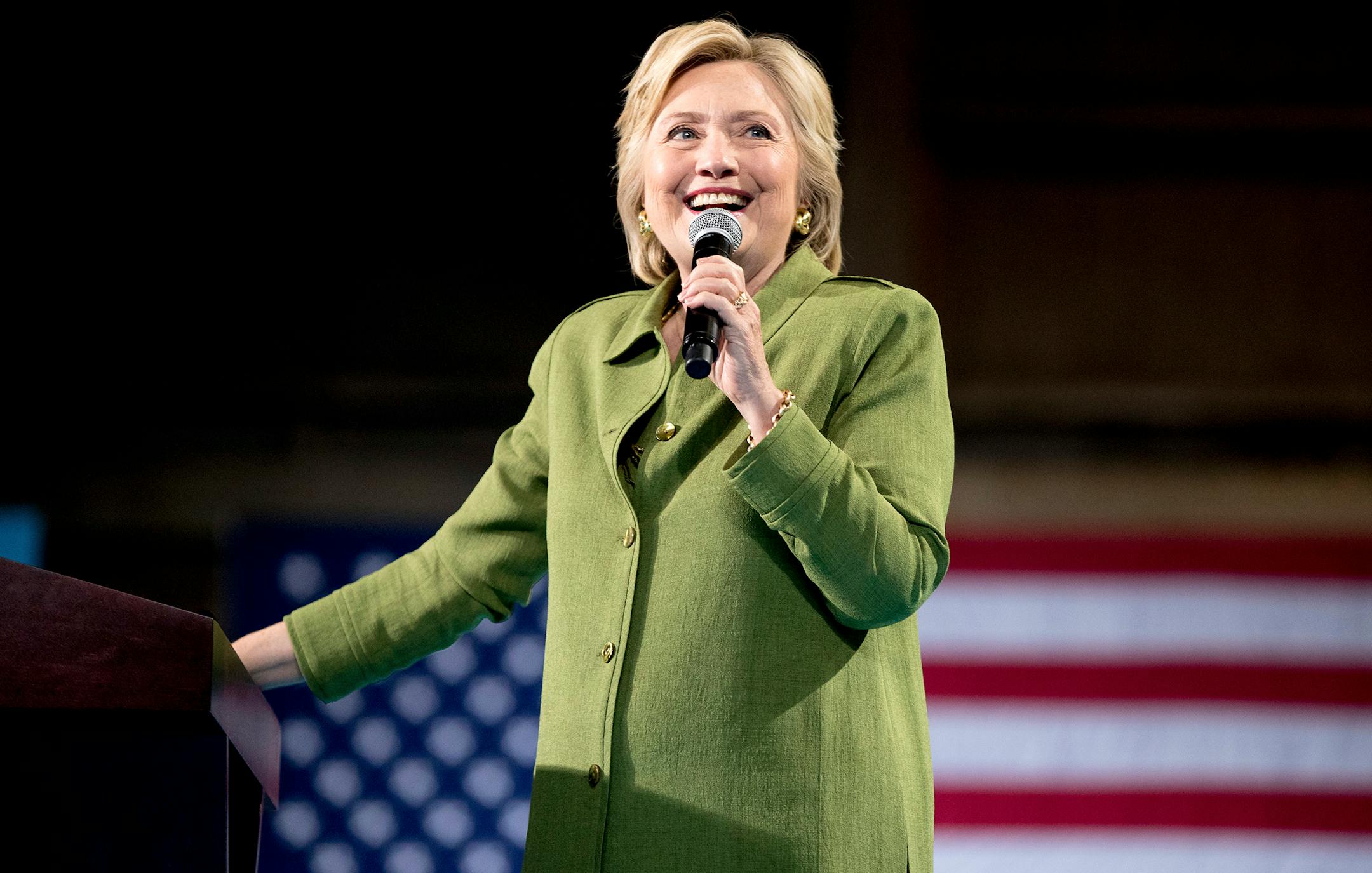
Watching Hillary Clinton's victory week in Philadelphia, many of us have full hearts. Many of us oldsters also know the truth behind the spectacle: This triumph was made possible by recent generations of active women who contributed courage and smarts to stimulate public discussion and change the role of women in politics.
And nowhere was there greater women's political activity in the past four decades than in Minnesota.
We need to remember and honor the women who collectively made this victory possible.
In 1970, when I was a state House candidate from the old 35th District in south-central Minneapolis, only five women statewide were endorsed by DFL conventions that year: Jeri Rasmussen was endorsed for the Senate; and Helen McMillan, two others and me were candidates for the House.
Only McMillan won (a re-election) that year, but two years later a bumper crop of talented women was elected, many of whom went on to have long and distinguished careers in the Legislature: Linda Berglin, Phyllis Kahn and Joan Growe, to name just a few. Soon after that, we had a woman lieutenant governor, Marlene Johnson.
This phenomenon of women achieving public office did not spring full-blown from the lumpen masses of Minnesota voters: something else was happening. Women were organizing.
The Women's Political Caucus was born, nationally and in Minnesota, and within two years the DFL Feminist Caucus followed. Many women who did not run for public office generated and supported these efforts: Prof. Esther Wattenberg at the University of Minnesota, longtime activist Marilyn Gorlin from the McGovern Steering Committee, Fran Naftalin, elected to the library board — again, to name just a few.
The decade of the 1970s and the early '80s was alive with political possibilities for women, even more so after Walter Mondale selected Geraldine Ferraro as his vice-presidential running mate.


