

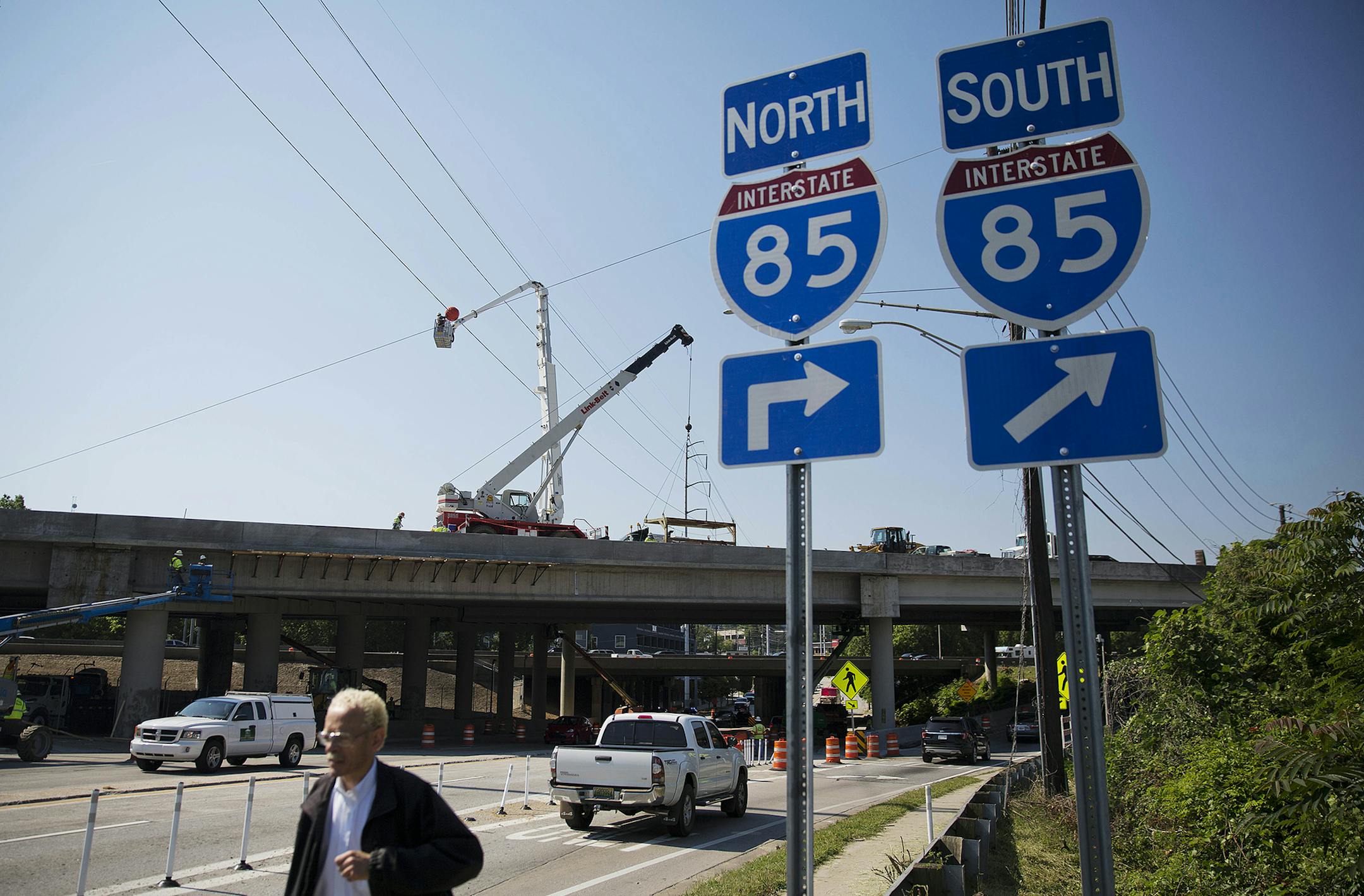
Interstate 85 reopened in Atlanta earlier this month, six weeks after a homeless man allegedly set a fire that caused a bridge collapse and shut down the freeway in both directions. It could be easy to misjudge the catastrophe as the latest proof that America's infrastructure is falling apart from coast to coast. In reality, our highways and bridges are in surprisingly good shape — at least compared to what headlines and politicians would have us believe.
President Trump, for example, recently told Congress our infrastructure is "crumbling" and asked for a major expansion in infrastructure spending. Americans seem to agree; a recent CNN/ORC poll found that 79 percent support a similar idea. And the American Society of Civil Engineers, which recently gave a D grade to our highways, argued for a 25-cents-per-gallon federal fuel tax hike to pay for more infrastructure spending.
This approach would cement Washington's role in financing local transportation, when what we really need is a second opinion on the condition of our roads and bridges and a clean break from the outdated way we finance them.
Where exactly do our highways stand? The Department of Transportation provides annual state-level data on highway and road conditions across the country. This data allows for a measurement on those conditions using the objective International Roughness Index.
It turns out things aren't nearly as bad as Americans tend to think. Only about 8.5 percent of all urban interstates were in poor condition in 2014, along with 2 percent of rural interstates. The higher urban figure reflects higher traffic volume. Figures for the entire highway and road system have changed very little over the last decade. So U.S. highways are not in perfect condition, but they aren't falling apart, either.
Turning to bridges, the percentage in need of attention declined over the last 10 years. In 2014, about 7.5 percent were structurally deficient (requiring reduced carrying loads). A little over 18 percent were functionally deficient (for example, too narrow). Both types are considered safe but need maintenance to improve performance.
These figures mask wide differences across states. For example, 25 states have improved their urban interstates over the past 10 years. Diverse states like Arizona, Florida, Ohio and Illinois have only about 1 percent of urban interstates in poor shape. Hawaii and California had the highest percentage of poor quality urban interstate highways in 2014, at 22 and 15 percent, respectively. A similar story can be told for rural interstate highways, freeways, arterials and bridges.
Because the condition of highways and bridges varies across states, expanding Washington's traditional funding approach would be a mistake. Our system does a poor job of getting funds to areas of the country most in need of investment.


