

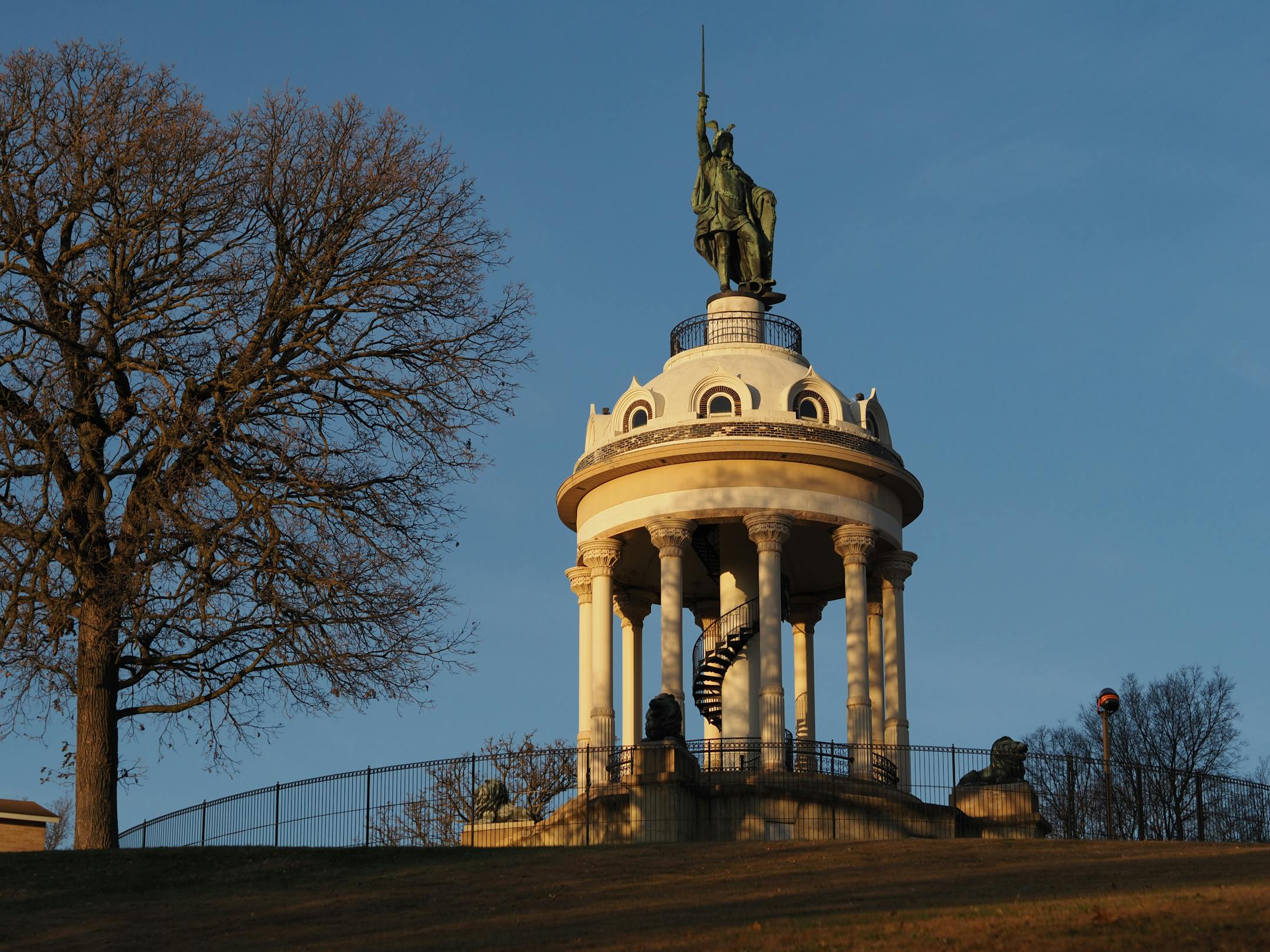
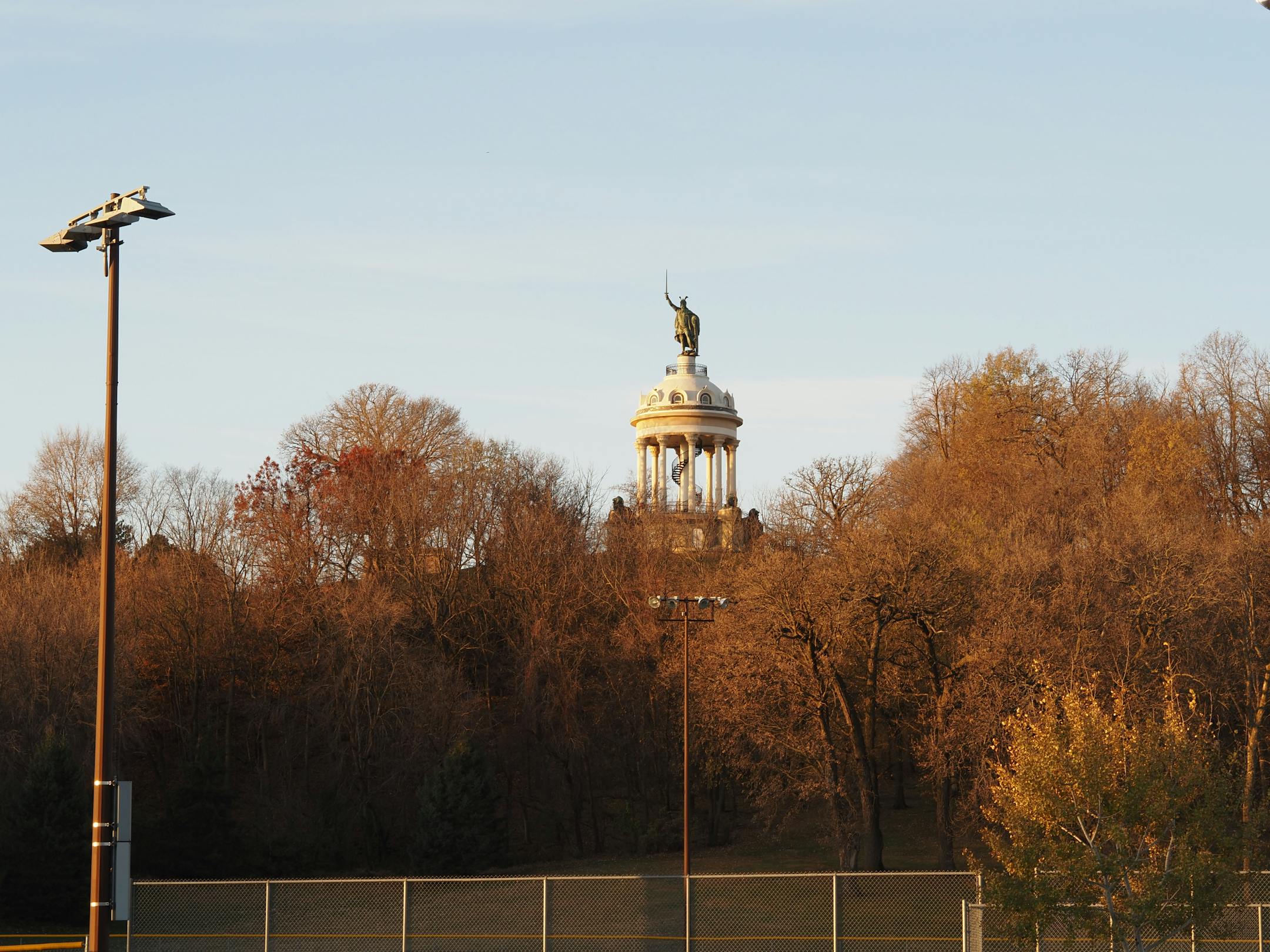
NEW ULM, MINN. – For more than a century, Hermann the German has looked out over New Ulm from his hill atop the Minnesota River Valley, his copper sword piercing the sky.
But beneath the 28-foot-tall statue of the ancient Cheruscan chieftain is an aging base — a large pedestal with columns that sits atop a small museum damaged by water over the last 128 years. Leaks and falling plaster led to the 2018 closure of an interpretive center on the ground level and in time could destroy the structure from the inside out, city officials said.
Now New Ulm, a city that loves to showcase its German heritage, faces a monumental choice: either repair the base crumbling under Hermann’s feet or take it all apart and rebuild new.
The Hermann Monument is a symbol of the community’s German heritage as well as a tourist attraction that tens of thousands of visitors climb each year. At 102 feet, the structure and statue completed in 1897 is listed on the National Register of Historic Places. A yearly festival at Hermann Heights Park features German fare such as bratwurst, pretzels and beer.
“We need to continue to have Hermann on the hill,” said City Councilor Thomas Schmitz during discussions about the project, which could cost $10 million to $14 million and take years.
The ground-floor building has had structural problems almost since the beginning. Studies found the building and the columned pedestal above it — which visitors climb to get to the base of the statue for a panoramic view of the valley — has “significant evidence of water damage.”
Inspectors saw water leaking down the building’s central stone column and pooling at its base. That single column is crucial to the structural integrity of the monument, with no redundancy if it fails, according to a 2024 study by MacDonald & Mack Architects.
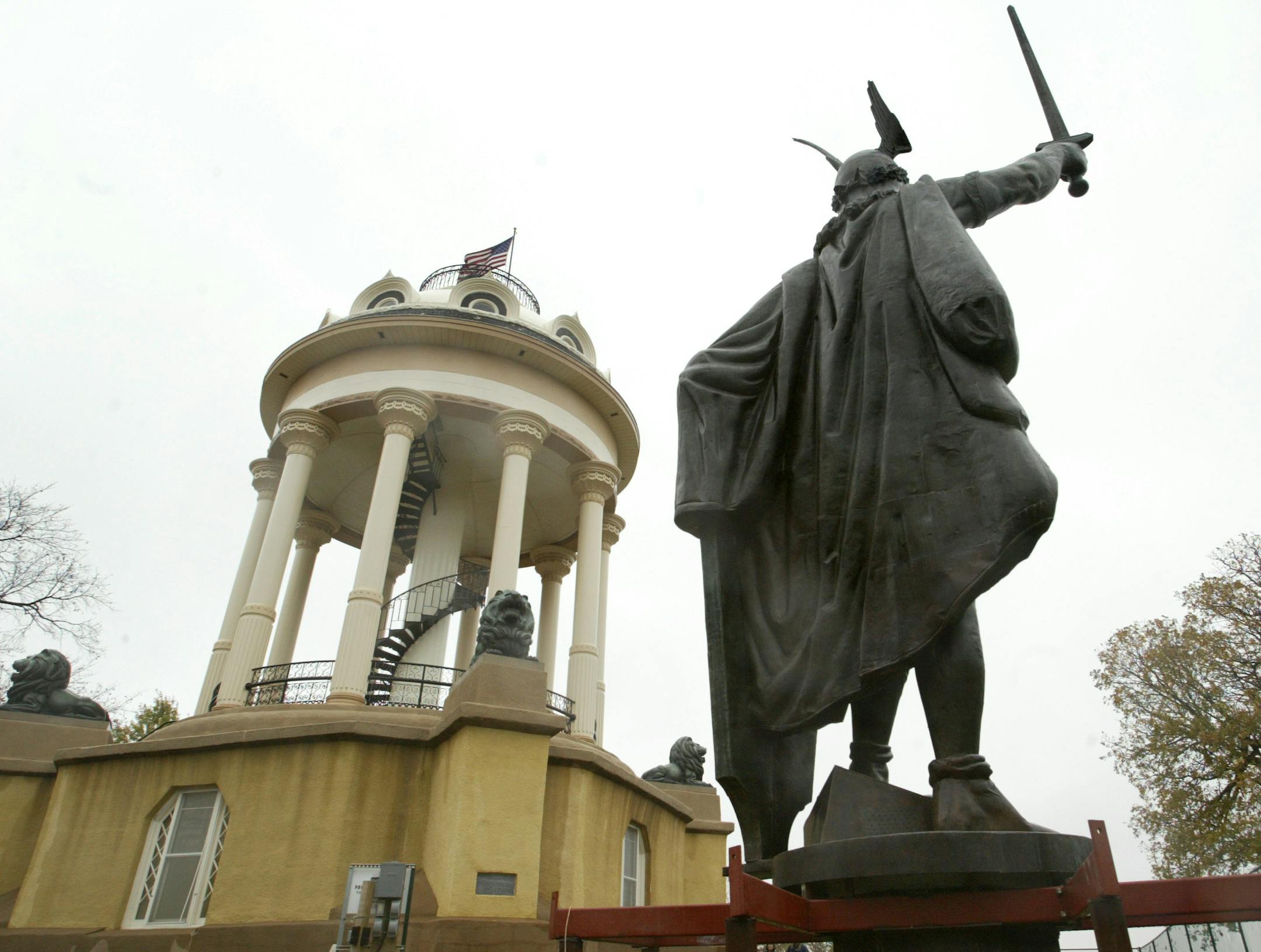
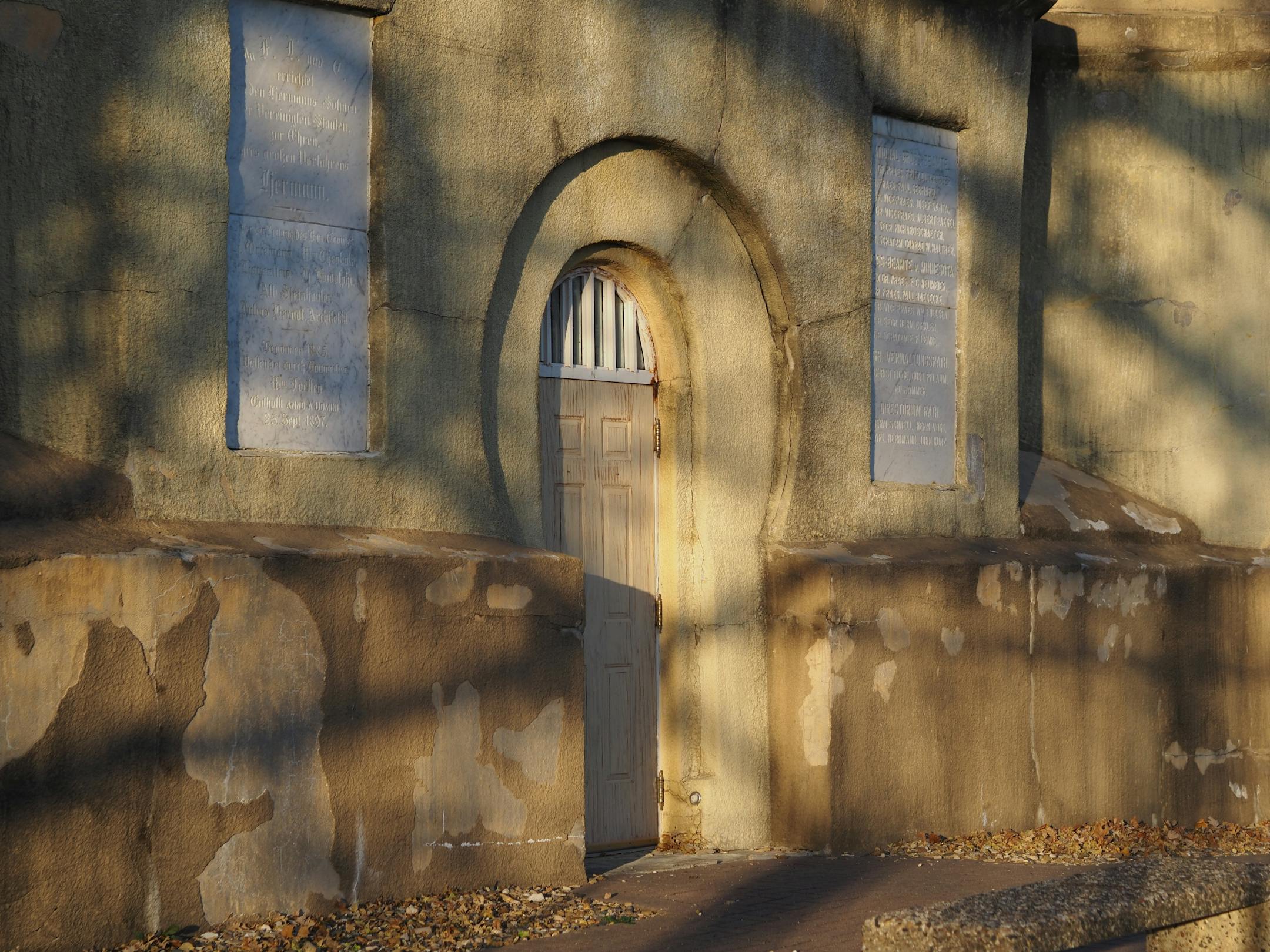
Water problems were first documented in 1901. Among a dozen repairs over the years, one backfired: A 1951 attempt to waterproof the structure by encasing it in gunite, a sprayed concrete coating, trapped moisture in the walls, leading to deterioration of the stone underneath.


![BRIAN PETERSON • brianp@startribune.com INTERNATIONAL FALLS, MN - January 31-Feb. 2nd ] The Arrowhead 135 Ultra Marathon, from International Falls to Tower Minnesota, follows the scenic and rugged Arrowhead State Snowmobile Trail and attracts some of the best ultra-athletes in the world. Competitiers can Bike, run or ski the 135 mile race that challenges the body and the mind and presents participants with some of the coldest conditions in ultra marathon racing. (IN THIS PHOTO) Being alone and c](https://arc.stimg.co/startribunemedia/TQBYYJEXPK7GJUOKY5IXJWD6I4.jpg?&w=252&ar=3:2&fit=crop)