

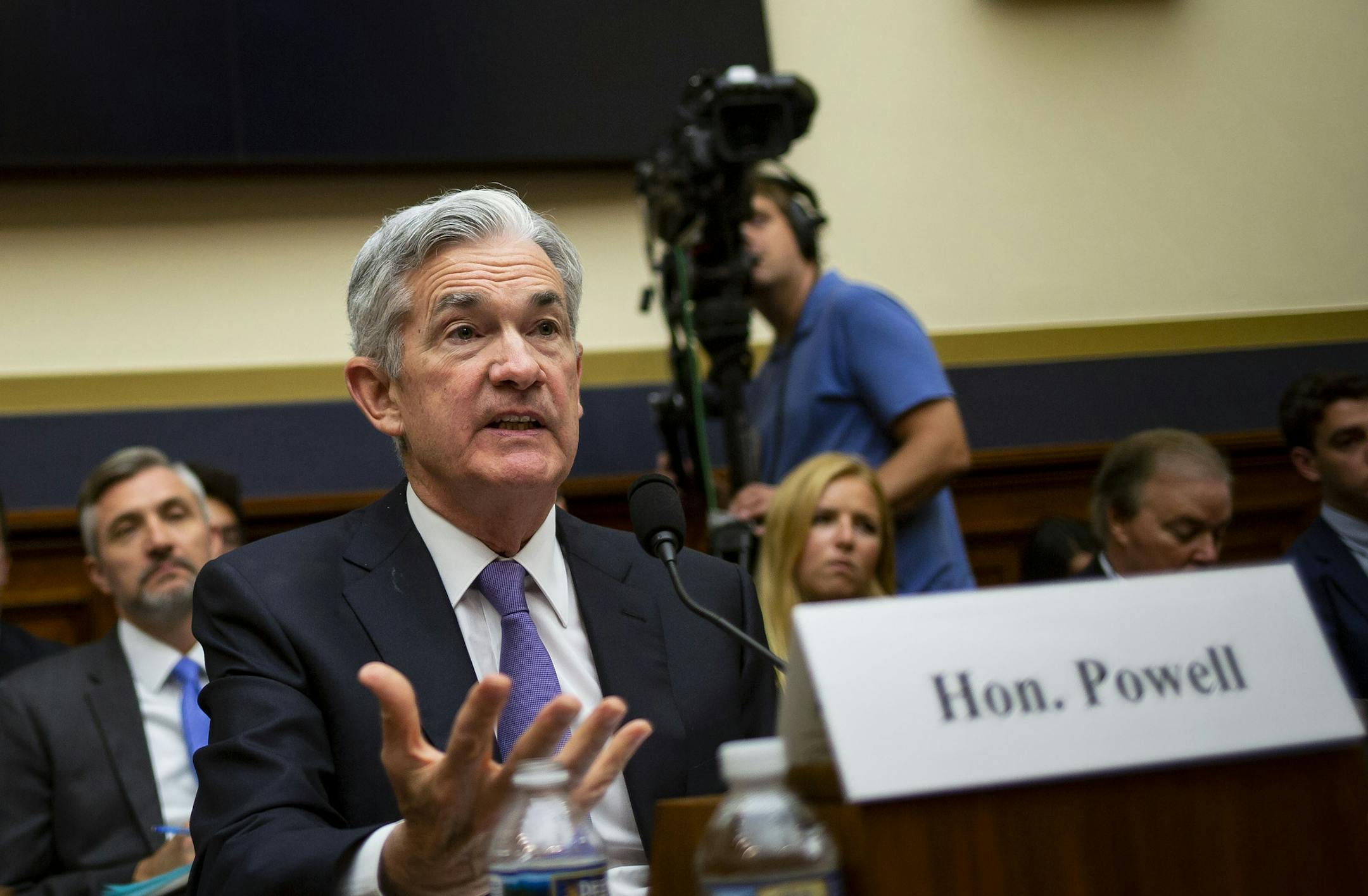
President Donald Trump trampling on convention. Nothing new there. It's his target that's fresh. Upending decades of tradition, Trump questioned the wisdom of the Federal Reserve's gradual and consistent increases in interest rates.
"I don't like all of this work that we're putting into the economy and then I see rates going up," he said Thursday. (The White House quickly recanted, saying Trump respects the Fed's independence and isn't interfering. That won't make the stain of his indiscipline go away.)
But Federal Reserve Board Chairman Jerome (Jay) Powell does not take orders from the president and is unlikely to be swayed by his appeal. And thank goodness for that: Powell matters more to economic and financial stability — and not just at home — than Trump, and is acting like it.
This week offered a stark contrast in their respective approaches to the job, and a possible explanation to the disconnect between the havoc in the White House and the robust condition of the world economy, led by the U.S.
Testifying to Congress this week, Powell was a study in consistency and professionalism. He conveyed at length over two days that interest rates are still going up gradually, but the Fed is probably getting close to a rate that neither stimulates nor restricts growth. Investors responded by pushing the dollar higher and trading in Treasury notes barely skipped a beat. (There was a flutter in the aftermath of Trump's Fed comments.)
Compare that with the chaos that Trump sowed with his summit with President Vladimir Putin, his dismissal of U.S. intelligence and the uproar that followed. His efforts to calm nerves were astonishingly unconvincing.
It's unclear whether the regrettable episode weakened Trump's political standing. If Jay Powell was caught in a similar mess, his career would be over - and for good reason. Over the past 18 months, many have tried to reconcile political instability with markets and economies that remain above the fray. The answer may be simple: Trump actually isn't in charge of that; Powell is.
It's not just about Trump and the Fed. The steady, if imperfect, hand of central banks smoothed edges from markets' views of Brexit, Italian populism and the cracks in German Chancellor Angela Merkel's coalition. The People's Bank of China is tilting policy toward shoring up growth. The Bank of Japan's task is focused on trying to get inflation up to 2 percent. (Japan hasn't had a recent political crackup.)


