
Keith Ellison, 38 other attorneys general ask Congress to ban intoxicating hemp products

The Attorney General’s Office says it doesn’t want to shut down Minnesota’s legal hemp-derived THC market. But one lawyer said “this would kill our industry.”

The Minnesota Star Tribune
October 29, 2025 at 11:13PM
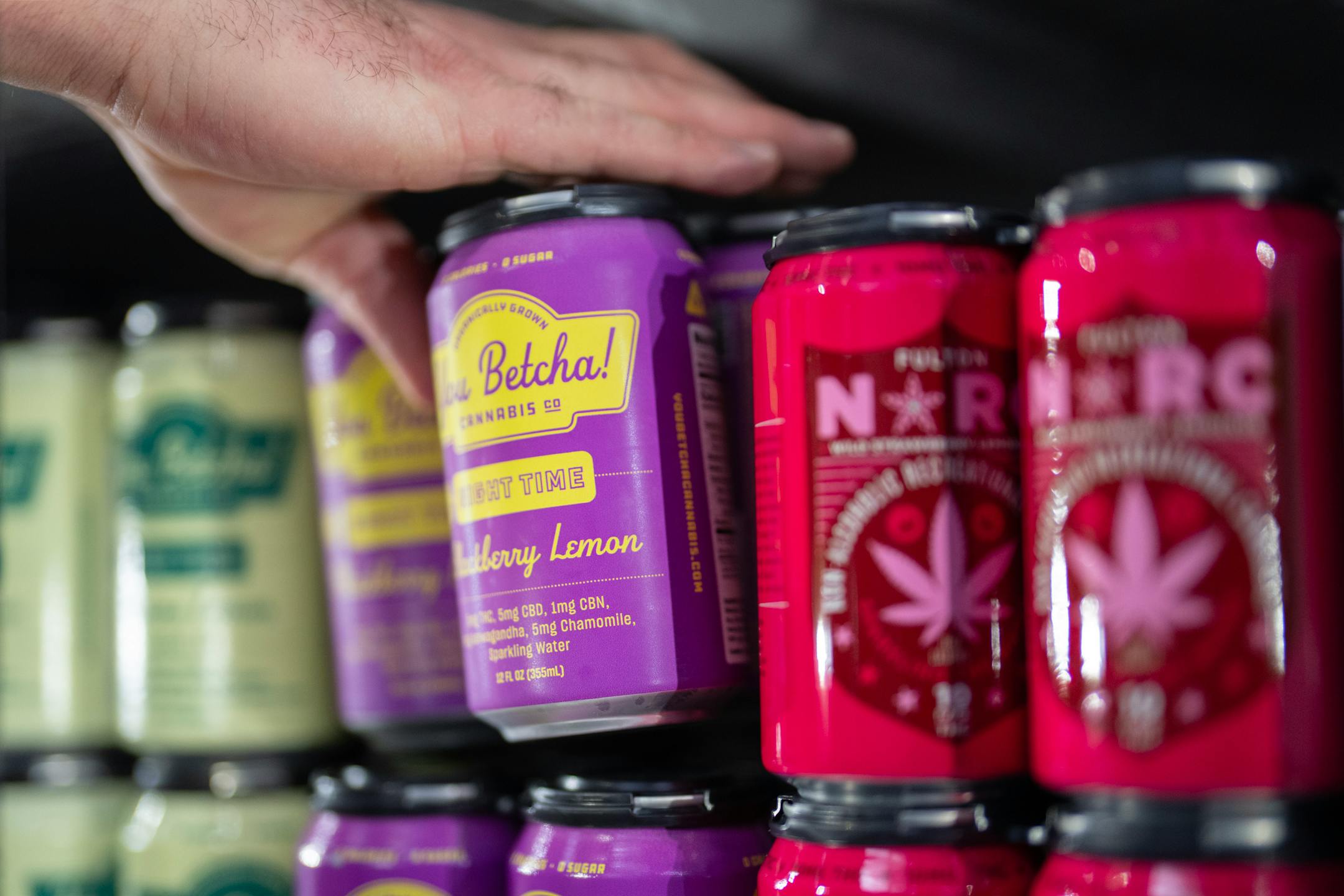
A sales representative restocks THC-infused beverages in a cooler at Elevated Beer Wine & Spirits in Minneapolis on Oct. 1. (Alex Kormann/The Minnesota Star Tribune)

Minnesota Attorney General Keith Ellison has joined a bipartisan coalition of 39 state and territory attorneys general calling on Congress to outlaw intoxicating hemp products at the federal level.

If enacted, the move could have major implications for Minnesota’s booming hemp-derived THC edible and beverage industry.

Ellison is one of four lead sponsors of a letter publicized Friday asking congressional leaders “to act decisively to clarify the Farm Bill’s definition of hemp to ensure intoxicating THC products are taken off the market.”

The letter specifically targets “synthetic” cannabinoids such as Delta-8 and Delta-10 THC, THC-O and THC-P, in addition to Delta-9 THC, the active ingredient in marijuana that produces a high.

Minnesota was a pioneer in creating a legal hemp-derived THC market before legalizing recreational marijuana. THC products have been legal and regulated in the state since the Legislature authorized the sale and possession of lower-potency THC edibles and beverages for adults 21 and older in 2022. Minnesota law already bans products containing several synthetic cannabinoids.

In a statement to the Minnesota Star Tribune, Ellison spokesman Brian Evans clarified the Attorney General’s Office is not seeking to shut down Minnesota’s existing legal and regulated hemp-derived THC market.

“The office’s primary concern was preventing out-of-state operations from evading Minnesota’s regulatory infrastructure, selling products that are dangerous and illegal in Minnesota, or selling products to minors,” the statement read. “The Office is seeking to prevent a wild-west of unregulated internet sales of cannabis across state lines.”

A federal ban would supersede state law, said Edina-based cannabis attorney Carol Moss

“If [Congress] said ‘no intoxicating hemp-derived cannabinoids,’ that’s all of the THC market,” Moss said. “This would kill our industry.”

Evans said Wednesday that Ellison’s office supports “an explicit [exception] for states with adequate regulatory schemes in place.”

While both hemp and marijuana come from the same plant, cannabis sativa, marijuana remains illegal at the federal level. The 2018 Farm Bill passed by Congress legalized hemp products containing less than 0.3% Delta-9 THC by weight.

That change inadvertently opened the door to a cornucopia of new products, from THC-infused gummies to chocolates to seltzers, that meet the Farm Bill’s definition of hemp.

Many of those products are now largely unregulated and widely available on store shelves in numerous states – including some, like Wisconsin, where marijuana is still illegal at the state level.

Leili Fatehi, a lobbyist and owner of hemp-derived THC edible and beverage maker Crested River Cannabis Co., said she is concerned the letter “explicitly calls on Congress to change the definition of hemp in a way that would criminalize products that are legal and safely regulated in Minnesota.”

“Changing the federal definition of hemp won’t stop unlicensed operators from shipping illegal products across state lines,” Fatehi said. “It will just wipe out the state-regulated hemp businesses that are following the law.”

In a social media post published Wednesday afternoon, Ellison said he signed the letter to urge Congress to close a “loophole” that accidentally legalized “a wide variety of THC-based, hemp-derived intoxicants” without putting in place “any quality-control standards to protect consumers.”

“I want this industry to continue to grow and flourish,” Ellison wrote. “I also want products sold in Minnesota to be safe and follow our laws. I believe that closing the loophole in the 2018 Farm Bill will accomplish both of these goals.”

Hemp-derived THC edibles and beverages are big business in Minnesota and nationwide. Earlier this month, Target announced it had started carrying THC drinks at a handful of its Minnesota stores.

A report from cannabis consulting and research firm Whitney Economics released in September found sales of hemp-derived THC beverages alone in the U.S. exceeded $1 billion in 2024. The report estimated the national market could triple in size by 2030.

A 10% tax on sales of cannabis and hemp products in Minnesota generated more than $11.6 million in revenue last year, when no recreational marijuana products were available from state-licensed cannabis businesses, according to a Minnesota House analysis.

The cannabis tax was increased to 15% earlier this year. Minnesota also collects sales tax on hemp and cannabis products.

Hemp-derived THC is produced in two ways: It can be extracted directly from low-THC industrial hemp and concentrated, which is costlier; or, more commonly, cannabidiol (CBD), a nonintoxicating cannabinoid that is often present in hemp in far greater quantities than THC, is extracted and then converted to Delta-9 THC or other compounds using chemical processes.

“It’s been seven years since that Farm Bill was passed, and we now have a robust hemp-derived THC market, both in Minnesota and throughout the country,” said Jason Tarasek, a Minnesota cannabis attorney. “It will be extremely difficult if not politically impossible to put the toothpaste back in the tube.”

Tarasek pointed to the recent fight over hemp-derived THC products in Texas, where the Legislature passed a ban, only to be vetoed by Republican Gov. Greg Abbott.

The state Office of Cannabis Management (OCM) said in a statement that it “continues to monitor the national conversations about cannabis and hemp products” but declined to speculate about what the changes requested in the letter could mean for Minnesota.

The OCM is in the process of licensing retailers, manufacturers and wholesalers of hemp-derived THC products. Starting Nov. 1, retailers of hemp-derived THC edibles and beverages will no longer be permitted to ship their products directly to consumers within the state. Minnesota law requires retailers to verify that customers are 21 or older and not currently intoxicated.

about the writer

about the writer

Matt DeLong

Audience editor

Matt DeLong is an editor on the Minnesota Star Tribune's audience team. He writes Nuggets, a free, weekly email newsletter about legal cannabis in Minnesota. He also oversees the Minnesota Poll. He can be reached on the encrypted messaging app Signal at mattdelong.01.

See Moreicon

More from Cannabis

See More
card image
Matt McClain/The Washington Post

The move would not legalize or decriminalize marijuana, but it would ease barriers to research and boost the bottom lines of legal businesses.

card image
card image