

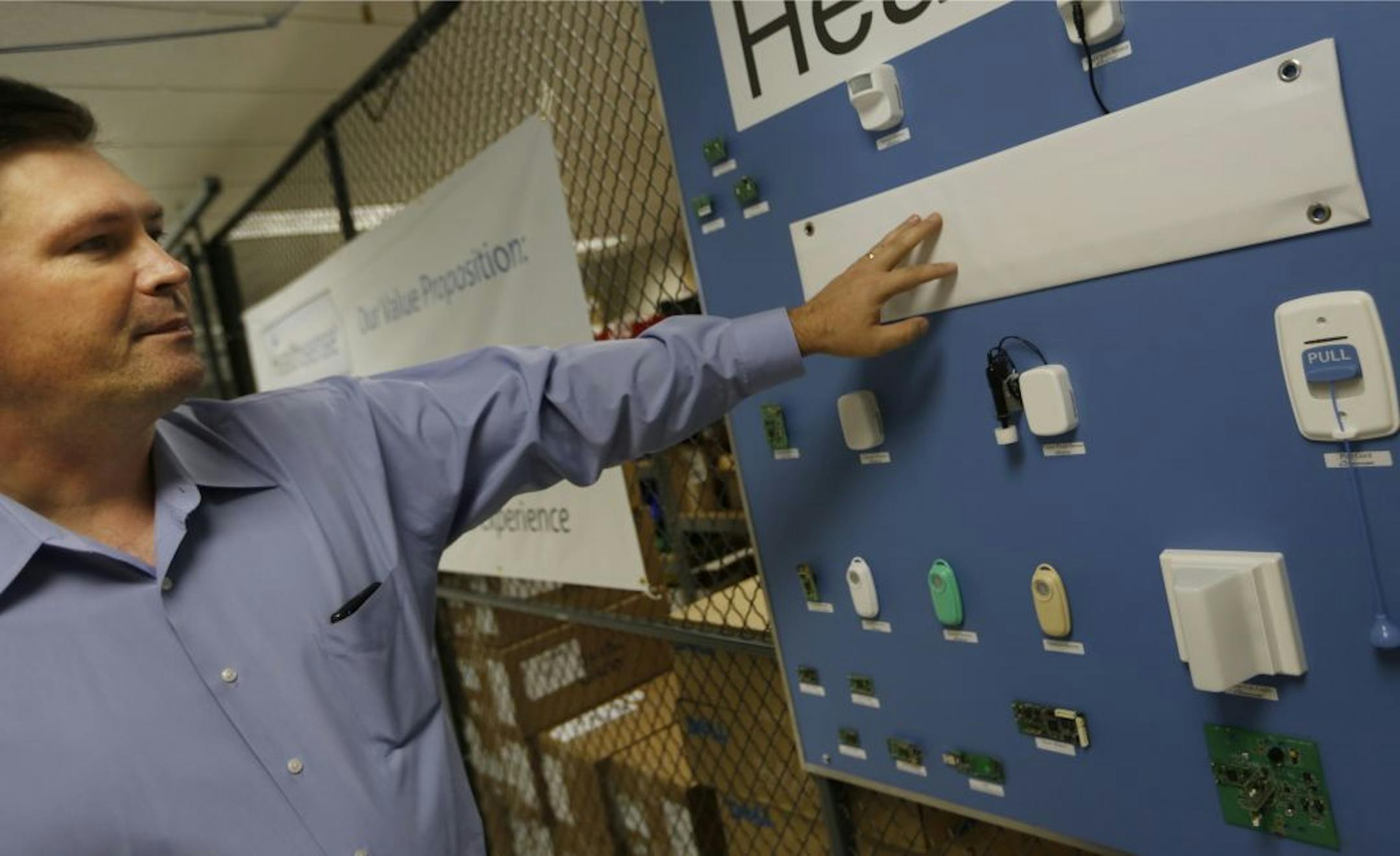
Since 2007, Healthsense, a Mendota Heights-based provider of remote monitoring for senior living communities and care centers, has built a growing business out of letting caregivers know when doors were opening, toilets were flushing and beds were being slept in.
Now, the company that monitors 15,000 people in 18 states is planning to provide more comprehensive, care-relevant detail to its customers. Drawing upon an additional $7 million in financing from new investors Merck Global Health Innovation Fund and Fallon Community Health Plan, Healthsense plans to use the data collected by its motion detectors and pressure sensors to better detect and analyze emerging health concerns before they become emergencies.
The idea, said Healthsense president and CEO Brian Bischoff, is to allow seniors to live as independently as possible, while still providing peace of mind to families and caregivers.
"It's all about using that technology, using that information, for better care," he said.
Toilet sensors show how often a resident is going to the bathroom and lots of times indicates a possible urinary tract infection. Motion sensors can let staff know if a resident is wandering during the night. Bed pressure sensors showing restless nights can be a harbinger of more serious health problems. A contact sensor on a cabinet door could show how often medication is being taken.
Healthsense can even help clients track seniors' vital signs over time.
But, instead of just feeding raw numbers about the number of flushes or times in and out of bed to the owners of senior living facilities and their care staff, Healthsense will provide analysis based on a person's care history.
The plan is for raw data, analyzed by Healthsense's own medical staff, to be transformed into detailed and timely "health notes" that direct staff can use to ensure proper care.



