He spent 100 hours in front of a painting at the Minneapolis Institute of Arts

A master bread baker is sharpening his focus with a singular painting at the MIA.

NextAvenue
October 3, 2025 at 11:00AM
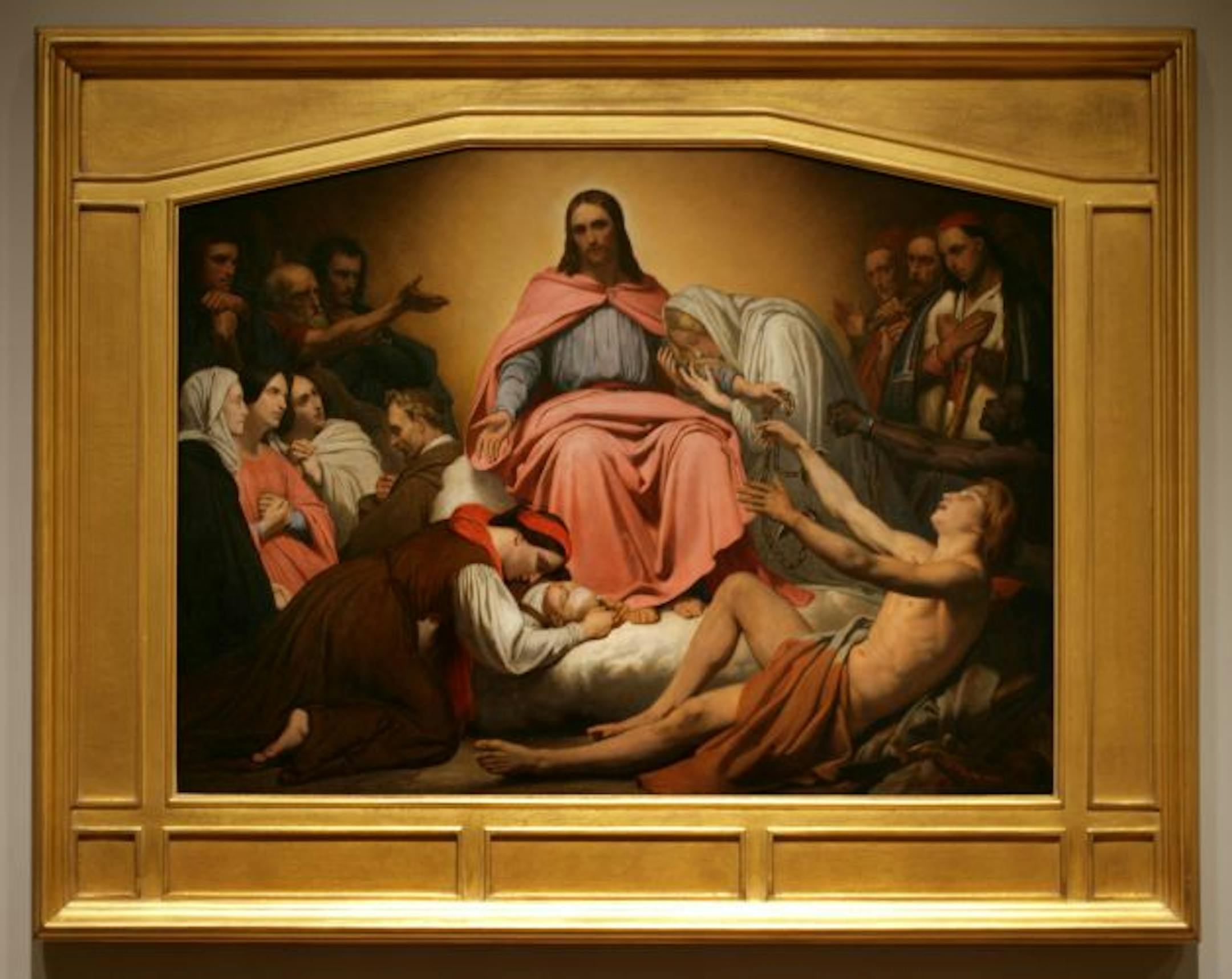
"Christus Consolator' 1851 by Dutch artist Ary Sheffer 1795-1858. Given to the Minneapolis Institute of Arts in memory of Rev. D.J Nordling by Gethsemane Luthern Church in Dassel, MN. "Christus Consolator," by Dutch-born, French-trained artist Ary Scheffer. Pix was recently discovered in a Dassel, Mn Lutheran church which is giving it to the MIA.
"Christus Consolator" by Dutch artist Ary Sheffer was found in a Dassel, Minn., Lutheran church and donated to the Minneapolis Institute of Art. (Joel Koyama/The Minnesota Star Tribune)

For many people, a visit to an art museum is included as part of a vacation agenda. In New York City? You wouldn’t think of missing the Metropolitan Museum of Art. Paris? You will pack your patience to brave the lines at the Louvre.

Others may be very familiar with the art museums in their towns and cities, although it might be unusual for them to schedule weekly visits.

Danny Klecko, 62, will see you one weekly visit and raise you another. Since last December, Klecko, a master bread baker, with close to 50 years in front of the ovens, and an award-winning poet, frequently featured in the New York Times, has been visiting the Minneapolis Institute of Art (Mia) every Sunday morning and every Thursday night. Is he browsing a different gallery each time? Far from it.

Klecko heads directly to Gallery 357, sets his backpack down on a nearby bench (more on that bench later) and spends one hour contemplating one painting: “Christus Consolator” (1851) by Dutch-French painter Ary Scheffer.

During a recent interview at one of his Thursday night sessions, naturally the first question was: why this painting and why this project?

“I decided if I was going to look at a painting for 100 hours, I was going to look at something that I understood and something that I would be able to think about, journal about, talk about,” said Klecko, who lives in Minneapolis. “This painting not only has Jesus, but he’s surrounded by 15 other people, which gives me a lot of different focal points.”

Baker/poet Danny "Klecko" McGleno, whose latest book highlights the Hispanic workers who made up most of the crew at Saint Agnes Bakery. (Brian Peters/Minneapolis Star Tribune/TNS) ORG XMIT: 1322922
Baker/poet Danny Klecko, shown in 2019 at St. Agnes Bakery in St. Paul. (Brian Peterson/The Minnesota Star Tribune)

A hidden gem

Adding that he “enjoys religion,” Klecko acknowledged a painting like this one might not appeal to everyone. “I started this project with the understanding that I would eventually turn this experience into a book, so I want to make this something that the audience will understand and appreciate. But if I don’t enjoy it, what’s the point? I like to be with Jesus, I like to be with Jesus and his friends, and I like to be with Jesus and his enemies.”

“Christus Consolator,” which was inspired by Luke 4:18, has an interesting backstory. This version of the oil painting (there are others) was originally displayed in Boston in 1852 and ultimately made its way, via a church pastor, to Gethsemane Lutheran Church in Dassel, Minn. Upon its surprising discovery, church officials contacted staff members at Mia and in 2008, donated the artwork to the museum.

“When I found out this painting was rescued from a janitorial closet of a church in a small town in western Minnesota, I realized that’s the kind of energy I wanted to hang around with,” Klecko said.

That’s how it all started — Klecko simply spent time “hanging around” the painting.

‘Slow viewing’

“When I first started this project, I was new to Minneapolis, I was new to this painting — I’d never seen it before. I started off from a point of ignorance. I slowly spent time staring at it, gathering my thoughts, taking mental notes,” he explained.

He continued, “As time went on, and I became more familiar with the piece, I stopped being afraid of the things that I missed. I thought I would understand this painting after several hours, but as I found out after 30, 40, 50 hours, there were still plenty of things that I missed. It’s a comfortable place for me to be now, knowing that I can come here and there will always be something new.”

Susan Magsamen, co-author with Ivy Ross of "Your Brain on Art: How the Arts Transform Us" and the founder and director of the International Arts + Mind Lab at the Center for Applied Neuroaesthetics at Johns Hopkins University School of Medicine, said the concept of “slow viewing” and observation, and its value, is gaining attention.

“A school-based curriculum was developed at MoMA [Museum of Modern Art] called the Visual Thinking Strategies method,” said Magsamen. “Visitors to an art museum spend on average three seconds looking at a piece of art. This method was developed as a way to help people be better viewers of art.”

Rather than imposing judgment about what someone may or may not know about the art, Magsamsen said the premise is simple. “It’s about asking people ‘what do you see?’ We all see the same things differently and every observation is valid,” she said. “This also promotes the importance of being reflective.”

In Klecko’s case, the desire to reflect on art for 100 hours actually started with 10 minutes. “The 10-Minute Challenge from the New York Times was instrumental,” he said.

This regular feature, posted on the first Monday of each month, invites people to stare at one painting without interruption for 10 minutes. Artists have ranged from Hopper to Van Gogh to Bosch. Reading the comments after the 10 minutes is over is enlightening — some people claim they could have stayed with a particular painting for an hour or more; others admit that 1 minute was enough for them.

“I’ve always enjoyed art and enjoyed looking at art, but it was interesting how difficult it was for me at first,” said Klecko. “I can hit the clock and sit there for 10 minutes, but there’s a difference between doing that and focusing on it. Month after month, my focus started getting stronger.”

An art influencer

As Klecko started spending more time at the museum, the Mia guards began to notice him taking notes. After a story about his project ran in the St. Paul Pioneer Press, Klecko learned that people were coming in and asking where to find Gallery 357 and the painting. A guard recently called him an “influencer” saying that patrons have come in flashing images of the “Exhausting Jesus at the Minneapolis Institute of Art” Facebook page that Klecko created.

“Exhausting Jesus” is a riff on the 1975 book by Georges Perec called “An Attempt at Exhausting a Place in Paris,” about his time spent observing St. Sulpice Square in Paris. Klecko is a fan.

“I kind of have an ‘art entourage’ now,” he says. “I can come in to see the painting and there can be eight or nine people in front of it. It’s kind of become a group project. More and more people are hearing about it.”

He’s also spoken to some art experts about Scheffer’s work, most notably Galina Olmsted, associate curator of European art at Mia, who invited Klecko, right around hour 50, to visit on a Monday when the museum was closed. They talked at length about the history of the painting, and he shared his observations.

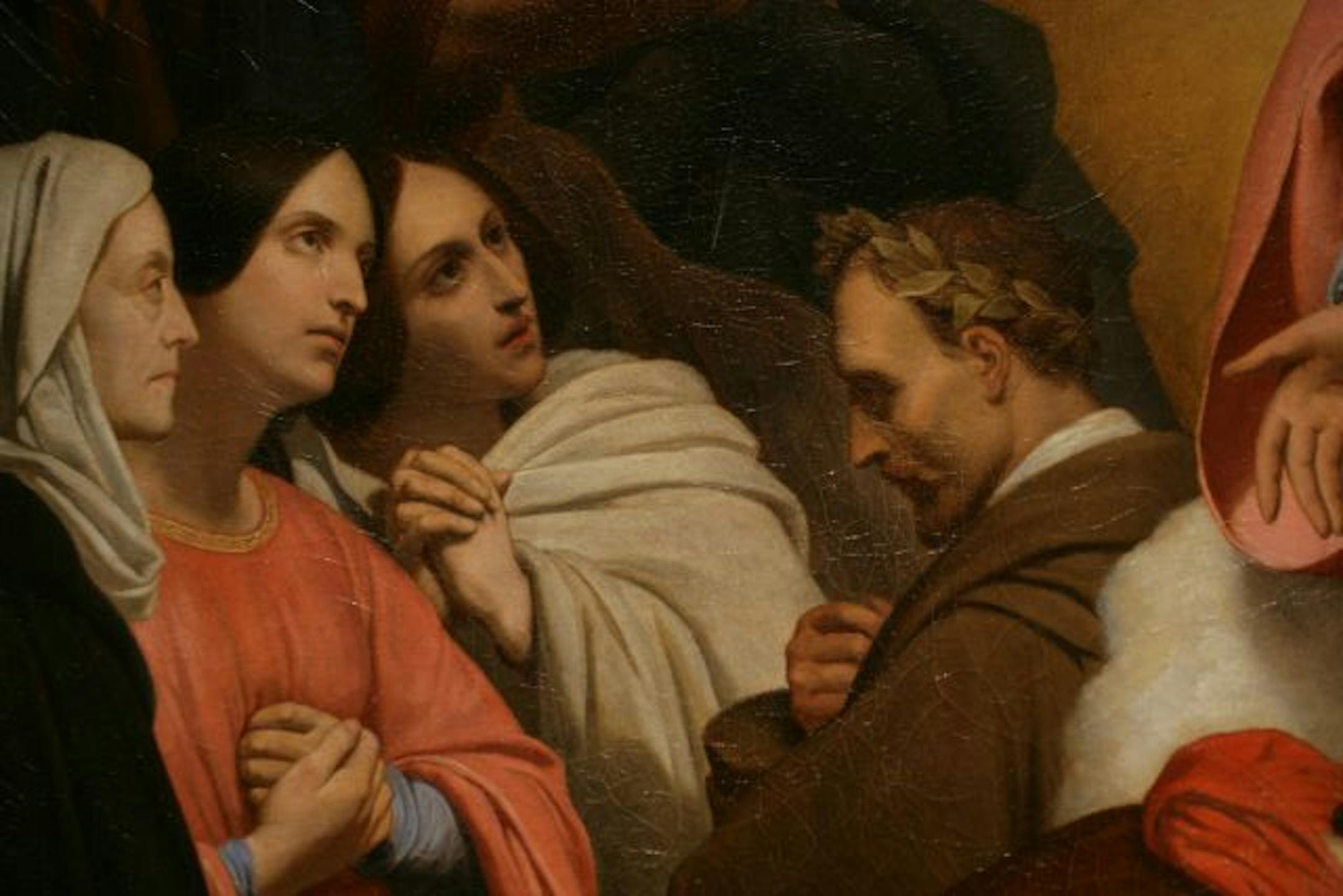
Detail of "Christus Consolator' 1851 by Dutch artist Ary Sheffer 1795-1858. Given to the Minneapolis Institute of Arts in memory of Rev. D.J Nordling by Gethsemane Luthern Church in Dassel, MN. "Christus Consolator," by Dutch-born, French-trained artist Ary Scheffer. Pix was recently discovered in a Dassel, Mn Lutheran church which is giving it to the MIA.
Detail of "Christus Consolator." (Joel Koyama/The Minnesota Star Tribune)

Art is for everyone

“She was very intrigued by the project and the first thing she said to me was ‘we need to get you a bench,’” Klecko said. Lo and behold, a few weeks later, a bench appeared. “How wonderful is that?” he said. “The people at Mia have been nothing but kind and encouraging to me.”

In addition to his observation of the painting, Klecko is also observing his fellow museum-goers. “I’m a confident person, but what I’m seeing is people walk by who seem intimidated by art, who walk past art and just don’t seem comfortable with it.”

Magsamen agreed, saying the idea that “art is a luxury” and not for everyone does affect how people perceive art and art museums.

“It’s not a luxury. Anyone can dance in their living room or sing in their shower. Art is for everyone,” she said. “Society has held up this high standard for ‘beholders’ of art — there’s a disassociation for some people. They feel like they are judged for not ‘understanding’ art. We need to hold space for all points of view around art.”

As Magsamen noted, it’s not just art museums where people can have easy access to art. “Libraries and other social spaces offer the visual arts, poetry, music — all free,” she said.

Seeking peace and routine

In a world that isn’t the most peaceful place, Klecko said he finds peace and tranquility in art.

“I’m a man of a certain age, 62 years old, and over the years, I’ve put my trust in religion, I’ve put my trust in politics, and I don’t trust either of those camps anymore. In my foxhole, I’ll put artists over clergy and politicians any day,” he said. “Art is probably the only thing that can save the world. It gives us hope. In art, there is no right and there is no wrong — it’s your own personal connection.”

What happens when the clock runs out on “Exhausting Jesus”?

“I’m nervous to have the project end. This has become my way of life, my routine for a year. This is where I like to be and this is how I like to spend my time,” Klecko said. “There’s pressure on me. It’s now become a project others have associated with. On social media, people are wondering if I’m going to tell them what I’ve learned.”

The baker also added, “I’d like to do things in this field — either in the Twin Cities or New York. Art always smells better in New York City.”

“I have no way of knowing this, but I’m at a point in this project where I’m willing to bet that I’ve spent more time staring at this painting than the guy who painted it.”

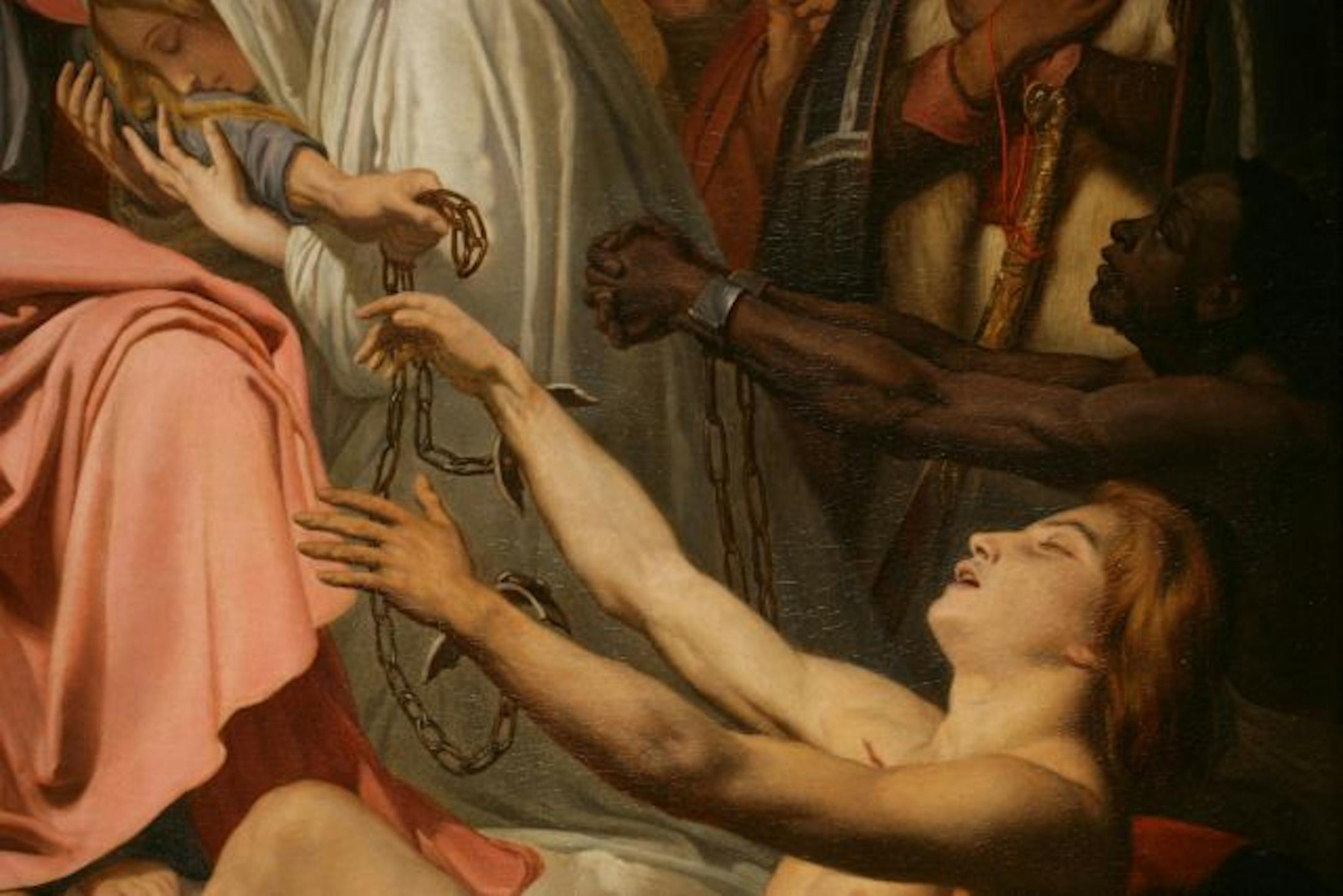
Detail of "Christus Consolator' 1851 by Dutch artist Ary Sheffer 1795-1858. Given to the Minneapolis Institute of Arts in memory of Rev. D.J Nordling by Gethsemane Luthern Church in Dassel, MN. "Christus Consolator," by Dutch-born, French-trained artist Ary Scheffer. Pix was recently discovered in a Dassel, Mn Lutheran church which is giving it to the MIA.
Detail of "Christus Consolator." (Joel Koyama/The Minnesota Star Tribune)
about the writer

about the writer

Julie Pfitzinger

More from The Good Life

See More
FILE - This Wednesday, May 30, 2007, file photo shows a cable box on top of a television in Philadelphia. Cable boxes may not be very exciting, but theyíre emerging as a new battleground over the future of TV. Technology companies and the government want to open up the boxes to new services and programming. Cable companies want to keep control in their own hands. The outcome could affect what you pay for television and whether youíll still need to clutter your entertainment center with
Matt Rourke/The Associated Press

Canceling a late loved one’s cable account led to an outrageous interaction with an AI assistant.