

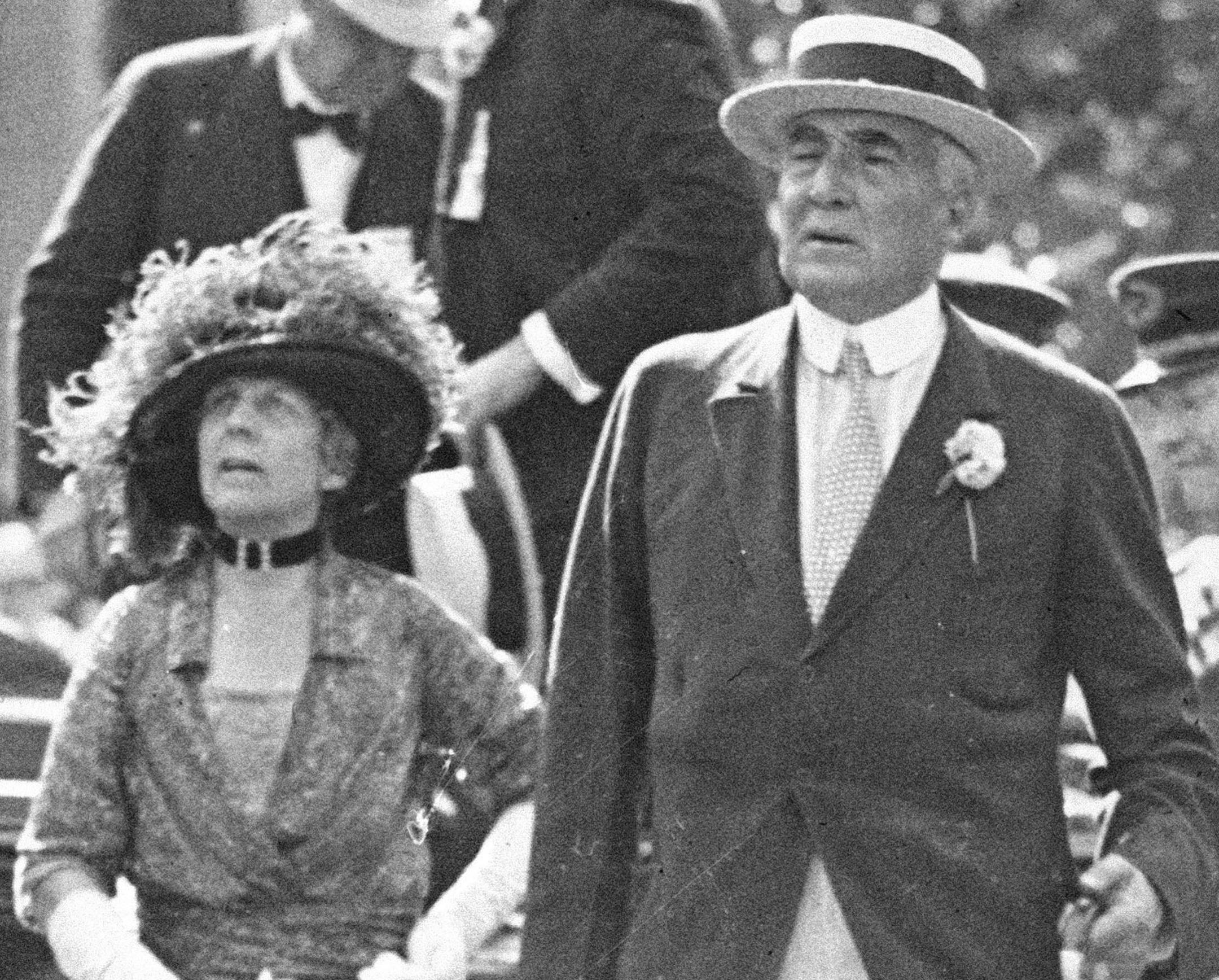
Every so often, we get a poignant reminder of what has been lost now that letter writing has been replaced by texting and emoticons — or by nothing at all, if you're a politician afraid to commit anything to paper for fear it will show up on page one or be read aloud by a committee chairman on a tear.
History is the poorer for it. Nevermore will we have a Winston Churchill or Franklin D. Roosevelt, Teddy or Ike free to memorialize in real time what is going on in their heads and hearts.
This makes the trove of love letters written by Warren Harding, to be unsealed at the Library of Congress and published online later this month, all the more appealing.
"I love you thus, and more," Harding wrote, enumerating the countless ways in a note to his mistress on Christmas Eve 1910. It so overflowed with passion that he turned at the bottom of the page and wrote up the side: "I love you more than all the world, and have no hope of reward on earth or hereafter so precious as that in your dear arms, in your thrilling lips, in your matchless breasts, in your incomparable embrace."
The world little noted nor long remembered Harding's achievements. These days, his presidency is known to schoolchildren, if at all, only in connection with the Teapot Dome scandal.
But for a few weeks this summer, we will note that Harding was a prolific and impassioned man with the time and florid vocabulary to put his feelings into words. The library held about 1,000 pages of these missives for 50 years after the family bequeathed them in 1964. They were written between 1910 and 1920, mostly while Harding served — with little distinction — as a Republican senator from Ohio. His paramour, as the Library of Congress quaintly describes her, was Carrie Fulton Phillips. The story has some added spice because she was the wife of a friend — adding a layer of betrayal — and a suspected German spy during World War I — adding a layer of treason.
Both Harding and Phillips, according to the presidential biographer James Robenalt, who got access to microfilmed copies of some letters while researching his book, were in loveless marriages. In 1913, Harding describes his to Phillips, relying on a timeworn crutch of the maritally unfaithful: "There isn't one iota of affection in my home relationship. ... It is merely existence, necessary for appearance's sake."
The details of the affair are unlikely to lead to a reassessment of Harding's character or his political career. He already had the distinction of being the subject of what is widely regarded as the first kiss-and-tell book for his alleged liaison with Nan Britton, who claimed that they had their own sort of congress in a coat closet in the White House and that the president fathered her illegitimate daughter.


