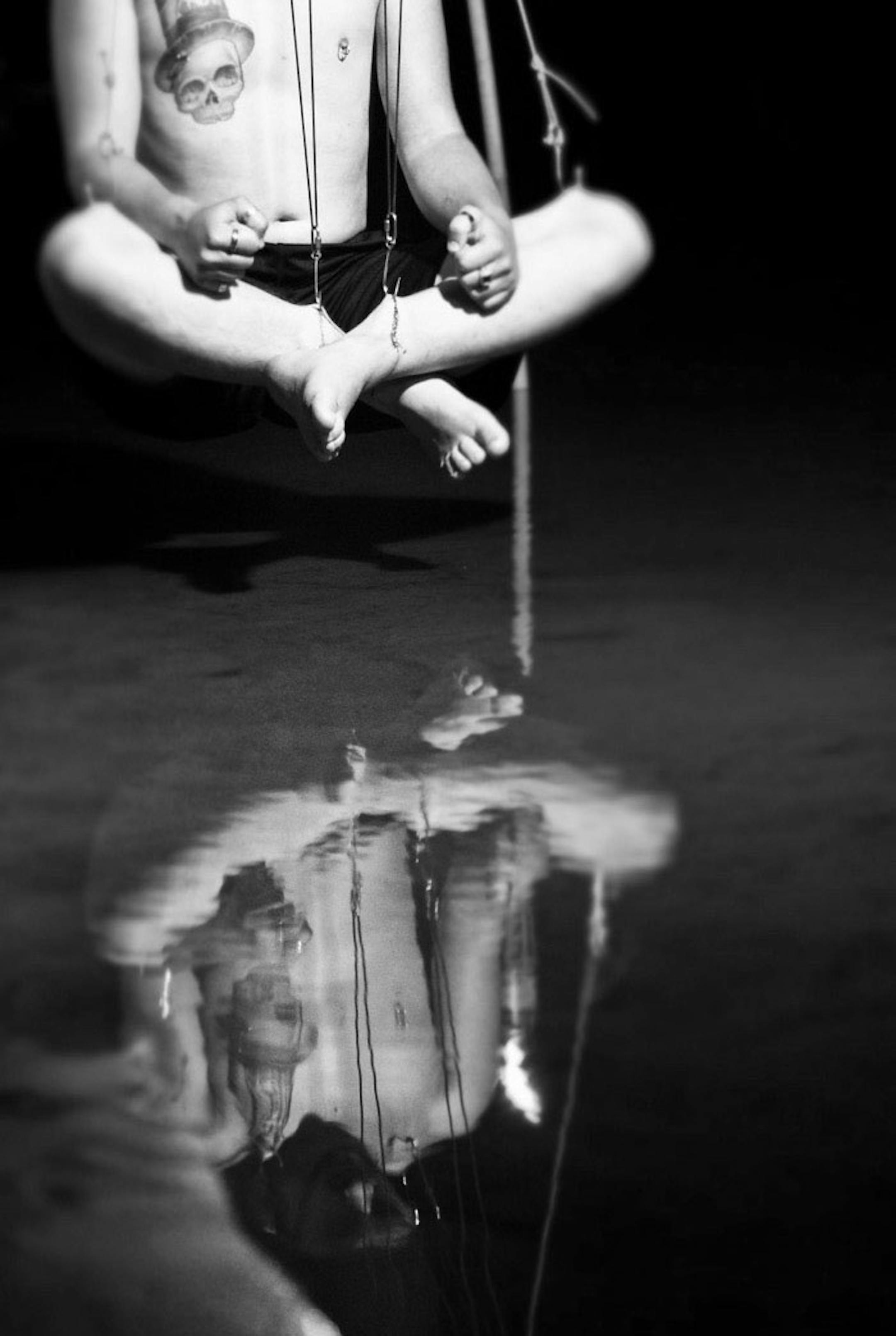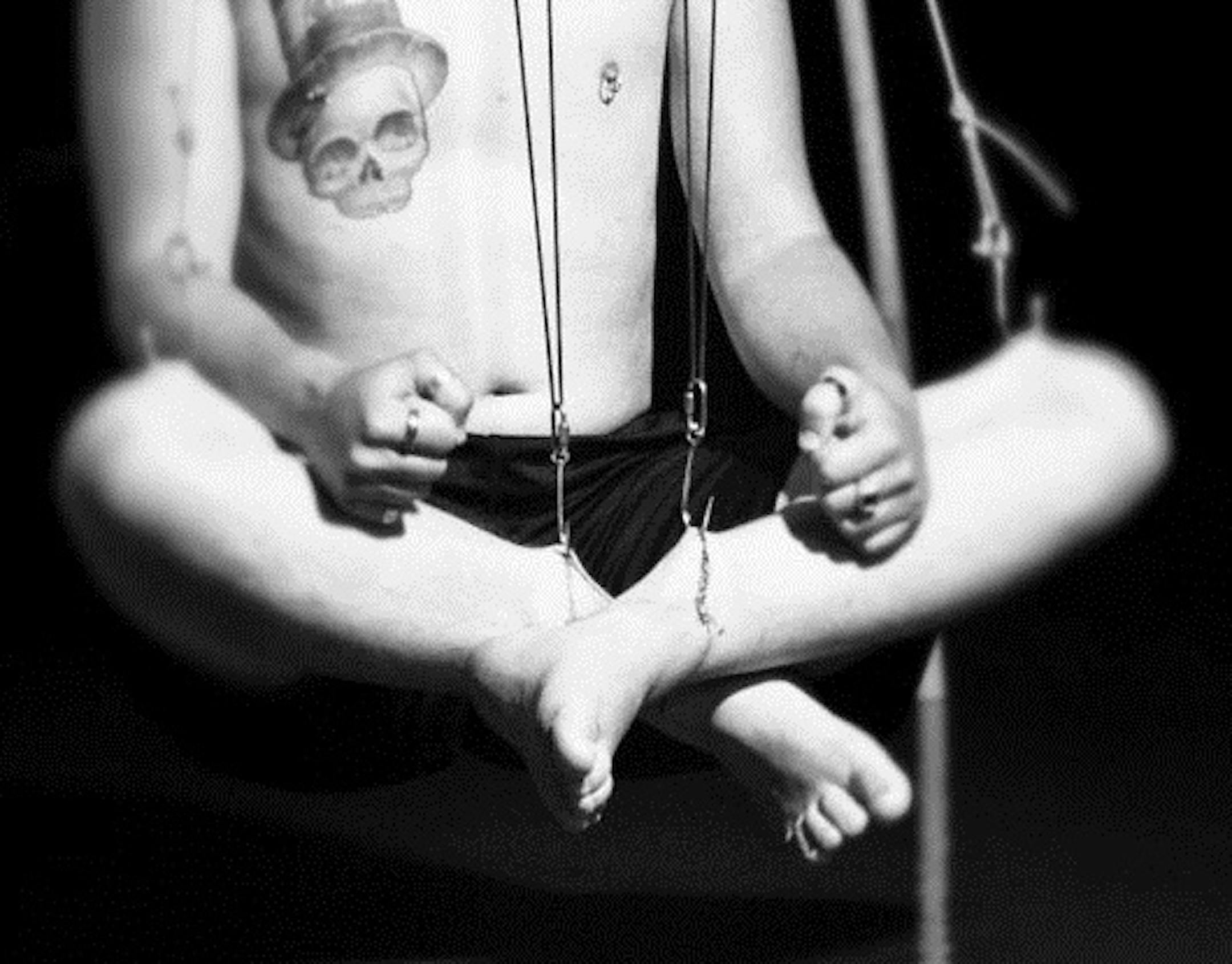
He tried bungee jumping, scuba diving and riding the biggest, fastest roller coasters in the country. Thrill-seeker Adam Phillips was looking for his next adrenaline fix. After sky diving, "I was kind of at wits' end as far as what I could do," he said.
Then he recalled an old episode of "Ripley's Believe It or Not" on suspension — the practice of hanging in the air from hooks that have been pierced through the skin. He wanted to try it.
Like tattoos and piercing, suspension is rooted in religious rituals or cultural traditions that have slowly moved into the secular world. While it's by no means as common in the United States as the tattoo parlor, suspension is practiced by a small, passionate group who trade momentary pain for a euphoric rush of endorphins that comes from stretching the body to its limits.
Some do it for spiritual reasons, tapping into the practice's history among Plains Indians or Hindus. Some to cast off anxiety, stress, even chronic back pain. Some go for the feeling of bliss produced by the fight-or-flight hormone adrenaline, which is triggered by the physical trauma to the body. And some do it simply for the thrill of accomplishing something that appears too painful, too impossible.
Although suspension makes the news every now and then, as it did here recently when a deadly domestic violence case involved two suspension hobbyists, it remains a relatively underground practice popular among people who are comfortable with body modification — and the stigma that comes with it.
Most states have suspension clubs; in Minnesota, fans number in the low hundreds. Participants come together in small groups at invite-only events in piercing parlors, barns, even over the Mississippi River.
Phillips had to ask around to find Verno (full name Vernon Musselman), a piercing artist in St. Paul who hosts suspension events. Phillips signed up for the first event he could. In a Minneapolis record store warehouse, he watched about 15 people go up before it was his turn.
Two piercers stuck thick-gauge hooks into the skin about 4 inches below the tops of Phillips' shoulders — three on each side, pierced two at a time. The pricks weren't too painful, he recalled, like getting blood drawn. But the hooks were much thicker than a doctor's needle; in fact, they were about three times the girth of standard earrings.