

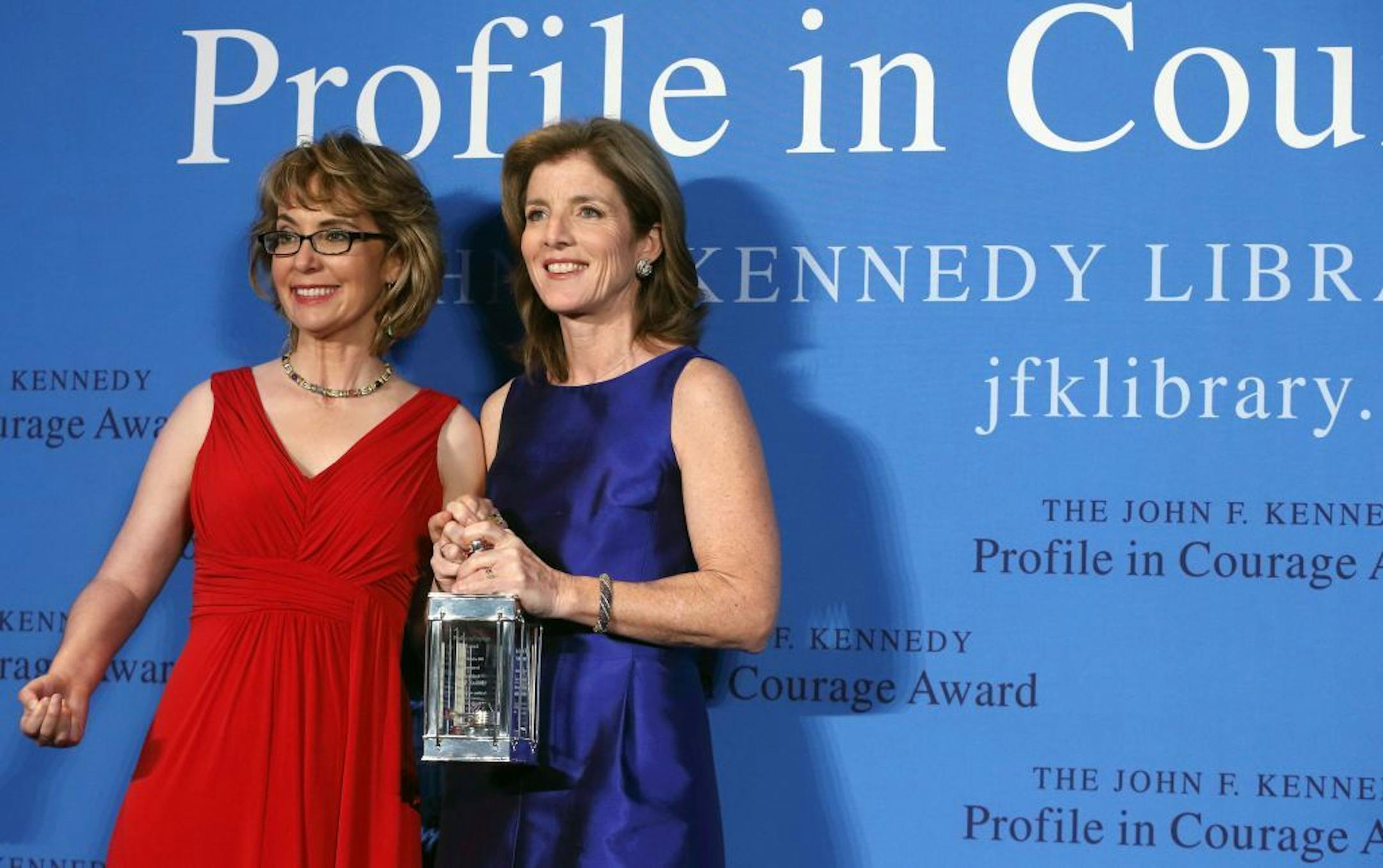
Gabrielle Giffords received a Profile in Courage award this weekend at the John F. Kennedy Library in Boston. The award is fitting, though she is displaying a different kind of courage than was celebrated by the late president in his 1957 best-selling book.
In 2011, the Arizona congresswoman was gravely injured when she was shot in the head by a deranged gunman at a Tucson political event, where six people were killed.
Giffords has undergone an excruciating rehabilitation and had to resign her House seat. She is partially blind, largely paralyzed on her right side and struggles to speak.
Yet after the mass shooting at a movie theater in Aurora, Colo., last summer, she and her husband, Mark Kelly, began thinking about solutions to the epidemic of gun violence in America. The killing of children at a Connecticut school in December was the final straw.
"If we could be effective in trying to come up with a solution, it was our obligation to do so," Kelly says.
In "Profiles in Courage," Kennedy wrote about lawmakers who risked their careers by taking principled stands. Giffords, who has left Congress, doesn't meet that description. Mustering the energy to overcome her condition and become actively engaged in an issue that generates controversy and emotion, however, is a challenge few would undertake.
"It takes real courage to overcome a disability that is so personal," says Guy McKhann, a leading neurologist at Johns Hopkins University.
Although he hasn't treated her, he says it was clear that, distinct from cognitive abilities, retrieving the right words is difficult for Giffords. "What she wants to say sometimes doesn't come out," McKhann says. (A personal disclaimer: I am chairman of the Profile in Courage Committee that honored her Sunday and have a son with a brain injury.)


