

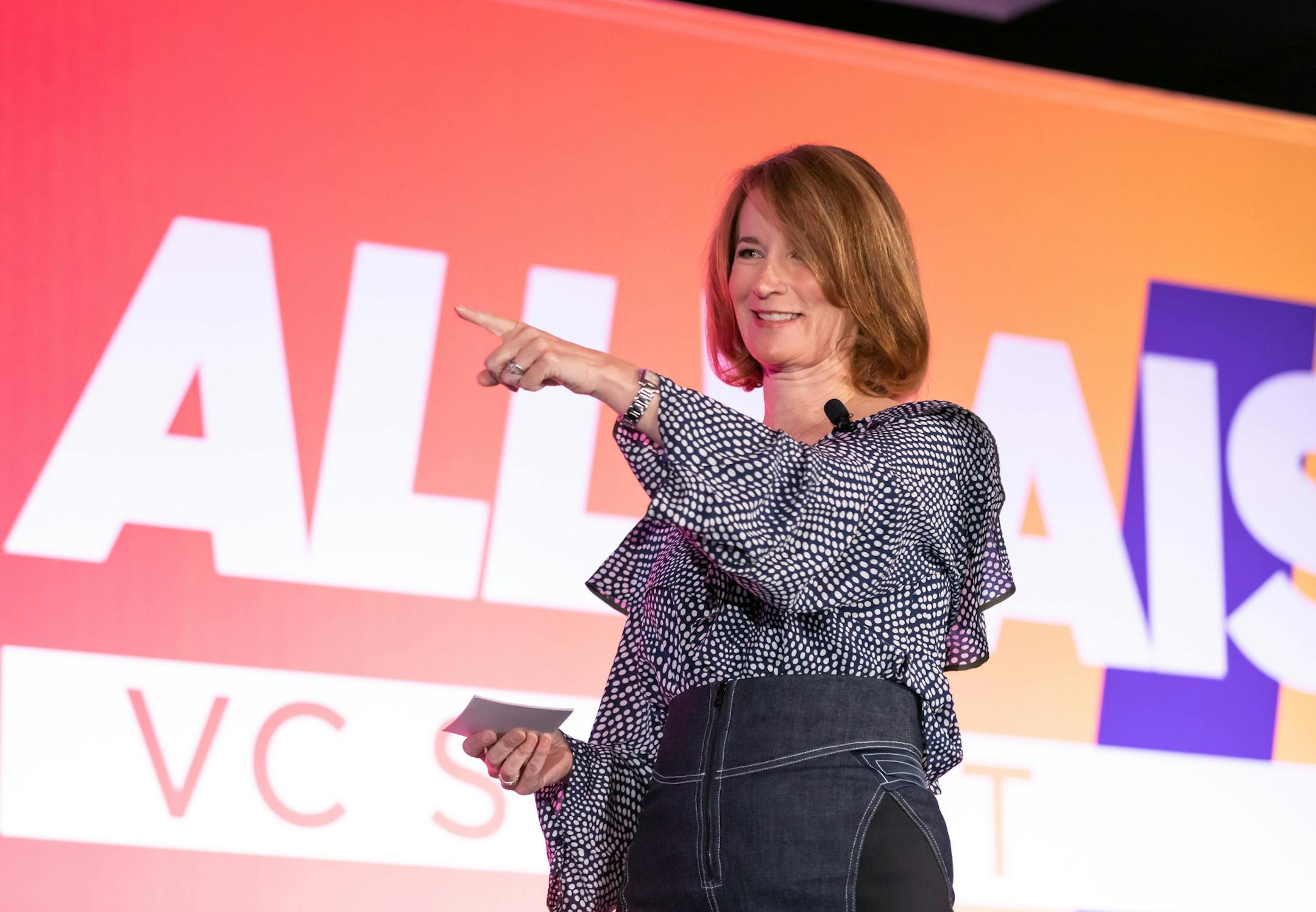
SAN FRANCISCO – Two years ago, fed up with stories of harassment and discrimination in Silicon Valley, a group of female venture capitalists formed a nonprofit called All Raise to focus on women's equality.
Last week, the group raised $11 million toward a target of $15 million from backers including Pivotal Ventures, the investment firm of Melinda Gates; the Reid Hoffman Foundation; and GGV Capital. The money will fund expansion plans for the next three years, said Pam Kostka, All Raise's chief executive. It previously raised $4 million in 2018.
"We're moving as aggressively as we can to change the ecosystem," Kostka said.
In two years, All Raise built a network of 20,000 people across four U.S. tech hubs. The industry began adding more female investors, who now make up 13% of the venture industry, compared with 9% before. All Raise said it aimed to help push that number to 18% by 2028.
Yet many challenges remain. Roughly two-thirds of venture-capital firms still have no female partners. Venture-capital funding going to women entrepreneurs stagnated over the last year at around 12%. Women own just 11% of founder and employee equity in startups, according to a study conducted by Carta, a financial-technology startup.
And by some measures, harassment has worsened, according to a recent survey from Women Who Tech, a nonprofit. Forty-four percent of female founders said they had been harassed. Two-thirds said they had been propositioned for sex, up 9% from 2017.
More broadly, bigger tech companies, which began publishing diversity statistics on their workforces six years ago and have poured millions of dollars into diversity efforts, are nowhere close to gender parity and have shown even less progress on hiring more Black and Latino workers. This year, the World Economic Forum concluded that it would take women 257 years to close the employment gender gap across all industries, compared with its previous estimate of 202 years.
"We are not going to take hundreds of years of stereotyping and systemic oppression and turn that around overnight," Kostka said. "But are we making more tangible progress? Yes."



