Lino Lakes’ Greta Myers hopes to be on fast track to Olympic speedskating podium

The 21-year-old is young both by Olympic speedskating standards and in her involvement in the sport.

The Minnesota Star Tribune
February 7, 2026 at 2:28PM
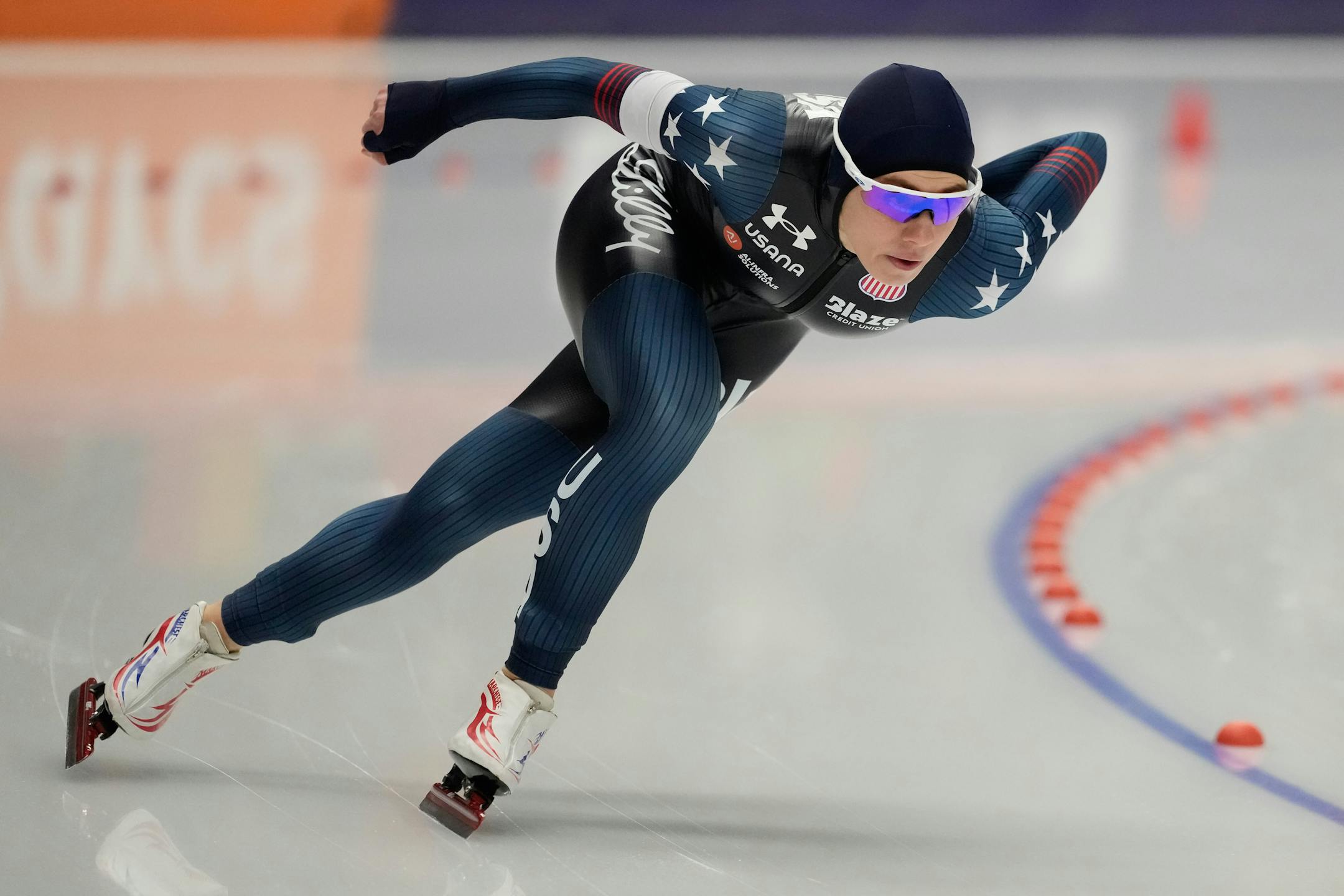
Lino Lakes native Greta Myers competes for Team USA during the World Cup speedskating event in Germany in January. Myers hopes to medal at the 2026 Olympics. (Matthias Schrader/The Associated Press)

Greta Myers crouched behind her laptop in a corner of the classroom, hoping to go unnoticed by her teacher. She just wanted to watch Jessie Diggins race in the Olympics.

Myers has loved the Olympics for as long as she can remember, Summer and Winter Games, all events. She dreamed of being on the medal podium herself someday.

Diggins captured her attention that day in February 2018. A middle-schooler at Hand In Hand Christian Montessori in Roseville, Myers slipped away to a quiet spot to watch Diggins race in the cross-country skiing team sprint final at the Pyeongchang Winter Games.

Myers tried to contain her emotions — and cheers — to avoid detection, but then Diggins made that final turn and “Here Comes Diggins!”

Young Greta got busted.

“I remember cheering,” she said. “That was so cool. I wanted to be like her. I wanted to be her someday.”

That moment is here.

Myers, a 21-year-old from Lino Lakes, will represent Team USA in women’s speedskating at the Milan Cortina Games. She is scheduled to compete in four events — the 1,500 meters (Feb. 20), the 3,000 meters (Feb. 7), mass start (Feb. 21) and team pursuit (Feb. 14 and 17) — and she is also a reserve in the 5,000 meters. If a country or individual drops out of that race, she will be added to the field.

ADVERTISEMENT

Myers is young both by Olympic speedskating standards and in her involvement in the sport. Her former coach Bob Corby said women speedskaters usually reach peak performance from age 23 to 27. Corby believes Myers is operating on an accelerated timeline because of her natural athleticism.

“She is really strong,” he said. “She’s got a big engine.”

That engine began revving around the time she took her first steps. Myers’ dad Joe laced up her skates and sent her onto the ice.

“It’s a good Minnesota thing to do,” Joe said.

Greta Myers was a gifted skater from the beginning. She was faster than other kids, and fearless. Her dad gave her a nickel for every lap she completed around the rink.

“That was a good motivator,” Myers said. “As a kid, when you can put those in your piggy bank, that’s so exciting.”

She fell in love with hockey after joining a team. She became a rink rat, along with her three siblings. Myers’ specialty was forechecking.

“I would always go after the puck,” she said. “I realize now that I was probably in the wrong sport because sometimes I would get a little lost trying to chase after the puck.”

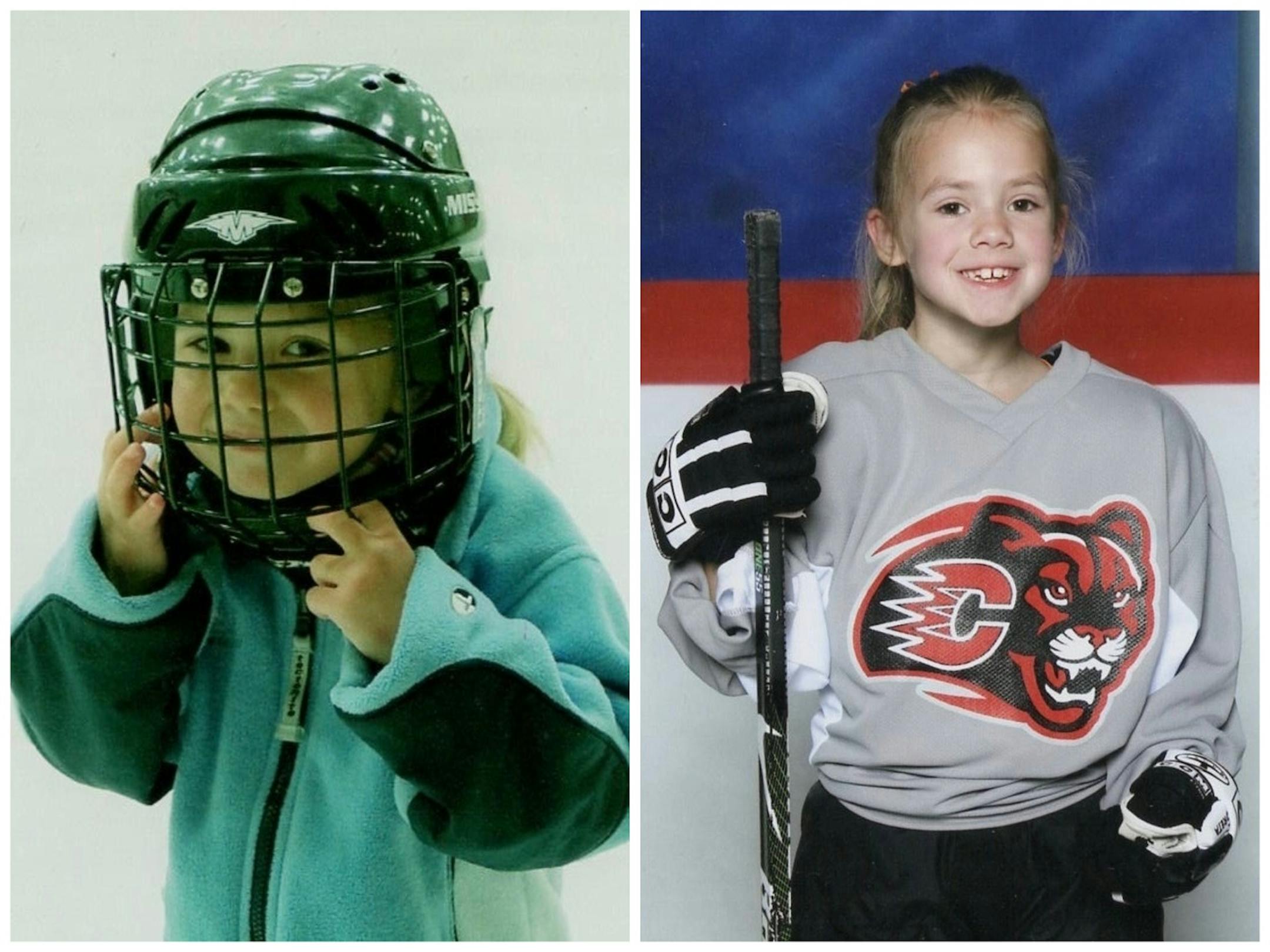
Speedskater Greta Myers of Lino Lakes was put on ice skates at young age and loved playing hockey as a child. (Greta Myers)

Myers played one season of varsity hockey for Roseville as a freshman, though she had already received her introduction to speedskating a few years earlier.

Her hockey team practiced at the Roseville Skating Center. A speedskating coach originally from Russia would observe practice. He spotted Myers one day and asked to meet her.

The coach told Myers, then 12 years old, that she should get started in speedskating because “your country needs you.”

“I was like, ‘Whoa,’” she said. “I was shocked because that’s not something you normally hear. I said I can’t say no to that.”

The coach gave her a pair of old speed skates. Myers immediately began trying to chase down skaters who were there practicing. She was hooked. The thing that appealed to her most?

“Just going fast,” she said.

Myers found that speedskating improved her hockey skills, so she did both sports until her training schedule and success in speedskating nudged her toward a full-time commitment.

She made her World Junior Championships debut as a high school freshman. One day she told her dad on the drive home from training that she wanted to stand on an Olympic podium. Joe told her if she was truly dedicated to that goal, she would need to make sacrifices in her personal life.

“Nothing else can interfere with what you want to do,” he said. “That’s the way it’s got to be. She understood the parameters.”

Greta Myers pushed all her chips in.

She moved to Milwaukee as a junior in high school to train under Corby, the renowned coach of speedskating star Jordan Stolz, who is vying to win multiple medals in these Olympics.

Myers lived with a host family, took online classes and logged countless hours fixing flaws in her skating technique.

“Bad habits,” Corby said. “That took a while to get rid of them.”

Myers’ strength and endurance made Corby see she had the potential to be a world-class skater.

“We just don’t have a whole lot of women who do really well in longer distances,” he said. “She was excelling at that right away. I didn’t know she could make the Olympic team that quickly. She’s got a pretty good rise from four years ago.”

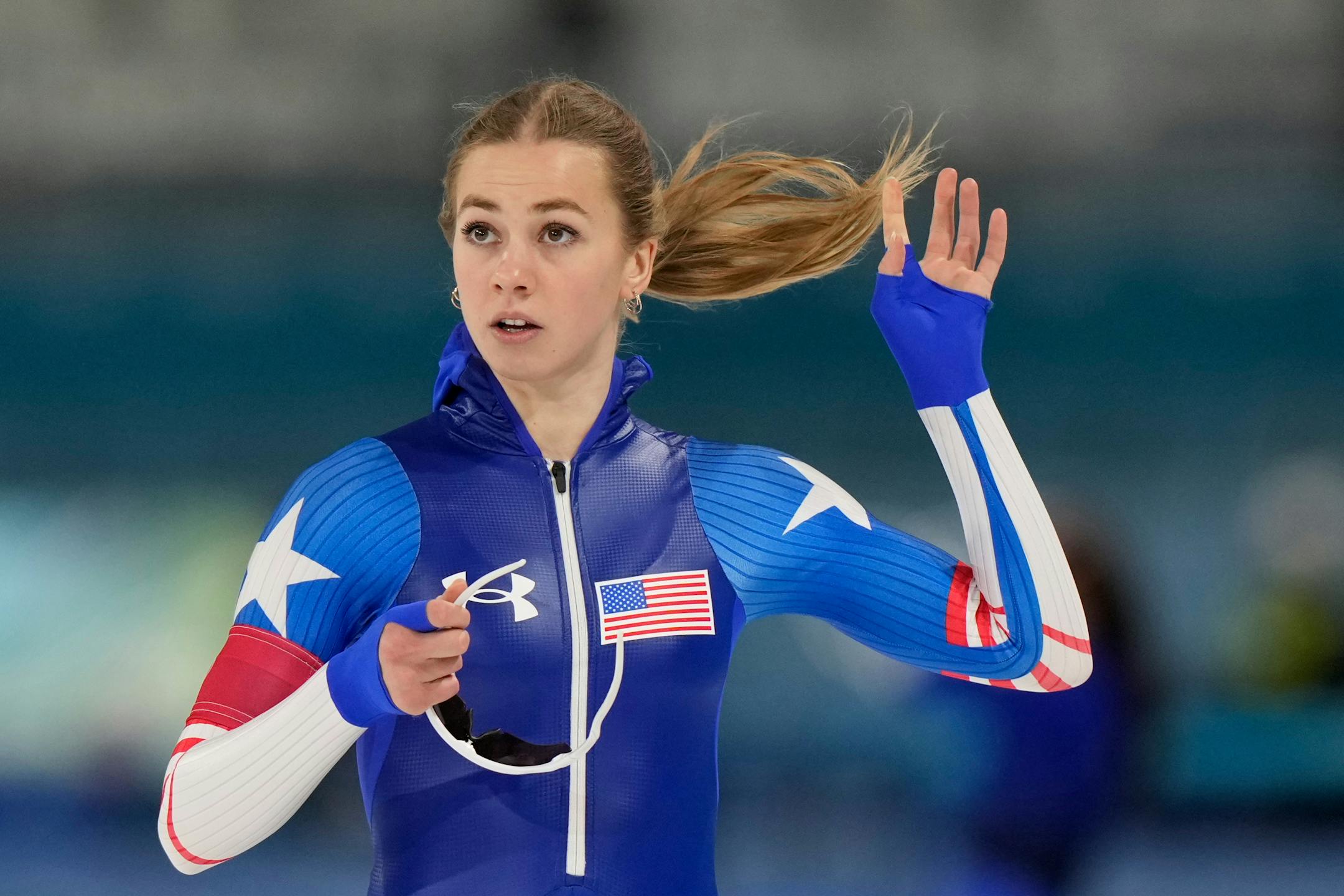
Greta Myers after competing in the women's 1500m time trials at the 2026 Winter Olympics, in Rho, Italy, on Feb. 4, 2026. (Luca Bruno/The Associated Press)

That rise included Myers becoming the first American woman in 20 years to medal in the all-around at the World Junior Championships. She won silver in 2023.

Myers earned an invitation to join the U.S. national team and moved to Salt Lake City to train with some of the country’s best skaters. Her goal of reaching the Olympics came into focus, but not without some drama and suspense.

In early January, Myers competed at the Olympic trials in Milwaukee. In her 1,500 meters heat, Myers accidentally made contact with Brittany Bowe, triggering an automatic disqualification.

“I knew the moment I hit her, I was like, ‘Oh dang,’” Myers said. “I don’t think I impacted her a lot, but I lost quite a bit of speed.”

Bowe, who is headed to her fourth Olympics, still finished with the fastest time. Myers was worried her spot had vanished.

Said Myers: “After I finished the race I went up to the officials and I was like, ‘So, is this it for me? What now? Am I not going to be able to compete at this distance in the Olympics?’”

USA Speedskating rules stipulated that Myers had a chance at a do-over. She was granted a re-skate after the men’s competition.

The 1,500 meters is a physically demanding event. Myers compared it to running a mile at max speed. She had an hour of recovery time.

“You’re just trying to go out as hard as you can and hold on,” she said.

Myers rode the stationary bike and tried to remain calm. She reminded herself that her training sessions prepared her to handle any circumstance.

“I was really relieved and grateful to have another opportunity to skate,” she said. “I knew I had something to prove. I wanted to earn that spot.”

Racing by herself, Myers posted the second-fastest time, securing her Olympic spot. She skated a faster time on her retake.

“Honestly, I think I had a lot of adrenaline in my body,” she said. “I didn’t feel as tired as I normally do. My body responded really well. I trusted my training and that gave me a lot of confidence.”

A dream that took root as a child became reality as she crossed the finish line. Just as she did with Diggins, young kids will now watch Myers and hope to be like her someday.

“It still feels so surreal,” she said.

about the writer

about the writer

Chip Scoggins

Columnist

Chip Scoggins is a sports columnist and enterprise writer for the Minnesota Star Tribune. He has worked at the Minnesota Star Tribune since 2000 and previously covered the Vikings, Gophers football, Wild, Wolves and high school sports.

See Moreicon

More from Olympics

See More
card image
Anthony Souffle/The Minnesota Star Tribune

There are 10 players from the organization who will compete in Milan Cortina, with the gold medal game set for Feb. 22.

card image
card image