
RandBall: Thanks to Packers, we know how rich the Vikings and rest of NFL are

The Packers are the NFL’s only publicly owned team, so they must report their finances. This year’s look was eye-opening, Michael Rand writes in today’s 10 things to know.

Columnist Icon
The Minnesota Star Tribune
July 24, 2025 at 5:53PM
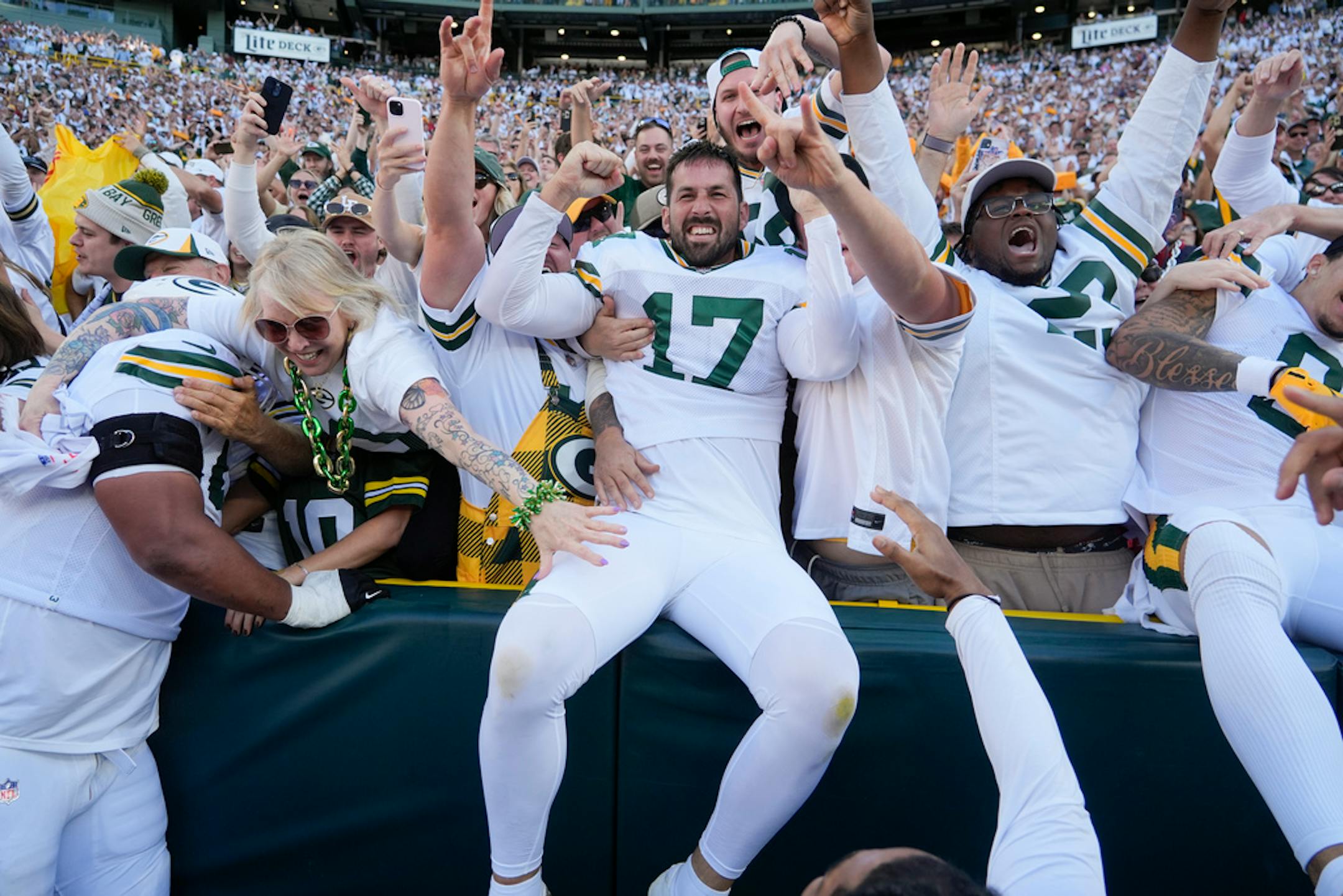
The Green Bay Packers, like every NFL team, generate a lot of revenue. (Morry Gash/The Associated Press)

The NFL salary cap for the 2024 season was set at a $255.4 million and jumped up this season to $279.2 million, which is one sign that the league is in very healthy financial shape.

But the Packers, as they do every year, gave us a look at just how much wealth there truly is in the league.

Green Bay is the only publicly owned franchise in the NFL. ESPN reports that there are “approximately 5,204,615 shares of stock owned by 539,029 stockholders,” though, of course, none of those pieces of paper generate any dividends for those owners (my italics).

That has always struck me as a raw deal for fans who invest in the team, but it certainly isn’t my money. What the public ownership arrangement does ensure is that the team’s finances are a matter of public record.

This week, as I talked about on Thursday’s Daily Delivery podcast, we learned that in the last fiscal year, the Packers received $432.6 million in national revenue sharing from the league.

Because that revenue sharing is equal, we know that’s the same amount the Vikings and every other NFL team received.

“That’s mostly the growth in the national TV deals,” said Mark Murphy, the outgoing Packers team president. “The league has it so they’re trying to grow at about a 7 percent growth rate annually. And then the other thing I think the league’s done a good job of is moving more towards streaming, but still a vast majority of our national revenue is coming from broadcast television.”

ESPN reported that when Murphy started with the Packers 18 years ago, the revenue sharing total was $138 million per team — less than a third of what it is right now.

ADVERTISEMENT

Since inflation has been such a hot topic lately, I was curious what the current figure would be if the league had merely grown along with yearly inflation. In that case, teams would be getting a little over $214 million per year — less than half of that $432.6 million figure.

Murphy estimated that national revenue represents about 60% of the Packers’ total revenue, meaning their total revenue last fiscal year was around $720 million.

That figure will vary from team to team since the rest of the revenue is more dependent on ticket sales and other local revenue, but it boggles the mind that the Packers’ revenue last fiscal year was roughly $465 million more than the salary cap.

Teams, of course, have other operational expenses, including travel, stadium fees and salaries for coaches and staff.

But suffice to say, the Packers, Vikings and every other NFL team are doing pretty nice business. And we have Green Bay to thank for knowing a lot of the specifics.

Here are nine more things to know today:

  • I enjoyed Mark Craig’s first installment of five training camp observations from opening day with the Vikings.
    • Expect more Vikings talk on Friday’s Daily Delivery podcast when I chat with the Minnesota Star Tribune’s Ben Goessling.
      • Star Tribune columnist La Velle E. Neal III was my guest on Thursday’s podcast. We talked about Gophers QB Drake Lindsey, Vikings QB J.J. McCarthy and how to frame the last five years of Twins baseball.
        • Wednesday’s gut-punch Twins loss to the Dodgers, when Minnesota had L.A. down to its last strike before eventually being walked off, felt like the last straw for the Twins to contend.
          • Rocco Baldelli decided to walk Shohei Ohtani with a runner on first and two outs in the ninth. It backfired, but the logic was sound.
            • David Festa is the latest injured Twins pitcher, adding to chaos in the starting rotation.
              • Royce Lewis is on fire. Is it too late?
                • Will the Twins be sellers at the trade deadline? It’s trending that way, and our Bobby Nightengale takes a look at who might be on the move.
                  • Pro wrestling icon Hulk Hogan died Thursday at age 71. He lived in Minnesota for several years in the late 1970s and early 1980s.
                    about the writer

                    about the writer

                    Michael Rand

                    Columnist / Reporter

                    Michael Rand is the Minnesota Star Tribune's Digital Sports Senior Writer and host/creator of the Daily Delivery podcast. In 25 years covering Minnesota sports at the Minnesota Star Tribune, he has seen just about everything (except, of course, a Vikings Super Bowl).

                    See Moreicon

                    More from Vikings

                    See More
                    card image
                    Jerry Holt/The Minnesota Star Tribune

                    A victory over the Packers would give the Vikings reason to second-guess every decision they made that cost them the one victory that might have gotten them into the playoffs.

                    card image
                    card image