
Opinion | Be alarmed at how cities are using tax increment financing

TIF has metastasized into one of the most abused public financing mechanisms in the state. The whole concept should be revisited.

January 1, 2026 at 7:29PM
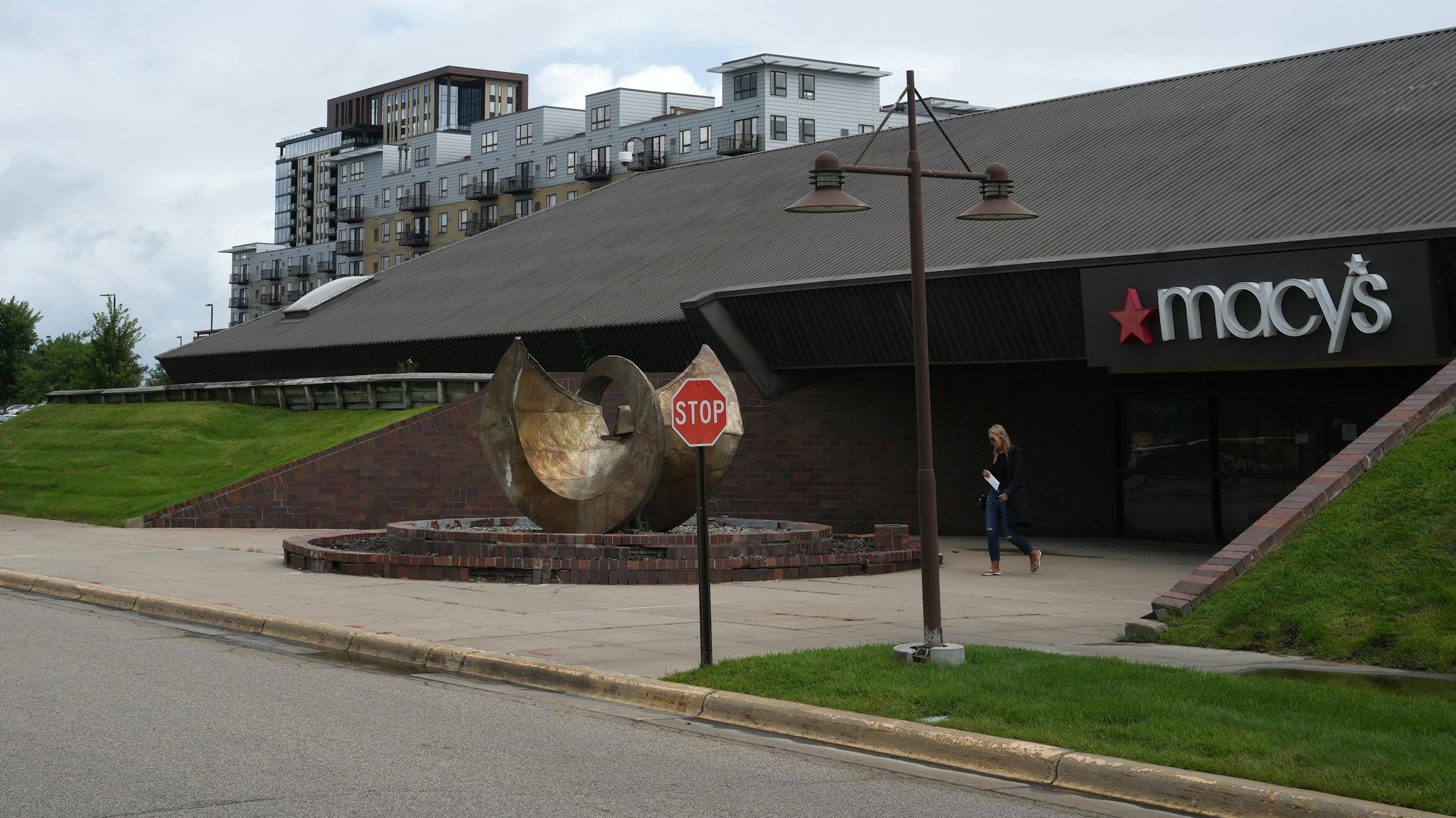
"Edina has leaned heavily on TIF to subsidize redevelopment of the former Macy’s furniture store site and nearby parcels along France Avenue," the writers say. (Anthony Souffle/The Minnesota Star Tribune)

Opinion editor’s note: Strib Voices publishes a mix of guest commentaries online and in print each day. To contribute, click here.

•••

St. Paul’s City Council recently approved a tax increment financing or TIF district for the Grand Avenue shopping corridor, one of the city’s most affluent and commercially successful areas. At the same time, Edina has leaned heavily on TIF to subsidize redevelopment of the former Macy’s furniture store site and nearby parcels along France Avenue. These are not distressed neighborhoods. They are prime real estate. Using TIF here strips the program of any remaining legitimacy.

TIF was sold to Minnesotans as a narrow economic development tool. It was supposed to revive blighted areas, attract investment where markets had failed, and expand the tax base over time. Instead, TIF has metastasized into one of the most abused public financing mechanisms in the state. Recent decisions in St. Paul and Edina make clear that TIF is no longer about redevelopment. It is about corporate welfare, political convenience and shifting tax burdens onto homeowners and businesses.

The scale of TIF use in Minnesota underscores the problem. According to the 2023 Tax Increment Financing Legislative Report from the Minnesota Office of the State Auditor, there were 1,678 TIF districts statewide. Nearly 400 development authorities — including cities, housing and redevelopment authorities, and port authorities — administer these districts. In Hennepin County, roughly 85-90% of cities use TIF, making it the most TIF-intensive county in the state. This is no longer an exceptional tool. It is standard operating procedure.

St. Paul alone now has 66 active TIF districts, administered by its Housing and Redevelopment Authority and Port Authority. Each new district pulls property value out of the general tax base, diverting future property tax growth for up to 25 years. That means less revenue not only for the city, but also for Ramsey County and local school districts. The result is predictable: higher taxes on everyone else, or cuts to services.

TIF works by capturing the increase in property taxes generated by development and diverting that money to subsidize the project itself. The justification rests on the so-called “but-for” test: the claim that development would not occur but for the subsidy. In practice, this test is little more than a formality. Private consultants hired by developers define the financing “gap,” city councils approve it, and no independent state review occurs. The state auditor does not evaluate project viability. There is no meaningful oversight once a TIF district is created.

Edina’s recent experience illustrates how this system breaks down. The $22 million France TIF #1 district, approved in 2022, remains largely undeveloped. Aside from a rebuilt U.S. Bank branch, the promised high-rise apartments, office space, and parking infrastructure exist only on paper. When the city sought a special legislation to extend France TIF #1 in 2025, lawmakers were not informed that city staff were already discussing taking on additional financial risk to jump-start the project. Nor were they told about additional public subsidies layered on top of the TIF financing for the other TIF district they wished to extend, France TIF #2 at 7200 and France.

The France TIF #3 district, tied to the former Macy’s site, is even more troubling. It is a 25-year, $80 million district that allows $20 million of captured taxes to be used for city infrastructure projects, including a proposed pedestrian tunnel connecting two private developments. The same firm that declared the site TIF-eligible also designed the proposed tunnel. That kind of overlap should raise serious conflict-of-interest concerns, yet current law imposes few safeguards.

TIF abuse does not stop once a project is built — or fails to launch. If a district generates excess revenue, cities are not required to decertify it or return funds to counties and school districts. Instead, development authorities can repurpose the money with minimal transparency and no public hearings. In Edina, surplus TIF funds have been used for projects that stretch the definition of “economic development” beyond recognition, including a homebuyer assistance program for households earning six-figure incomes.

This is the structural flaw at the heart of TIF. It short-circuits the market by picking winners and losers. It encourages developers to demand subsidies as a condition of investment. It allows municipalities to compete against one another in a race to the bottom, creating a TIF arms race in which businesses win and local governments lose. Over time, widespread TIF use erodes the tax base itself, creating a collective action problem that undermines long-term fiscal health.

Politically, TIF is seductive. It allows elected officials to claim they are “doing something” about development without raising taxes today. The costs are deferred, opaque and spread across future taxpayers. But the long-term consequences are real: higher property taxes, underfunded schools, distorted development patterns and growing dependence on subsidies for projects that should stand on their own.

Minnesota does not need more TIF districts. It needs far fewer — and far stricter rules. At a minimum, the state should restore meaningful oversight by requiring independent review and regular audits by the state auditor. Cities should be required to demonstrate genuine blight, disclose all public subsidies and return excess funds to overlapping jurisdictions. Better yet, lawmakers should seriously consider eliminating TIF altogether.

A tool designed for exceptional circumstances has become routine. That is not economic development. It is corporate welfare by another name — and Minnesota taxpayers are paying the price.

Julie Risser is an Edina City Council member. She previously served on Edina’s Planning Commission and Energy and Environment Commission. David Schultz is Hamline University Distinguished Professor of Political Science. Previously he served as a city director of planning, zoning and code enforcement and also as a housing and economic planner.

about the writer

about the writer

Julie Risser and David Schultz

More from Commentaries

See More
card image
Anthony Souffle/The Minnesota Star Tribune

TIF has metastasized into one of the most abused public financing mechanisms in the state. The whole concept should be revisited.

card image
card image