

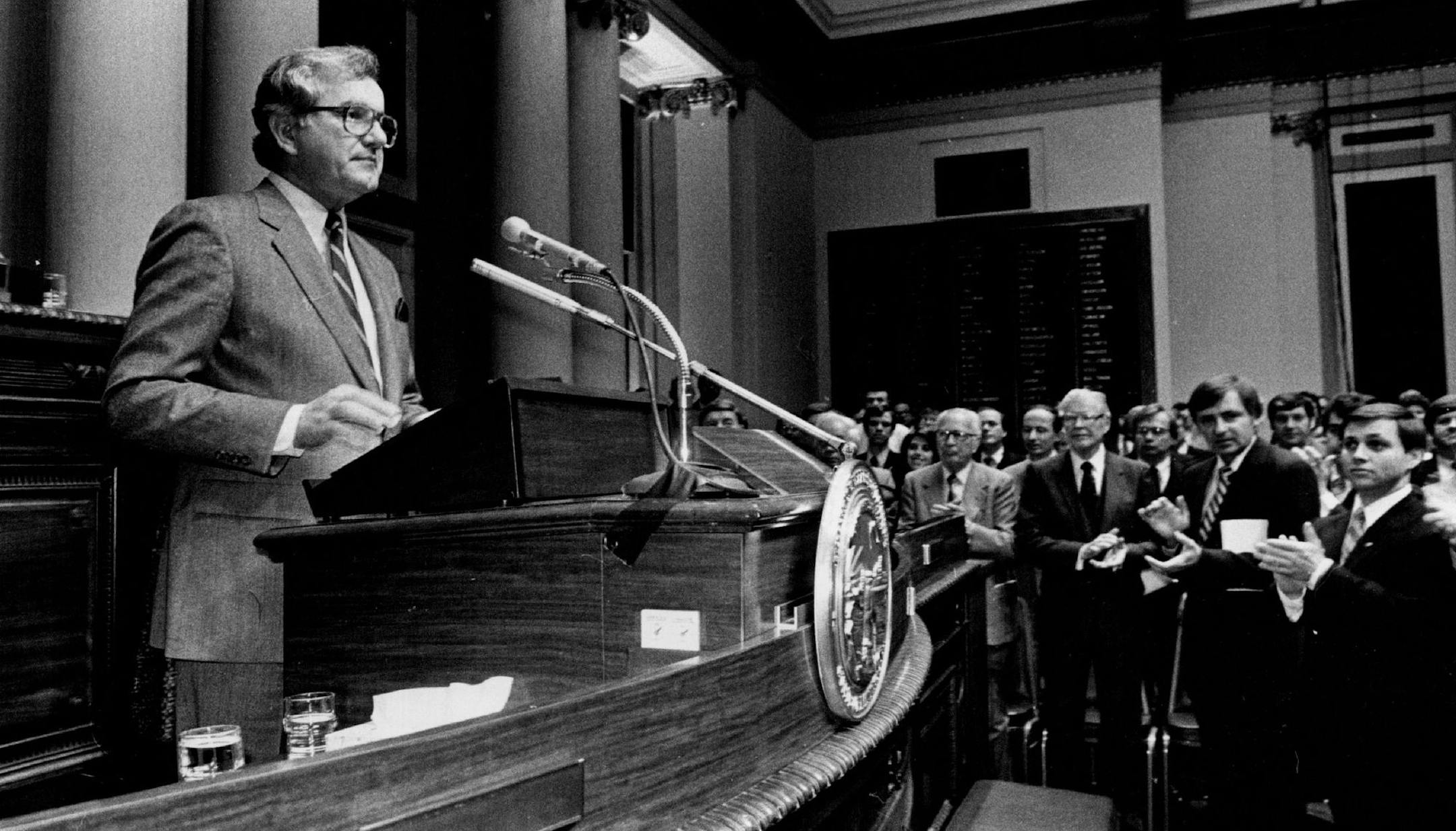
"The leadership of Minnesota must and will find new solutions to public problems, and expanded alternatives to the strategies of cut and tax. Long-term solutions involve raising revenues through expanded economic activity, and redesigning government. We need to reconsider and restructure the way we provide state services. The answers will not come easily."
Gov. Rudy Perpich, budget message, 1983
Gov. Tim Walz's biennial budget proposal has created a political stir, both with respect to its ambition and the accompanying price tag. The governor has made it clear that his "One Minnesota" vision demands a rededication to the institutions, programs and progressive ideals that have been a hallmark of this state for decades. His budget conveys boldness and vision.
It also conveys tiredness and monotony.
That's because the mechanisms Walz is calling upon to achieve his vision employ the same policy and rhetorical toolbox that has been used for decades — higher taxes, more redistribution of tax dollars, and expanded spending on government programs and systems that in many cases were designed half a century ago or more. And it's all offered with a subtext that Minnesota's businesses aren't carrying their fair share of the load.
There seems to be little in the way of cost management, efficiency or redesign.
It's a budget of great ambition but little introspection.
I moved to Minnesota in late 1991, so I was not around for Rudy Perpich's tenure as governor. But when I ask longtime members of my organization for an example of a chief executive in state history who not only embraced policy entrepreneurship but was willing to risk political capital to pursue it, Perpich is the name that comes up most frequently.


