
Gov. Tim Walz criticized for appointing prominent Democratic donor to U’s Board of Regents

One of Walz’s regent picks, Samuel Heins, donated $11,000 to his gubernatorial campaigns and $8,400 to his past congressional campaigns.

The Minnesota Star Tribune
August 15, 2025 at 11:00PM
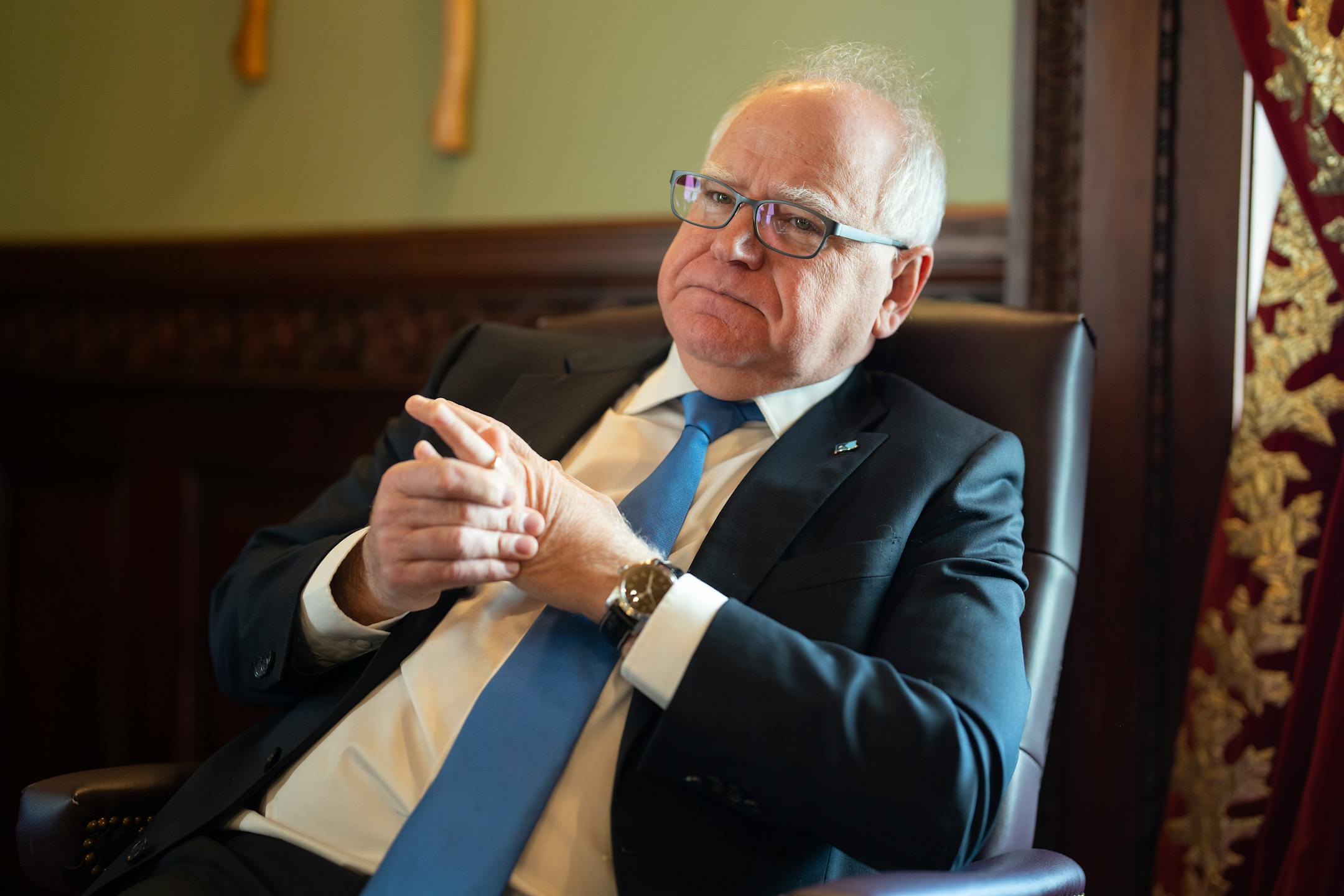
Minnesota Gov. Tim Walz listens during an interview with Minnesota Star Tribune journalists in the governor’s office at the State Capitol on Dec. 12. (Alex Kormann/The Minnesota Star Tribune)

Gov. Tim Walz is facing criticism for appointing two Democratic donors to the University of Minnesota’s Board of Regents this week, including one who gave nearly $20,000 to his campaigns for governor and Congress.

Walz’s appointment of Samuel Heins, a retired U.S. ambassador to Norway, has drawn particular concern from Republicans as well as some regent finalists who weren’t selected for a spot on the U’s governing board.

Heins, a longtime lawyer, human rights advocate and alum of the U’s Law School, has given Democrats hundreds of thousands of dollars over the years. He donated $11,000 to Walz’s gubernatorial campaigns, $8,400 to his past congressional campaigns and $25,000 to the Kamala Harris campaign after Walz joined the national ticket.

“Samuel Heins is obviously a Democrat major donor,” said state Rep. Marion Rarick, GOP co-chair of the Minnesota House Higher Education Committee. “The optics are terrible. It looks like a pay-to-play.”

Another one of Walz’s four regent picks, Ellen Luger, donated at least $3,450 to his gubernatorial campaigns, state campaign finance data shows. Luger is a former minister counselor for agriculture at the U.S. Mission to the United Nations, with experience negotiating international agricultural policy. She also previously served as a trustee at Wellesley College in Massachusetts, and is married to former U.S. Attorney of Minnesota Andrew Luger.

Walz’s appointments to the board come at a critical time for Minnesota’s flagship university, which cut some academic programs and hiked undergraduate resident tuition by 6.5% earlier this summer. The U’s 12 regents serve unpaid, six-year terms and are tasked with approving major policies such as tuition increases and a multibillion-dollar annual budget.

A spokesperson for Walz said in a statement Friday the governor “appointed a highly-qualified, well-respected slate of statewide leaders to the Board of Regents.”

“He has full confidence in their ability to tackle the challenges facing the University of Minnesota with integrity and dedication,” the spokesperson said.

The governor’s office said it followed the same vetting and review process it uses for hundreds of appointments to judgeships, boards and state agencies.

The Minnesota Legislature typically appoints members of the U’s Board of Regents, but lawmakers failed to do so before their session adjourned this year, giving the governor the rare opportunity to make the decision.

Heins did not go through the Legislature’s regent selection process, while Luger did. Heins applied to be a regent after the governor’s office opened its own application process in June.

Heins and Luger both declined to comment Friday when reached by the Minnesota Star Tribune.

Lakeville City Council Member Dan Wolter was a finalist through the Legislature’s regent selection process but wasn’t chosen by Walz. Wolter, who served in former Gov. Tim Pawlenty’s administration and has donated to Republicans, said he wasn’t surprised.

“I’m sure they were aware of my donations as part of it,” he said.

Wolter formerly chaired the council that’s charged with recruiting and recommending qualified regent candidates to the Legislature. He said regent selections have become more political in recent years, at a time when he believes the U needs board members who will push back on tuition increases and other controversial policies.

“The Board of Regents is supposed to be kind of the conduit to the real world,” Wolter said. He added that he was “aghast” at the U’s recent decision to impose a $200 yearly fee on students to help the school’s athletics budget as it faces steep costs of paying student athletes to play on Gophers teams.

“They’re taxing the students to pay the quasi-professional athletes,” Wolter said.

Rarick said the Legislature had an opportunity to appoint a bipartisan slate of regents, but Democrats at the Capitol refused to hold a vote. It takes a majority vote of the 201 legislators in the House and Senate to elect regents. This year’s Legislature was the most closely divided in Minnesota history, with 101 Democrats and 100 Republicans.

“They have exactly 101 votes, but if anybody defects, then they don’t get their preferred slate,” Rarick said. “I just think they couldn’t pull it all together.”

The Democratic chairs of the House and Senate Higher Education Committees, Rep. Dan Wolgamott and Sen. Omar Fateh, sent a letter to Walz after the Legislature adjourned recommending a slate of candidates they said “embodies the core values of the DFL.”

In an interview Friday evening, Wolgamott said he was “really impressed with the governor’s picks.” He said he thinks the candidates’ qualifications matter, not their political donations. Heins is an “international leader in human rights” and “highly qualified,” Wolgamott said.

But Fateh, who is the DFL-endorsed candidate for mayor of Minneapolis, said in a statement Friday evening that he “felt strongly that the legislature should’ve elected regents.”

“I’m disappointed that the Governor passed over candidates who put themselves forward to go through the public regents selection process,” Fateh said. “Instead, he appointed two regents who did not go through a public application process, did not receive scrutiny from the legislature, and most importantly did not engage with students, staff, and faculty in this process.”

Walz appointed two of the four candidates that Fateh and Wolgamott recommended: Luger and Kowsar Mohamed, who’s a doctoral student and the enterprise director of inclusion for the Minnesota Office of Inclusion.

The governor also appointed Joel Bergstrom, a principal at an executive employee search group who didn’t go through the Legislature’s regent selection process.

Neither Bergstrom nor Mohamed have donated much to political candidates. Bergstrom gave $250 to Walz’s gubernatorial campaign in 2022, and Mohamed donated a few hundred dollars to a DFL state Senate candidate that same year.

Some had high praise for Walz’s regent appointments, including the Jewish Community Relations Council of Minnesota and the Dakotas. Ethan Roberts, deputy executive director of the JCRC, said it’s important to have Jewish representation on the U’s board at a time when students are facing antisemitism.

“We are grateful to the governor for selecting two highly qualified Jewish candidates to join the Board of Regents,” Roberts said, referring to Heins and Luger.

Rarick said she doesn’t have the same concerns about Luger that she has about the appointment of Heins. Luger was vetted by the Legislature and engaged with many lawmakers, she said.

“She was very present with all of us legislators … and did everything that she could," Rarick said. “She was a solid candidate.”

Nathaniel Minor of the Minnesota Star Tribune contributed to this story.

about the writer

about the writer

Ryan Faircloth

Politics and government reporter

Ryan Faircloth covers Minnesota politics and government for the Star Tribune.

See Moreicon