

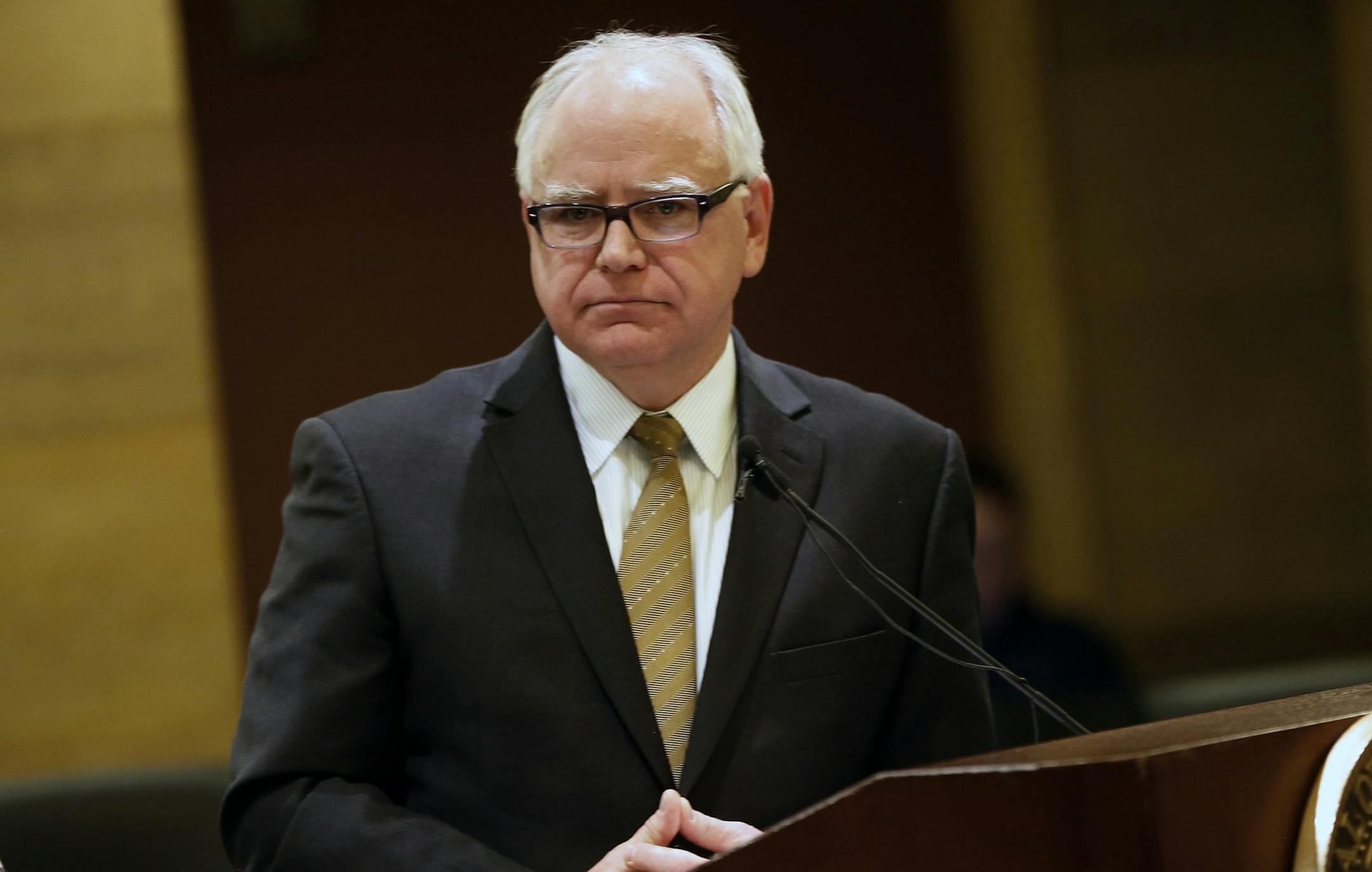
Minnesota will ensure vulnerable residents continue to get services amid the federal shutdown, Gov. Tim Walz said Tuesday, but the state faces potential reimbursement fights, staff layoffs and negative economic impacts if the stalemate drags on.
As the longest shutdown in U.S. history marked its 25th day Tuesday, Walz said his staff is assessing the federal grant money the state depends on for highways, Medicaid, veterans' health care, assistance for needy families and other services. If the shutdown continues much longer, the state may have to send layoff notices to certain staff members and have legislators sign off on using state money to fund programs.
"Promises made to people should be kept," Walz said of basic services, like food assistance. "So this is our commitment to do it. As it stands right now, the state of Minnesota is prepared to continue on basically until the 15th of February."
Walz left Congress to become governor of Minnesota, but from the beginning of his new job in St. Paul the Democrat has found himself mired in the side effects of Washington, D.C., dysfunction. He debuted his shutdown plan at a news conference Tuesday, flanked by advocates for the state's neediest residents as well as state agency commissioners and legislators — both Republicans and Democrats.
The governor has not yet needed to approach the Legislature to ask for money to cover federal programs. But if he does, Walz said it will be important that the bills say the federal government is expected to reimburse state expenses. Walz's general counsel is working with Minnesota Attorney General Keith Ellison to also look at legal options to ensure Minnesota gets money back for any costs it incurs.
"We're prepared to take legal action," Ellison said, adding that his office could potentially team up with other attorneys general in a multistate lawsuit.
The governor's administration is also talking with American Indian tribes about ways to assist them during the shutdown. Walz has reached out to the state's Congress members to urge them to help Minnesotans and said he is working with governors of other states to advocate for states' needs. A statewide contingency response team is following up on these initial steps and will look at how the plan should evolve.
Walz was hesitant to assign political blame at the news conference but said federal agencies' funds should not be tied to the border security debate. House Minority Leader Kurt Daudt, R-Crown, stood alongside Walz and said they should unite on areas of agreement, like making sure the state's most vulnerable get services.


