

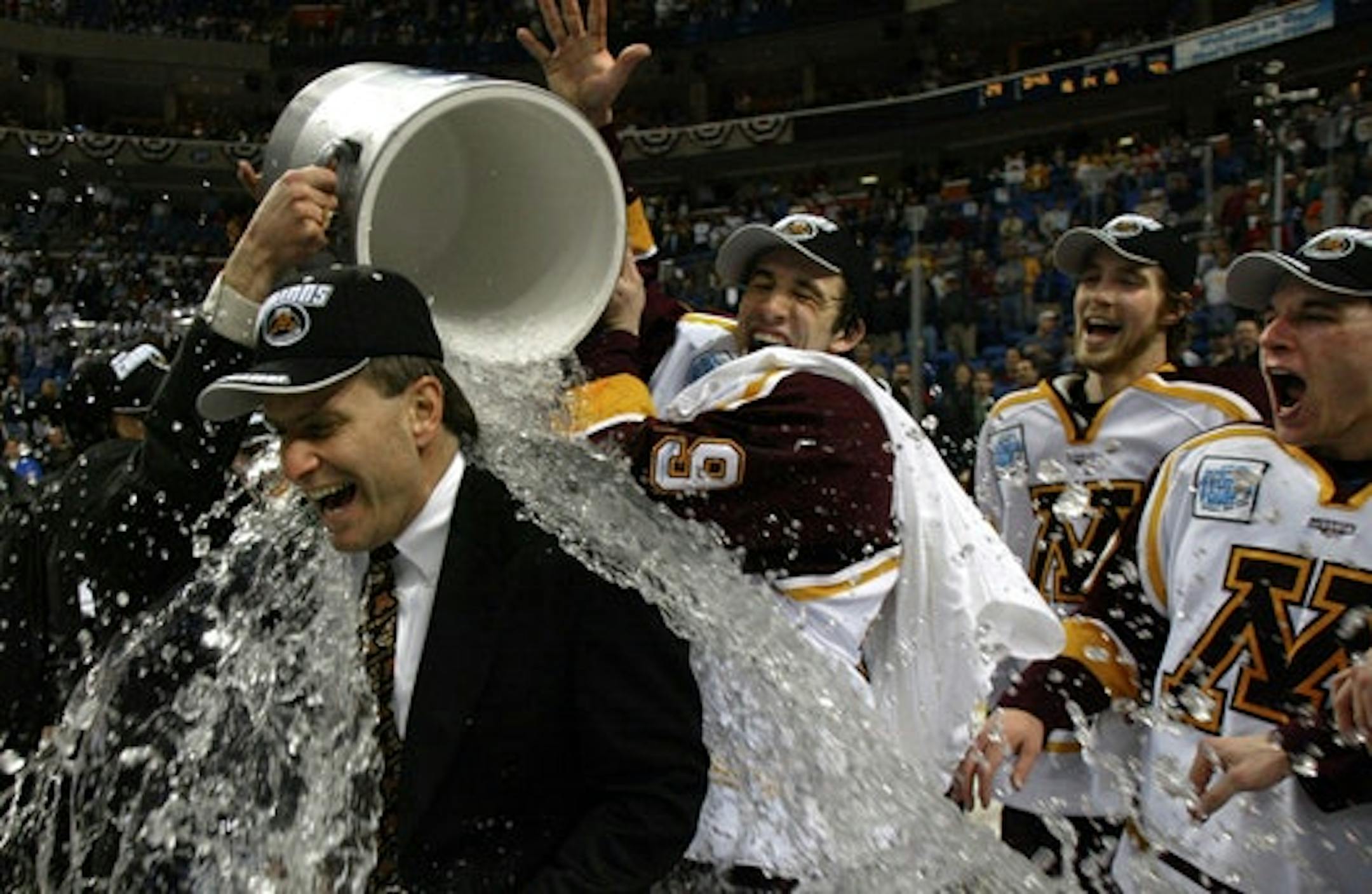
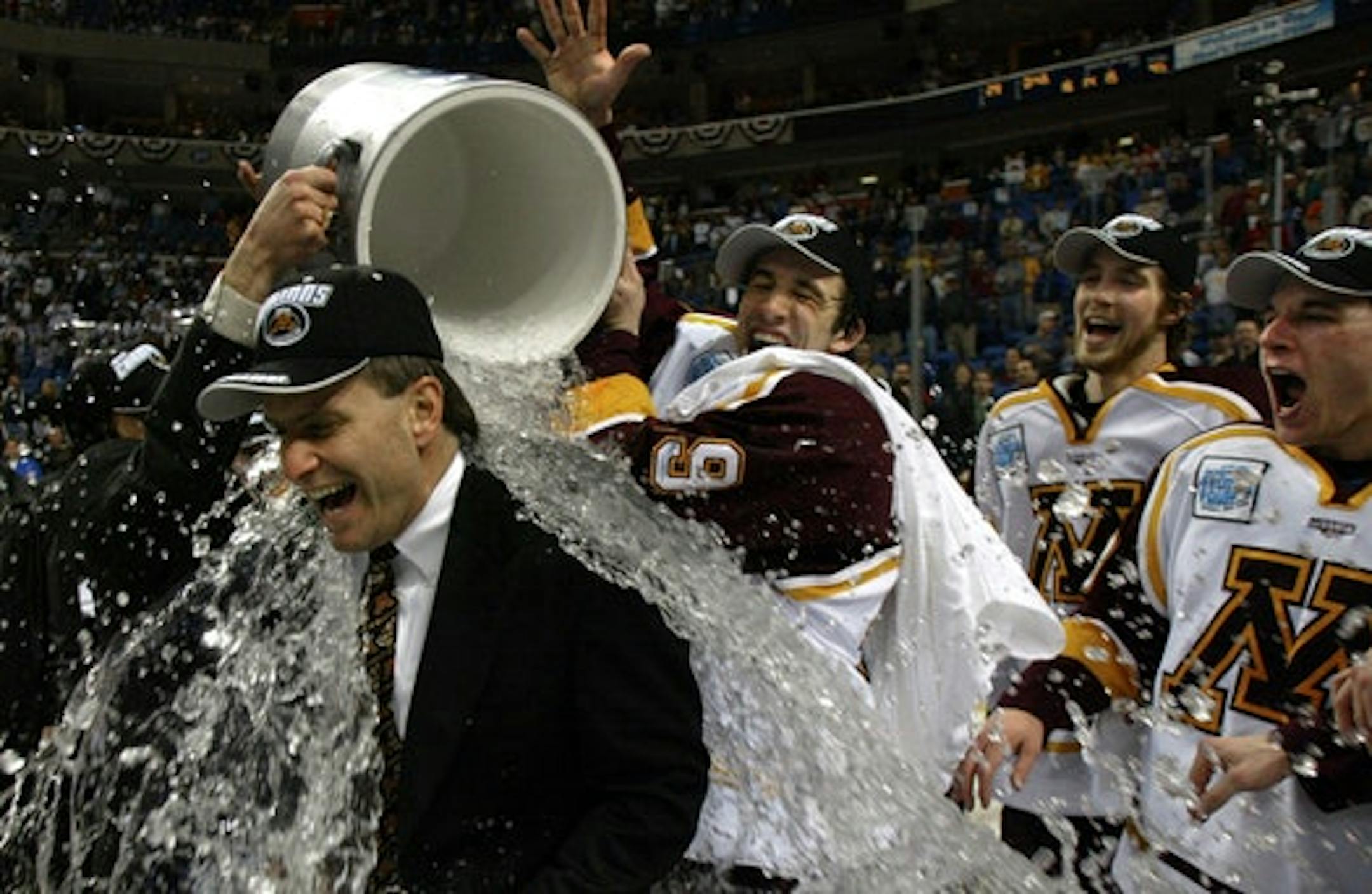
As Don Lucia stepped down from the Gophers men's hockey head coach job earlier this week after 19 seasons, I couldn't help but think about his legacy. The thought that kept returning was this: Lucia's greatest accomplishment — winning two NCAA titles in his first four seasons in Minnesota — ultimately saddled him with unrealistic expectations.
The things he accomplished in his final 15 seasons — including eight regular-season league championships, 10 more NCAA tourney appearances and three more Frozen Four berths — became obscured by the singular focus of fans thirsty for another championship. Lucia won twice. Shouldn't that be the standard? How hard could it be?
When it comes to perceptions, timing is everything. If Lucia had delivered his first title in, say, Year 6 and then another around Year 13 of his tenure. with three more Frozen Four berths sprinkled in throughout the tenure, the most rabid Gophers fans might think of him much differently.
As it is, those fans have an overall perception problem — and a math problem.
Adam Wodon of College Hockey News has a very good piece that lays this all out. He divides college hockey programs into tiers, placing the Gophers in the top tier of 18 teams that "have full support, resources, facilities and expectations to reach Frozen Fours on a regular basis."
As Wodon notes, if these were the only 18 men's college hockey programs in the country, and they were all of equal strength, on a simple math basis we would expect the Gophers to win one NCAA title and go to 4.5 Frozen Fours in 18 seasons. Lucia's Gophers won twice, and went to five Frozen Fours.
Even if you think that's too many teams in the top tier, there is a sizable next tier that also reasonably expects to compete for NCAA tourney berths and figures to be in the Frozen Four mix during a strong cycle — not as often as a top tier program, but still enough to be relevant.
And here's where we run into the real math issue, known as the Coupon Collector Problem. Even if we expect each top program to reach the Frozen Four every four years or so and win it all every 15 to 20 years, that doesn't mean each of the top teams will do so. Think of it this way: Six random tosses of a six-sided die will rarely give you a 1,2,3,4,5,6. It might take you 13 tries to roll a three. The next time, it might take 16 tries to roll a two. On average, a formula tells us, it will take 14.7 tries to roll each number 1-6 at least once.


