

SAN JOSE, Calif. – When the Florida Highway Patrol pulled him over this month for driving too fast, Brooks Weisblat didn't bother telling the officer that his Tesla Model S had been driving itself.
"That would have definitely got me a ticket," said Weisblat, who got a warning instead.
Florida doesn't have a driver's handbook dictating robot rules of the road. No state does, but California could become the global model next year when it publishes first-in-the-world consumer rules for self-driving cars.
Those regulations are already a year behind schedule. Among the problems vexing officials with the Department of Motor Vehicles is how to handle not just the vehicles but their overtrusting owners.
"The technology is ready. I'm not sure the people are ready," said Weisblat, who along with his Model S and its new Autopilot feature didn't notice the sign warning that the freeway speed limit had dropped by 10 miles per hour as it approached Miami. "You still need to pay attention."
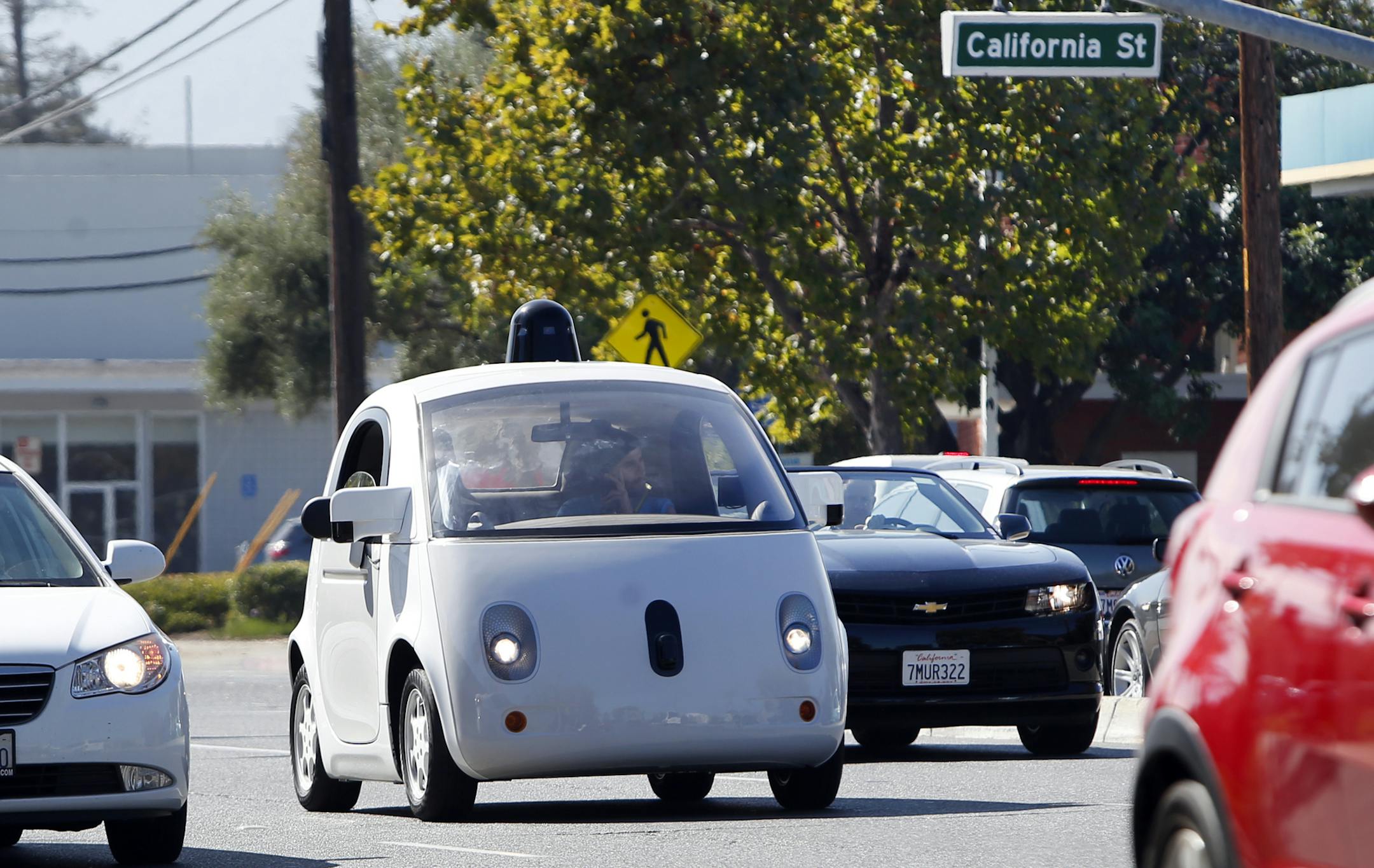
Google has for years been testing vehicles near its Mountain View headquarters that are meant to be fully autonomous, requiring no human intervention except a rider's voice saying "Take me to the supermarket." But most carmakers developing self-driving technology are working on tools that relieve but don't entirely replace human drivers.
That leaves some in the industry worried about "The Handoff," that moment — perhaps just a split-second — when humans must regain control to avert disaster. Today, drivers of cars equipped with semiautonomous tools such as automatic braking, adaptive cruise control and sensors that help keep the car in its lane are supposed to be monitoring and supervising whatever the car can do on its own. But as the cars get smarter and able to navigate themselves, the humans in the driver's seat will increasingly grow comfortable checking text messages, scanning a newspaper and opening up the makeup kit.
"Humans are really bad at evaluating low-probability events," said Steven Waslander, an engineering professor at the University of Waterloo in Canada. "You've been driving the same way to and from work every month and then there's one moment when suddenly you have to be paying attention."



