
Editor's Pick

Editor's Pick

Inspectors found dead rodents at Minneapolis food distributor years before big recall

Inspectors listed a leaking roof in a 2018 inspection at Gold Star Distribution. Water dripped from the roof toward merchandise during a reporter’s tour last week.

The Minnesota Star Tribune
January 10, 2026 at 11:00AM
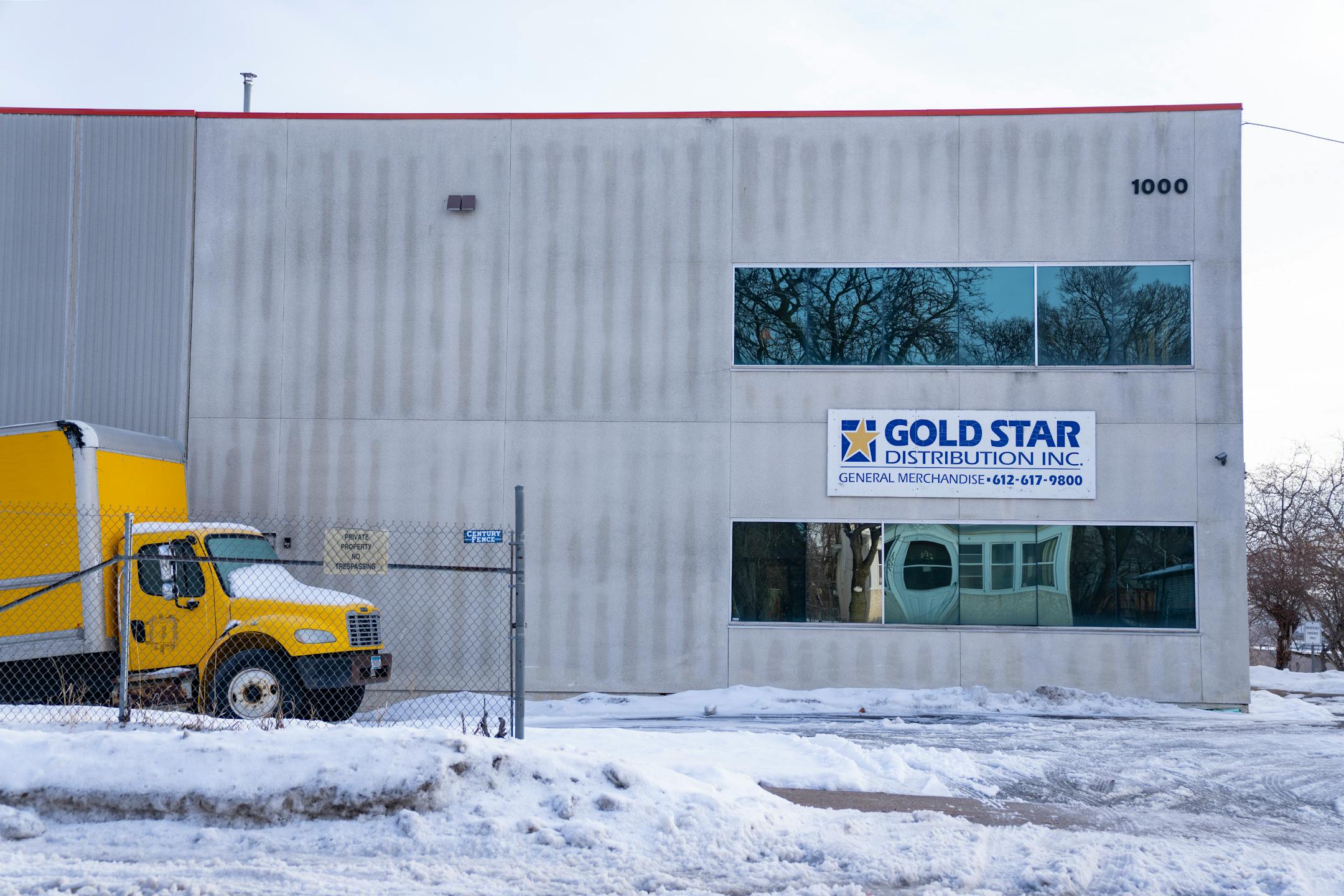
The exterior of Gold Star Distribution Inc. is seen in Minneapolis on Jan. 7. (Alex Kormann/The Minnesota Star Tribune)

Raed Azem, the manager of Jimmy’s Market in North Minneapolis, learned about the massive recall through a friend.

He didn’t hear from the food supplier, Gold Star Distribution, after rodent and bird contamination forced it to recall all of its products, including those that landed in Azem’s tiny shop.

He threw away his inventory and is looking for a new distributor.

“There is no trust” with the distributor, Azem said.

But regulators have known for years about infestations at Gold Star.

U.S. Food and Drug Administration (FDA) inspectors found decomposing rodents, birds flying though the warehouse and a roof leaking in 2018, according to a warning letter. The company admitted to continued “rodent and avian contamination” in the recall issued last month.

During a reporter’s impromptu tour of the site last week, water still dripped down from the warehouse’s roof onto boxes of merchandise in one area of the building.

The recall affected all food products in the warehouse, which the public notice said affected dozens of small stores and halal markets in Minnesota, exposing consumers to the risk of serious illness.

An FDA spokesperson said in an email the agency cannot comment on “current regulatory matters pertaining to this firm. The agency closed out the warning letter because of Gold Star’s voluntary corrective actions addressing pest activity as well as improving facilities, sanitation and employee training.

The years that passed between the FDA’s warning letter and the recall didn’t surprise food safety experts.

“Clearly whatever corrective actions they had taken eight years ago were not particularly effective, and the problem continued,” said Barbara Kowalcyk, director of the Institute for Food Safety and Nutrition Security at George Washington University.

Despite voluntarily issuing the recall, Gold Star’s owner, Sam Samrah, claims regulators are going too far. He said he feels targeted.

“I’m not here to hurt anybody,” Samrah said.

Inside the warehouse

Rain showers had passed overhead as Samrah sat at his desk on Jan. 6, sipping what looked like espresso just inside the front doors of Gold Star’s showroom on Minneapolis’ north side.

Unopened merchandise like Coca-Cola, Rhino sexual enhancement pills and Swedish Fish candy packed this room, where a floral painting with a thick golden frame hung nearby Samrah’s desk.

Samrah called his lawyer after the reporter identified himself, and the lawyer advised him not to talk. Samrah then spoke at length to the reporter, agreeing to provide a tour of the site as long as no photos or recordings were made.

Huge boxes filled with smaller boxes sat on row after row of shelving. Wet concrete, Samrah pointed out, connected part of the floor to the wall: an apparent repair. The warehouse looked mostly clean and organized.

But in the back of the warehouse, several tarps hung under the ceiling. Water was dripping down from them onto a pallet of merchandise Samrah insisted held clothing, not food.

The 2018 FDA warning letter, which Samrah claimed he properly addressed, also reported that the facility’s roof had been leaking.

The older warning letter also said inspectors found at least seven dead rodents, two flying birds, rodent pellets “too numerous to count,” a case of peanuts gnawed open, cream cheese stored out in the open unrefrigerated and bottles of bleach that had leaked onto a pallet of cheese curls, burning holes into boxes of the salty snack.

The company had failed to provide documentation of the fixes listed in a corrective action plan in July 2018, the agency wrote in the letter, including repairing the roof, contracting a pest control service, hiring a janitor and more.

Despite closing the warning letter, the FDA found in another inspection in April 2019 that the business did not keep up its grounds in a way that would protect against food contamination and did not “exclude pests,” according to entries archived in an agency database.

Since then, the database reports no additional inspections, although the federal agency said it conducted several inspections over the past eight years alongside the Minnesota agriculture department.

Samrah suggested that infested rice shipped to a customer recently flagged the facility to inspectors. He said regulators again inspected his facility in October.

This time, inspectors apparently found plenty of warning signs. Every food product in the warehouse was recalled, regardless of whether inspectors could tell if it was chewed, defecated on or moistened with rain.

The recalled products span 44 pages, and the company sold them to dozens of stores, some as far away as Indianapolis.

Katherine Simon, the Food and Feed Safety Division director of the Minnesota Department of Agriculture, which regulates food facilities alongside the FDA, said most recalls are not “typically associated to contamination of this sort.” A spokesman acknowledged in an email that the department is now investigating Gold Star.

Samrah spoke calmly. He said he had planned to renovate his roughly 125,000-square-foot property or move from it. A 2023 hail storm further damaged the roof, he said.

“We’re in a bad position,” Samrah said in December. The owner furloughed workers as he tried to resolve the recall.

Around the neighborhood

Azem, the Jimmy’s Market manager, said the recall has left him worried about the families and children his shop serves.

Other shop managers and owners reported that Agriculture Department inspectors had visited their shops to ensure recalled products had been removed. They said Gold Star previously was a convenient and dependable supplier.

Now, the recall is interrupting business.

The manager of West Bank Market in Minneapolis’s Cedar-Riverside neighborhood, who declined to further identify himself, said his shop was running out of rice after it had to remove its inventory originating at Gold Star.

Exposure to contaminated products, the recall said, can cause infections that can be fatal. Consumers have not yet reported illnesses connected to the recalled products, per the release, but experts say people underreport food-borne illnesses.

“Think about the last time you had diarrhea,” said Kowalcyk, the George Washington expert. “Did you go to the doctor?”

Kowalcyk’s toddler died because of a food-borne illness decades ago. She said the food system is complex, and people overlook distribution facilities, which are not facing the public.

“That’s really problematic,” she said.

Regulators’ limits

Companies often wait to take action on safety concerns until they catch the public’s attention, said Darin Detwiler, a food safety professor at Northeastern University.

“They wait, and they wait, and they wait,” he said.

The U.S. hadn’t improved its food safety oversight in 70 years prior to the Food Safety Modernization act in 2010, Kowalcyk said. Despite the passage of the act strengthening the government’s capacity to prevent food safety problems, regulators typically inspect facilities every five to seven years, she added.

The FDA, Kowalcyk continued, does not have the money or staffing to do all the inspections that should be performed.

Warning letters, Detwiler said, are common. Food safety experts worry that aside from flagging facility issues to insurance companies, the letters demanding action do not result in follow-through from companies.

The FDA spokesperson said the agency plans and staffs inspections “at levels that meet or exceed prior years.”

“Critical foods inspections remain a core FDA responsibility,” the spokesperson said. “Filling and sustaining critical foods investigator capacity continues to be prioritized in the fiscal year 2026 hiring plan.”

Recalls, the experts agreed, are expensive. The FDA rarely mandates them and instead calls on companies to voluntarily issue them, they continued. The Gold Star recall is voluntary.

Detwiler said it benefits companies economically, ethically, legally and “public health-wise” to proactively address public health concerns.

“History has showed us that ... the longer this gap is between indication or awareness and action always puts consumers in the losing seat,” Detwiler said.

about the writer

about the writer

Victor Stefanescu

Reporter

Victor Stefanescu covers medical technology startups and large companies such as Medtronic for the business section. He reports on new inventions, patients’ experiences with medical devices and the businesses behind med-tech in Minnesota.

See Moreicon

More from Business

See More

But spending to spend can create a deficit of emotion. Morgan Housel’s “The Art of Spending Money” is a good primer on how to make decisions.

card image
