

President Joe Biden faces many foreign policy problems, but one involving Equatorial Guinea was not on my Bingo card. This week, though, administration officials took offense at the revelation that China may establish a naval base in the western African nation.
This possibility is "a threat that is setting off alarm bells at the White House and Pentagon," reported the Wall Street Journal. Affording the Chinese navy a permanent presence in the Atlantic Ocean "would raise national security concerns," an unidentified senior U.S. official warned.
It's a stretch. But this administration, like every American administration, is exquisitely sensitive to any development abroad that could work to our disadvantage. Like every administration, it is also blind to actions of ours that other governments think would work to their disadvantage.
U.S. policymakers habitually act to protect marginal interests far from our shores while denying the right of other countries to protect vital interests on their doorsteps.
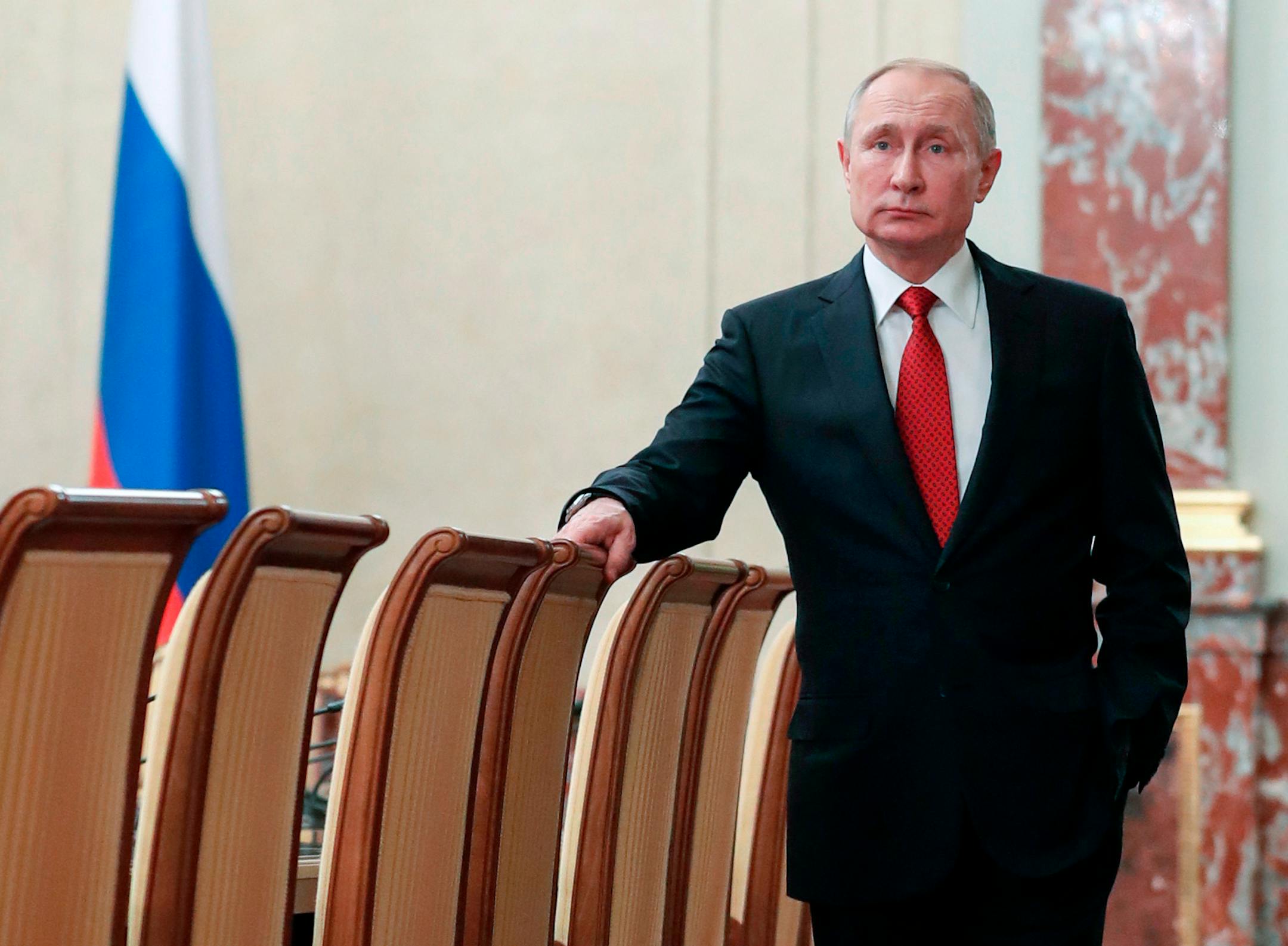
That double standard lies behind Biden's Ukraine quandary. On Tuesday, he told Russian President Vladimir Putin there would be serious consequences should Russia invade its former republic. But Putin, for all his thuggish ways, has legitimate reasons to regard Ukraine as a vital Russian interest. Biden's warning is unlikely to change his mind.
Russia has a 1,200-mile land border with Ukraine, whose government would like to join NATO — which for four decades was the Soviet Union's prime enemy. The Kremlin has always opposed the expansion of the alliance, but NATO has added former Eastern European nations and former Soviet republics. Defense Secretary Lloyd Austin says Ukraine and Georgia have an "open door" to join.
For two centuries, going back to the Monroe Doctrine, the U.S. has done its best to keep foreign powers out of the entire Western Hemisphere. So Biden should have no trouble understanding Russia's concerns about Ukraine.
It's not as though the Kremlin is making outlandish demands. As the Washington Post reported, "It wants written guarantees from the United States and its allies in NATO that the military alliance will not expand east — both in terms of membership and Western forces."


