

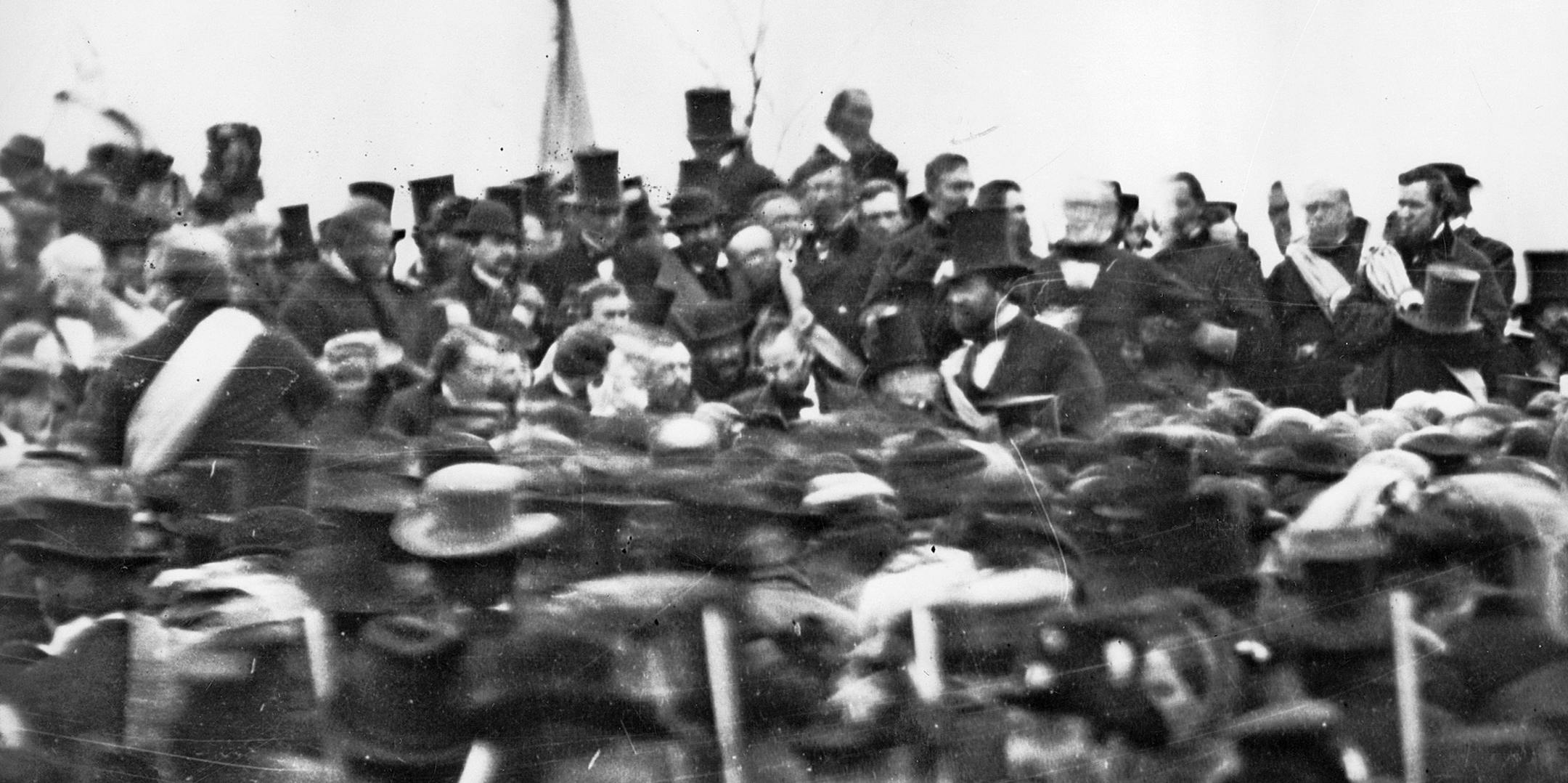
Today's celebration of the 150th anniversary of Abraham Lincoln's Gettysburg Address offers more than an opportunity to memorialize an extraordinary speech. It provides a model and a mirror for writing and speechmaking today.
"It's only words." This phrase captures what many feel about writing today. Our casual, rapid-fire communiques are tossed off at the push of a "send" button.
Within days of the battle of Gettysburg, plans were put in place to establish and dedicate the first national military cemetery. Gettysburg, Pa., civic leader David Wills invited Edward Everett, former president of Harvard and the nation's leading orator, to offer the main address. Later, Wills invited Lincoln to offer "a few appropriate remarks." Definitely second fiddle.
In February 1861, as Lincoln delivered speeches during his inaugural train trip from Springfield, Ill., to Washington, Everett — reading newspaper reports — had confided to his diary, "These speeches thus far have been of the most ordinary kind, destitute of everything, not merely of felicity and grace, but of common pertinence."
To their mutual surprise, Lincoln and Everett had an appointment with history at Gettysburg.
The story of the composition of the address was hijacked more than a century ago by a sentimental novelist who spun the tale that Lincoln wrote his speech on the back of an envelope on the train to Gettysburg.
No. We don't know for certain when he wrote the speech, but we do know Lincoln continued to edit his address in the upstairs bedroom in Wills' home, where he stayed the night before the dedication ceremony. He understood there is no such thing as good writing; there is only good rewriting.
On Nov. 19, 1863, Everett stepped forward and began to speak. He went on, and on, for two hours and eight minutes. The crowd grew restless.


