

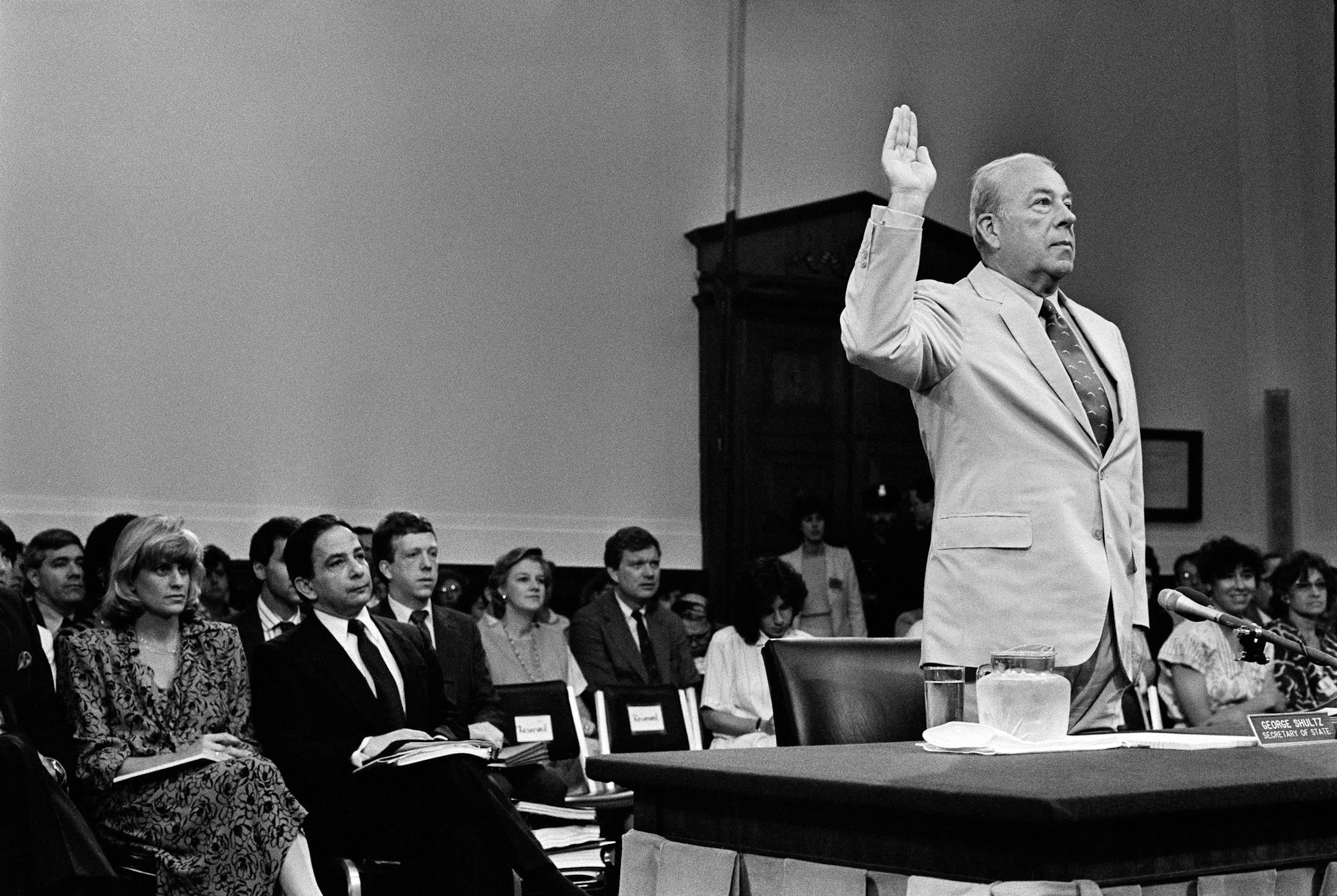
George Shultz's passing Feb. 6 — at 100 years of age no less — was a sad moment for me. Schultz was secretary of state for six and a half years in the 1980s when I was a member of the Senate Foreign Relations Committee, so we interacted with some frequency.
At one point Shultz had a trip to the Kremlin in Moscow planned — I forget for what purpose — but some of the Senate foreign relations cold warriors disapproved. So a nonbinding "Sense of the Senate" resolution was offered objecting to Shultz's trip and came up for a Senate vote.
It was unusual vote. The legislative branch really has no authority to direct the travels of an executive branch Cabinet officer. I liked Shultz and I thought he knew when and where he should go to advance his diplomatic work. So I voted against the resolution.
When, some while later, I visited George in his office, I had forgotten about that vote. But he opened his desk drawer, whipped out a Senate voting tally, and approvingly noted my vote. It was clear that he didn't like senators telling him what to do.
People in Washington keep track of things.
Shultz was the fourth secretary of state with whom I served in my first four Senate years. Cyrus Vance, Edmund Muskie and Alexander Haig had preceded him. Shultz came in at a tumultuous moment and calmed things down.
Friendly and approachable, he was also tough as nails when the situation demanded it, and of his strongest attributes was a clear and accurate sense of right and wrong. He met often with his Russian counterparts, particularly Eduard Shevardnadze, who Mikhail Gorbachev brought on in 1985 to replace the long-serving (28 years), very acerbic Andrei Gromyko.
Gromyko had met his match with Shultz. Shultz would start every meeting with Gromyko by bringing up the name of a "prisoner of conscience" the Soviets held. Gromyko didn't like that and said so. Shultz was undeterred.


