

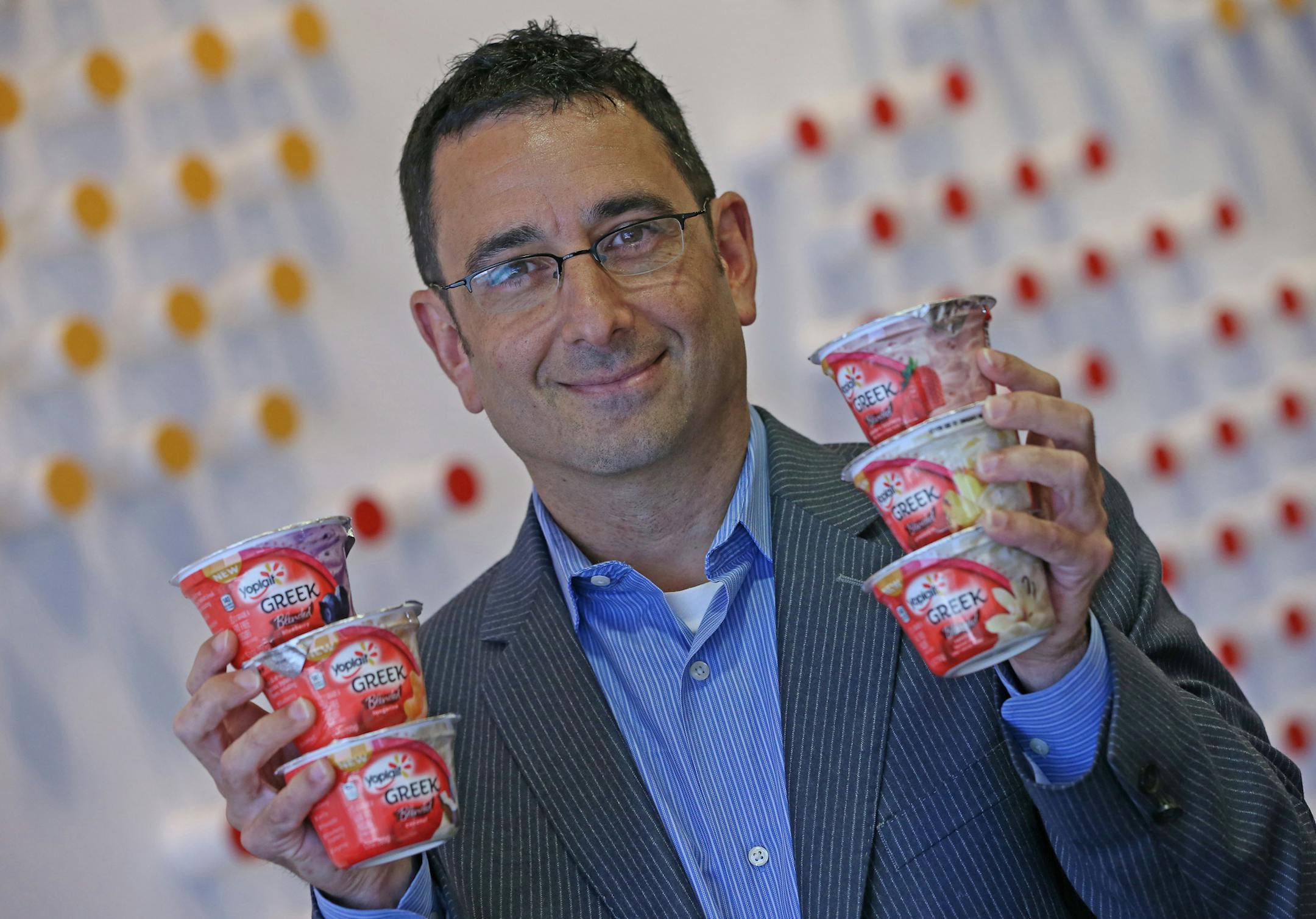
The rise of Greek yogurt has been simply extraordinary by packaged-food standards, as General Mills Inc. has learned the hard way.
Sales and market share of its popular Yoplait brand have fallen sharply as General Mills was late to the Greek party and failed to make a major dent in the category. With Greek now commanding around 40 percent of the overall yogurt market — up from 2 percent six years ago — it almost seems too late for General Mills.
But the Golden Valley-based firm says don't bet on it, and some analysts agree. General Mills scored its first Greek success this past year with Greek 100, a low-calorie offering that's been one of Yoplait's best product launches. And now, General Mills is coming out with an entirely new traditional Greek offering, replacing its earlier, well, flop.
Unlike Yoplait's past Greek offering, its new Greek yogurt is "strained" in order to build its rich character, a more traditional method preferred by consumers. Flavors are new, packaging is new and marketing — which barely existed before — is new, too.
"We took a clean-slate approach with this," said Michael Harad, director of marketing for Yoplait Greek. "There is nothing the same between this and where we were."
Indeed, General Mills has even switched production methods. Straining refers to removing liquid whey, the watery portion of milk, giving Greek-style yogurt its thicker profile and twice the protein of conventional yogurt.
General Mills had been using "milk protein concentrate" to thicken its Yoplait Greek, a cheaper method, but one that raises eyebrows among yogurt aficionados. General Mills first adopted strained Greek yogurt with the launch of Greek 100 a year ago.
Greek 100 is General Mills' biggest-selling new Yoplait product in at least 20 years, Harad said, and it's expected to do $140 million in sales in its first full year. To put that in perspective, only about 2 percent of new consumer product launches do over $50 million in their first year.


