

Opinion editor's note: Star Tribune Opinion publishes a mix of national and local commentaries online and in print each day. To contribute, click here.
•••
"We are made of star stuff." When the astronomer Carl Sagan said that famous line, he was reminding people that much of the matter of our bodies was created within the stars long ago. He wanted people to know, we are marvelous, and our story is, too.
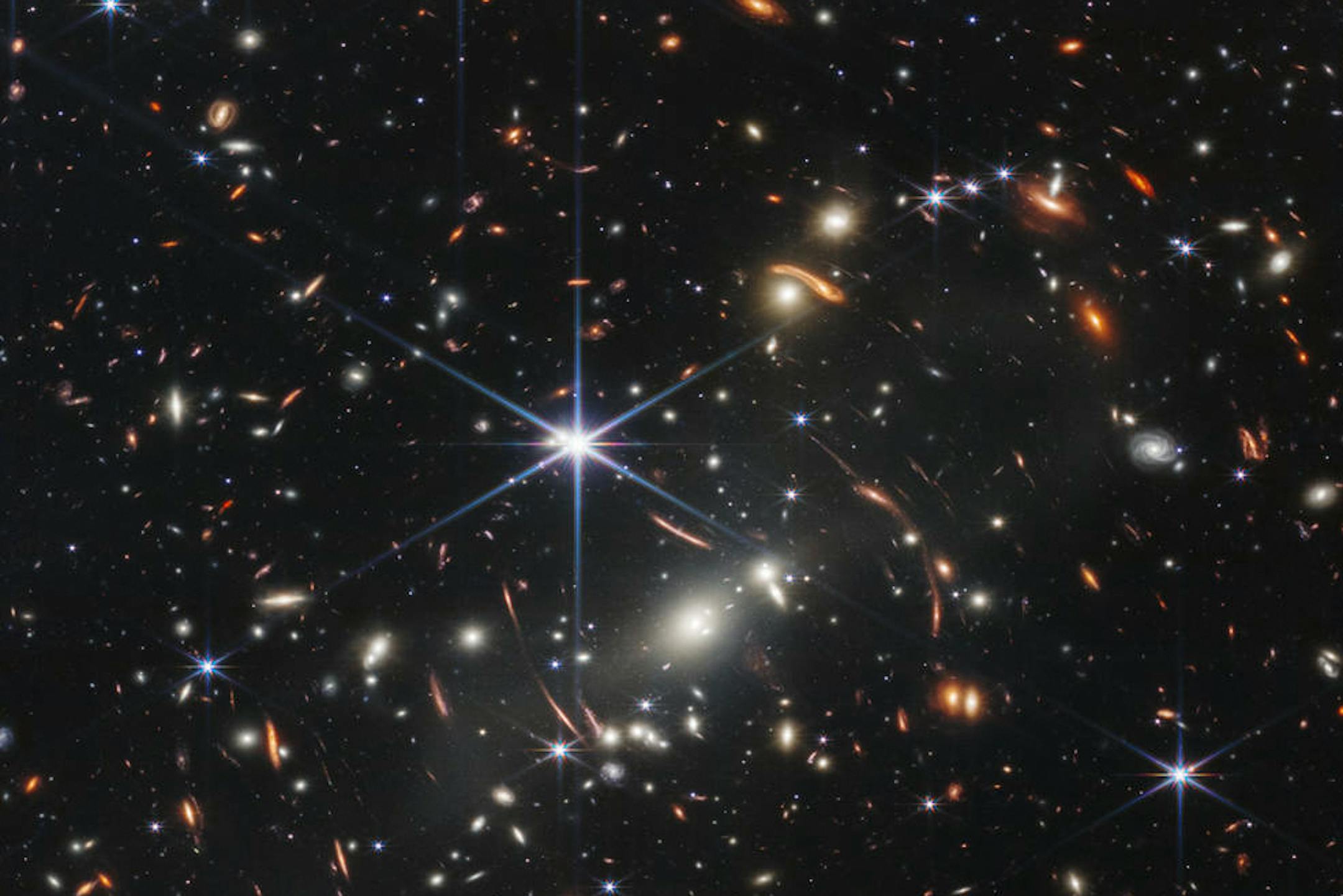
Humanity's story took a new and interesting turn when we traveled back in time 13 billion years. After over two decades of design and planning, on Monday NASA released the first image from the James Webb Space Telescope, which revealed the deepest infrared view of the universe, ever. This new deep-field image is much more detailed than earlier images captured by the Hubble telescope. Once again we are gawking in awe at the universe.
While there are a few interloper stars in the photo, nearly every dot in the image is a galaxy. For a sense of scale, if you could hold a grain of sand at arms length up to the sky, that speck is the size of the view. It is one minuscule sliver of our universe, filled with thousands of galaxies, each with billions or trillions of star systems and each of those with their own planets.
On Tuesday, NASA released even more images from the telescope, including views of the Carina and Southern Ring Nebula as well as notable clusters of galaxies.
The world watched as the images were shared. Moments like this are rare, not just because telescopes this powerful are few and far between, but because collective experiences are too, at least ones so overwhelmingly positive. That is its own feat, and it's what space exploration does: It reminds us of our inherent connection. Viewing images like these can also provide a profound sense of insignificance — they offer a sense of proportion and understanding of just how small we are on the grand scale.
Bound by our bodies and our planet, we lean on telescopes, rovers, planetary missions and the like to extend our reach beyond our little cosmic neighborhood. With these first images, Webb has ushered in a new era of exploration.


