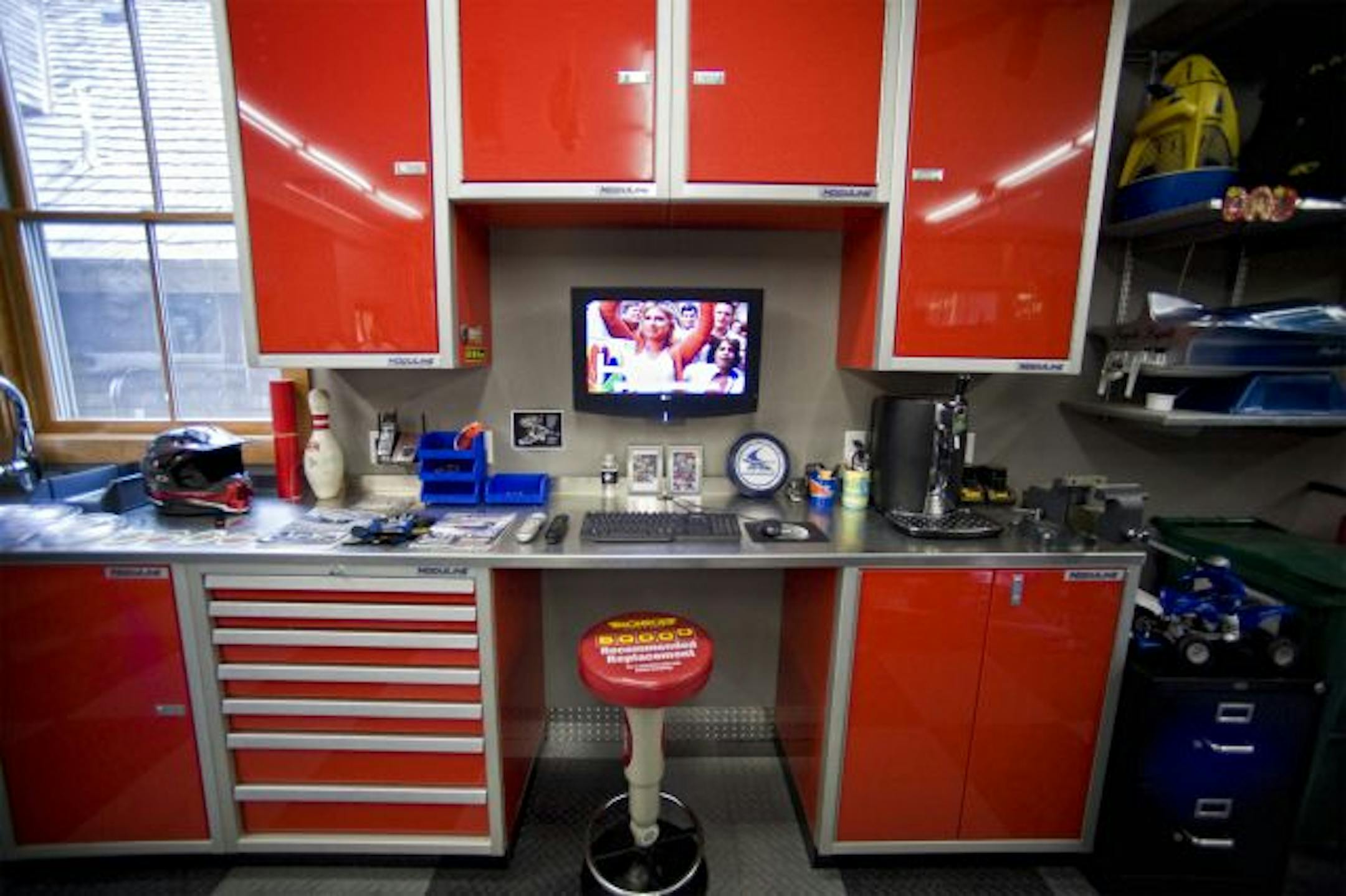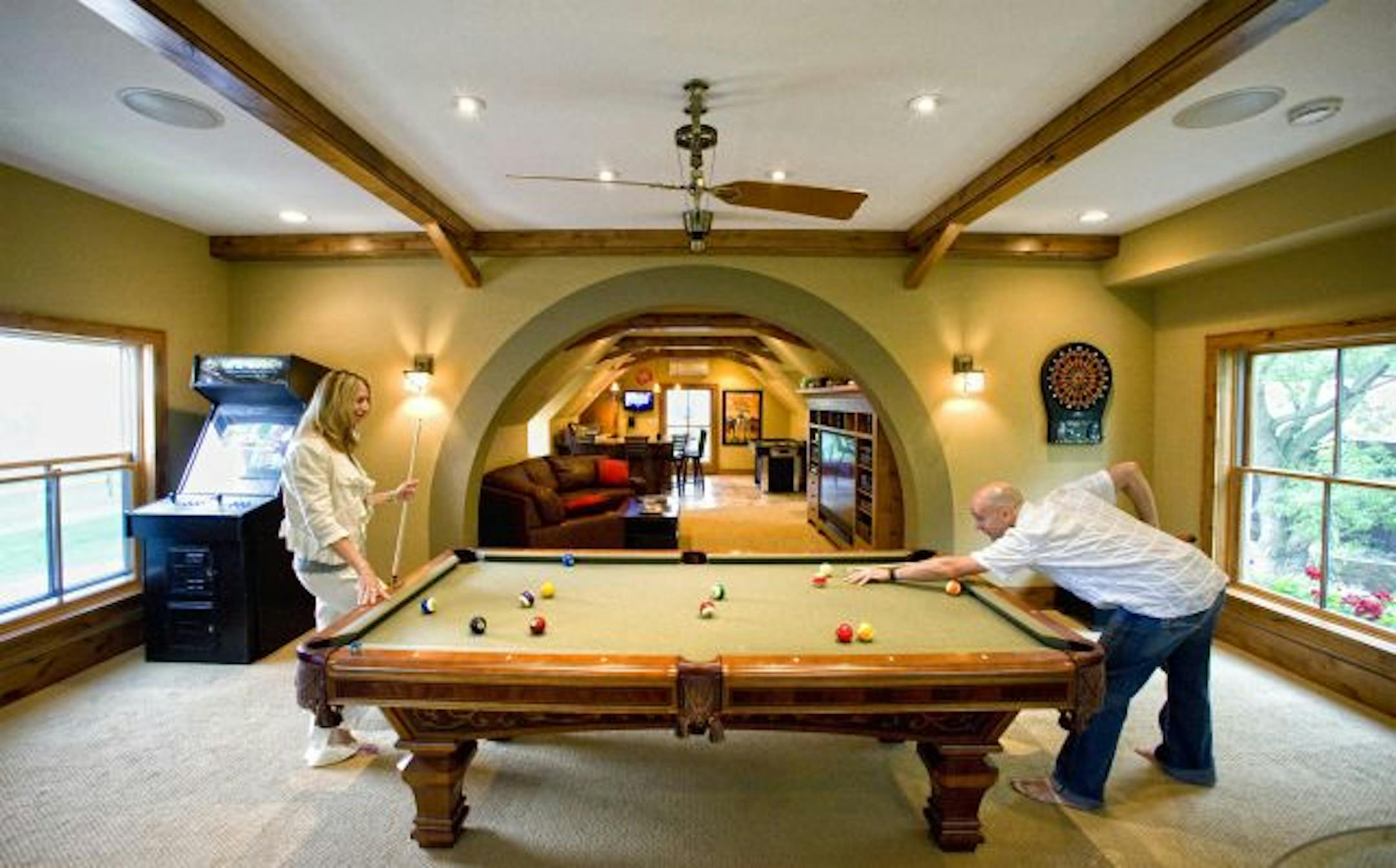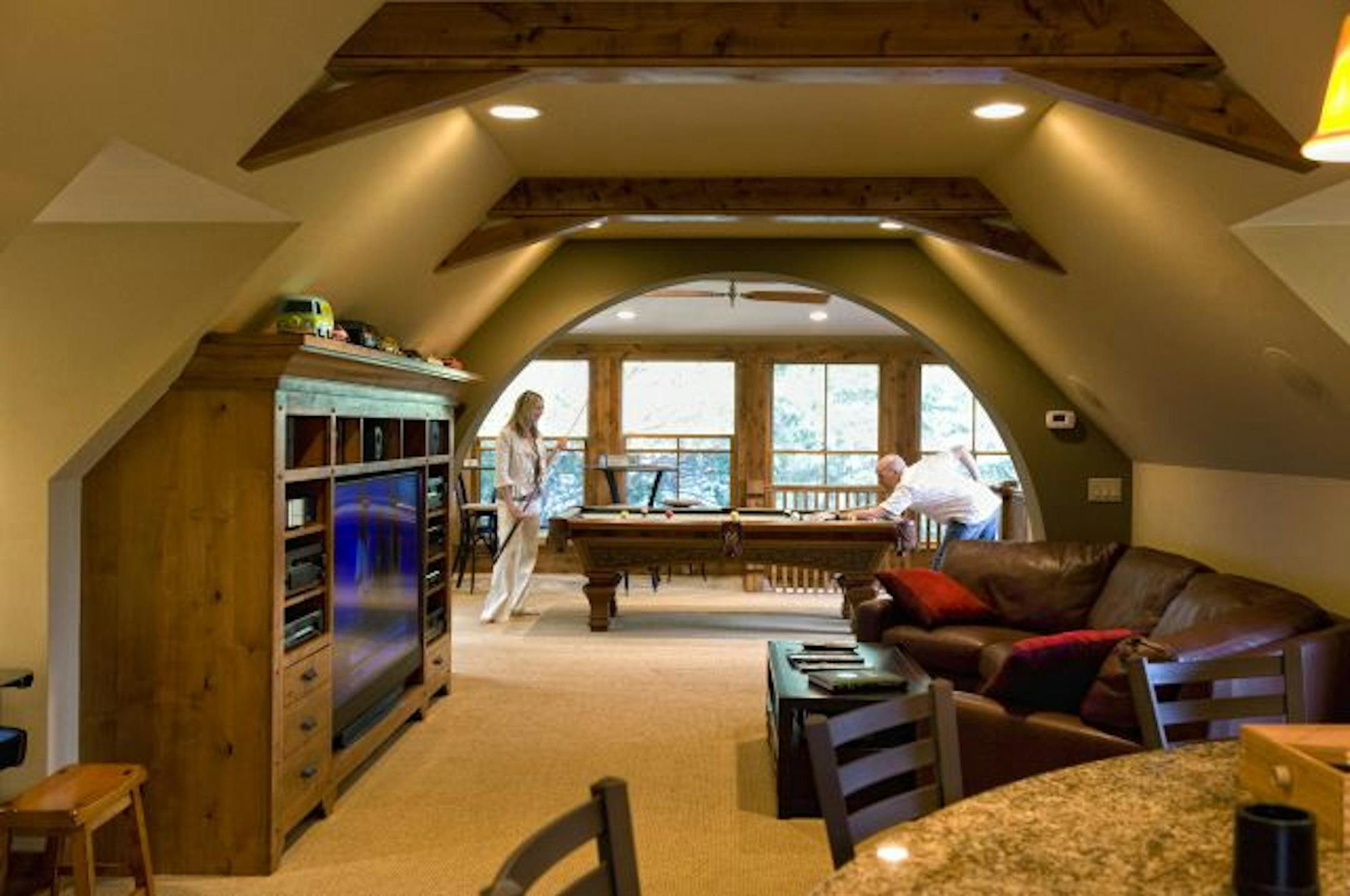
Jeff Murphy has a place to play billiards, watch football on one (or all) of his three TVs and serve beverages from a granite-topped bar. It just isn't in his house. It's in his garage.
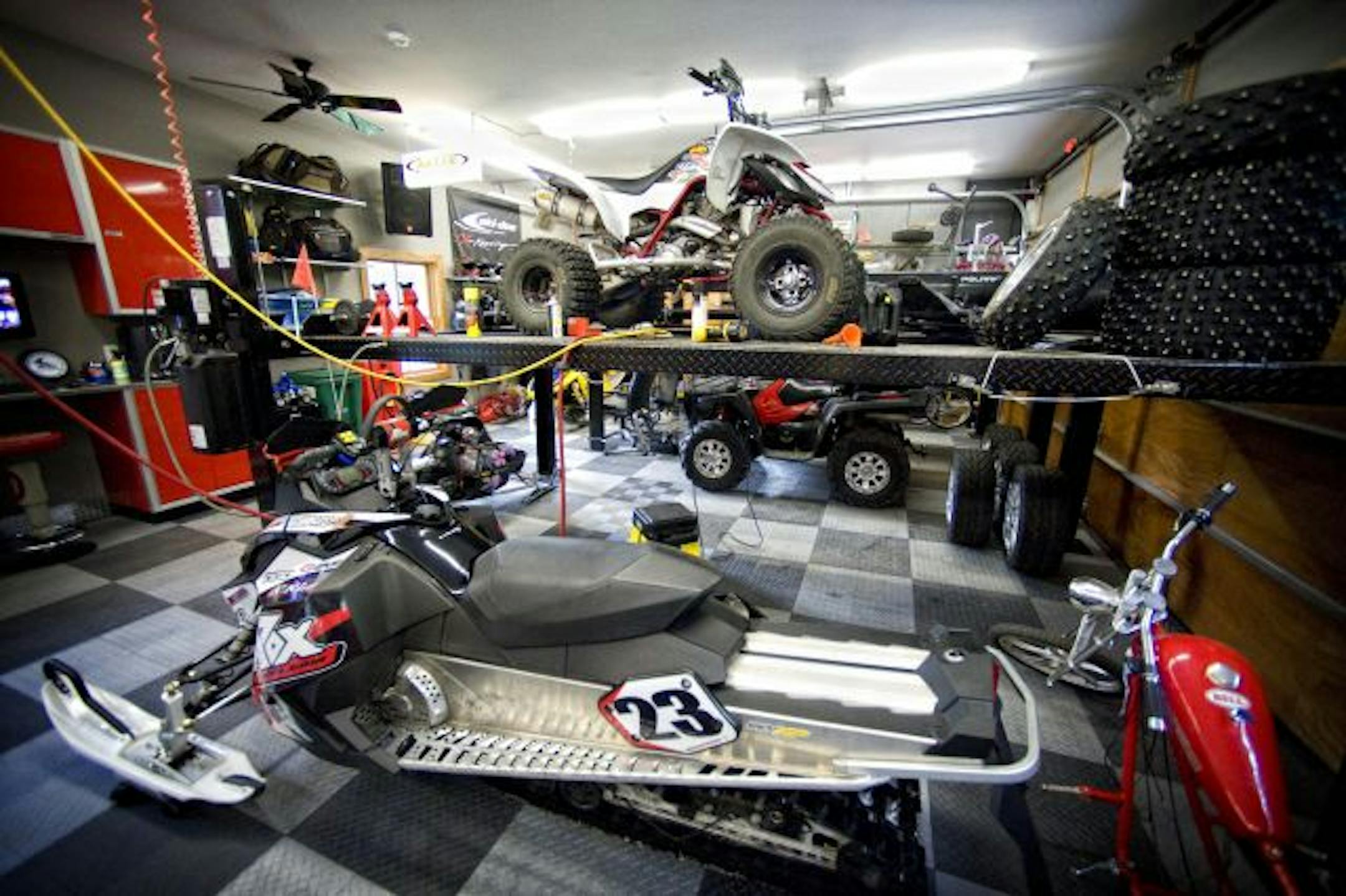
He still parks vehicles in his 1 1/2-story carriage-style garage, but he's made sure there's also plenty of room to play. On the first floor is a heated "man cave" where he can tinker with his toys -- snowmobiles, personal watercraft, ATVs -- and an automotive-themed bathroom with a vanity crafted from a used fuel drum. Upstairs, his wife, Jill, and their three children often join him to watch movies or play 1980s arcade games. "It's like going to a cabin for a weekend," he said.
The Murphys' home, on Lake Pulaski in Buffalo, Minn., has no basement. So when they added a second garage for storage, they decided to build more than a basic shell.
"After the kids are in bed, I'm out there until midnight," said Murphy, owner of Murphy & Co. Design, a Buffalo residential design firm. "It's my time to collect my thoughts. I can turn up 38 Special and install a new carburetor on a Jet Ski."
Murphy is among a growing number of garage owners who have taken the typically grungy, cold, cavernous space and transformed it to an inviting retreat. In the past several years, more people have built multifunctional garages or converted existing garages into lower-cost rec rooms, home offices, exercise rooms or even spare bedrooms.
"The garage is the final frontier of the house," said Kira Obolensky, author of "Garage: Reinventing the Place We Park." "People see more opportunities to use this flexible overflow space," she said.
Jim Kuzzy, project manager for Plekkenpol Builders in Bloomington, said he's noticed a rise in the number of homeowners tapping into the often underused space. "Cost-effective garage conversions are an area showing growth even in this economy," he said.
Among the more popular garage remodeling projects he's encountered are main floor combination mud/laundry rooms.