
From Silicon Valley to Baltimore: Opportunity zone lures surgical robot maker and opens new investment

Baltimore is among communities across the U.S. looking to leverage tools brought by 2017 tax cuts.

November 10, 2019 at 8:00PM
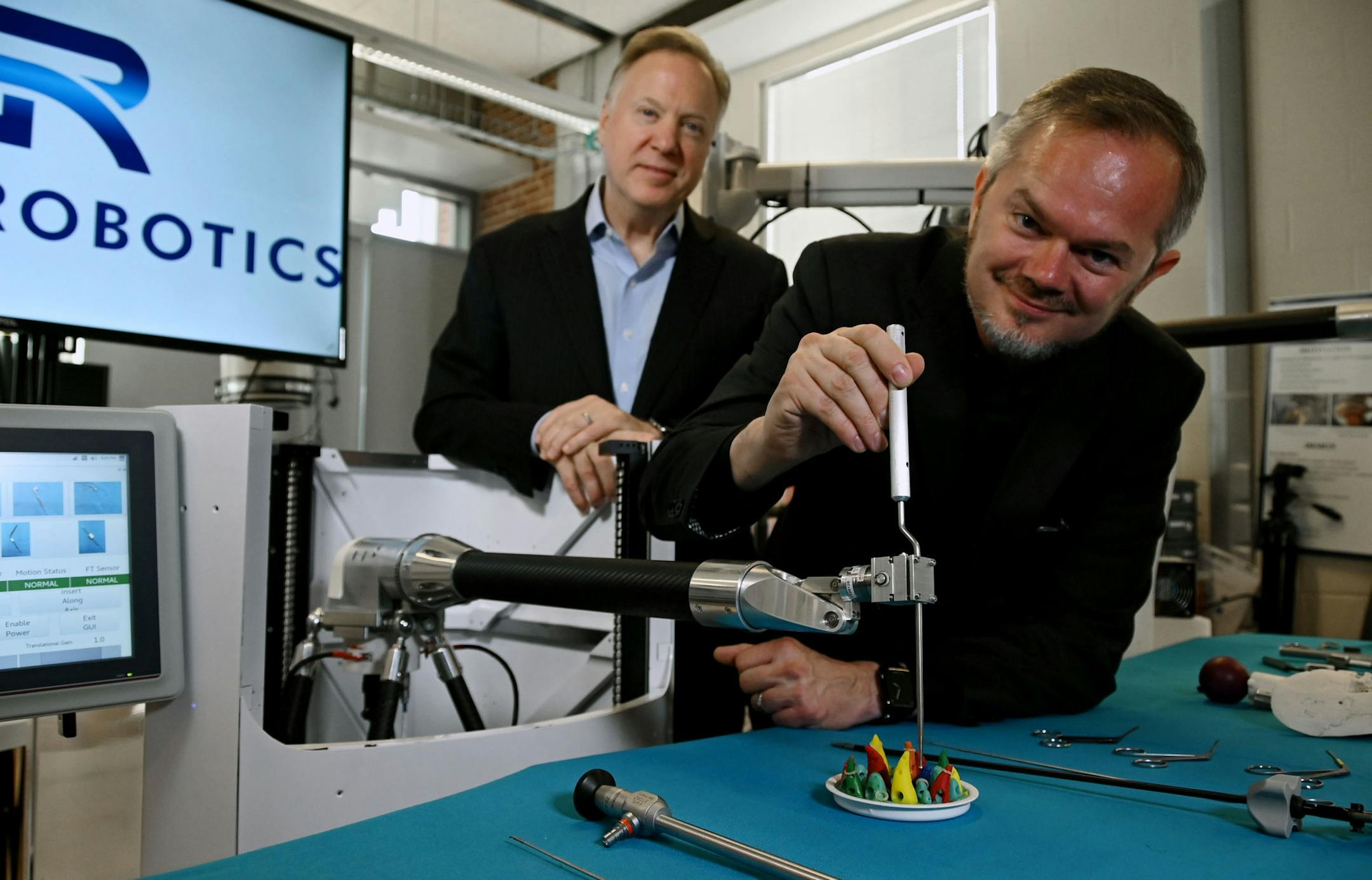
From left, Bruce Lichorowic, president and CEO, and David Saunders, CTO, co-founders of Galen Robotics, lead a company that has developed a robot to assist during microsurgeries. The company, incubated at Johns Hopkins University, is poised for a big expansion in Pigtown. They show off the Galen Robot in Hackerman Hall at Hopkins on Nov. 1, 2019. (Kim Hairston/Baltimore Sun/TNS) ORG XMIT: 1482018
Bruce Lichorowic, left, and David Saunders, co-founders of Galen Robotics, lead a company that has developed a machine to assist during microsurgeries. (The Minnesota Star Tribune)

BALTIMORE — The robot looks like a stout, little filing cabinet with one long arm, a simple-looking contraption that belies the precision of the brain, ear and throat microsurgeries it is designed to improve.

The company formed to develop and market the machine, Galen Robotics, recently moved to Baltimore from Silicon Valley and might represent the future of safer, less-invasive procedures.

"I like to say it will give the surgeons the effect of power steering," said David Saunders, a company co-founder and chief technology officer.

Galen's move to Baltimore also kicks off the city's quest to attract significant private investment to businesses in its many federally designated "opportunity zones," distressed areas that come with a federal tax incentive. City officials are poised to announce that Galen secured the first such investment in a city business after it moved here and some believe the tax benefit could be a bigger boon to businesses than real estate development that has gotten most of the initial attention.

A College Park, Md.-based venture-capital fund recently created to invest in opportunity-zone businesses gave an undisclosed sum to Galen, part of about $7 million the company has raised so far from investments, subsidies and tax breaks for job creation.

Galen aims to raise $25 million as it ramps up development of the surgical robot, based on technology developed at Johns Hopkins University, and hire more than 100 engineers and other professionals as it seeks federal approval for its use.

Opportunity zones, established by the massive 2017 tax law pushed by President Donald Trump, allow investors to defer or avoid taxes by rolling over investment income into properties or businesses in designated distressed areas.

Ben Seigel, the opportunity-zone coordinator at the Baltimore Development Corp., the city's economic-development arm, and others expect more money will flow into businesses in the zones than into real estate.
"I do think there is a feeling within the industry and the opportunity zone field over time, if opportunity zones really take off the way we hope they do," Seigel said, "we'll see a lot of investing in operating businesses because generally it's where investors can get bigger returns from growth businesses."

Seigel called Galen "a very positive example and case study."

Galen is the second opportunity-zone investment for the Verte Opportunity Fund. The other was on an Indian reservation. The fund's online description says it will look for "high-growth, disruptive businesses with innovative products and services."

Verte CEO Leonard Mills said the just-formed fund looked to Seigel to identify good bets and Galen fit the financial criteria. The link to Hopkins was a plus.

Galen hopes to gain approval from the U.S. Food and Drug Administration for the robot next year or in early 2021. Officials say 42 hospitals have expressed interest in the machine so far. And more tools and procedures could be added over time, potentially driving up demand for the robots.

Bruce Lichorowic, Galen's president and CEO and another co-founder, said company officials were sure of the need for the technology, based on discussions with surgeons. Robotics are growing part of surgery, but most such equipment is designed for bigger spaces in the body than the head and neck.

Verte's investment is not make or break for the company, Lichorowic said, but the incentives the city and state put together for companies moving to opportunity zones was key to Galen's decision to move from California.

While all of Verte's investors want a return on their money, many also are interested in the social effect of opportunity zones, Mills said.

Lettieri believes opportunity zone businesses will end up attracting the most attention from investors, and interest will increase in the next year or two.

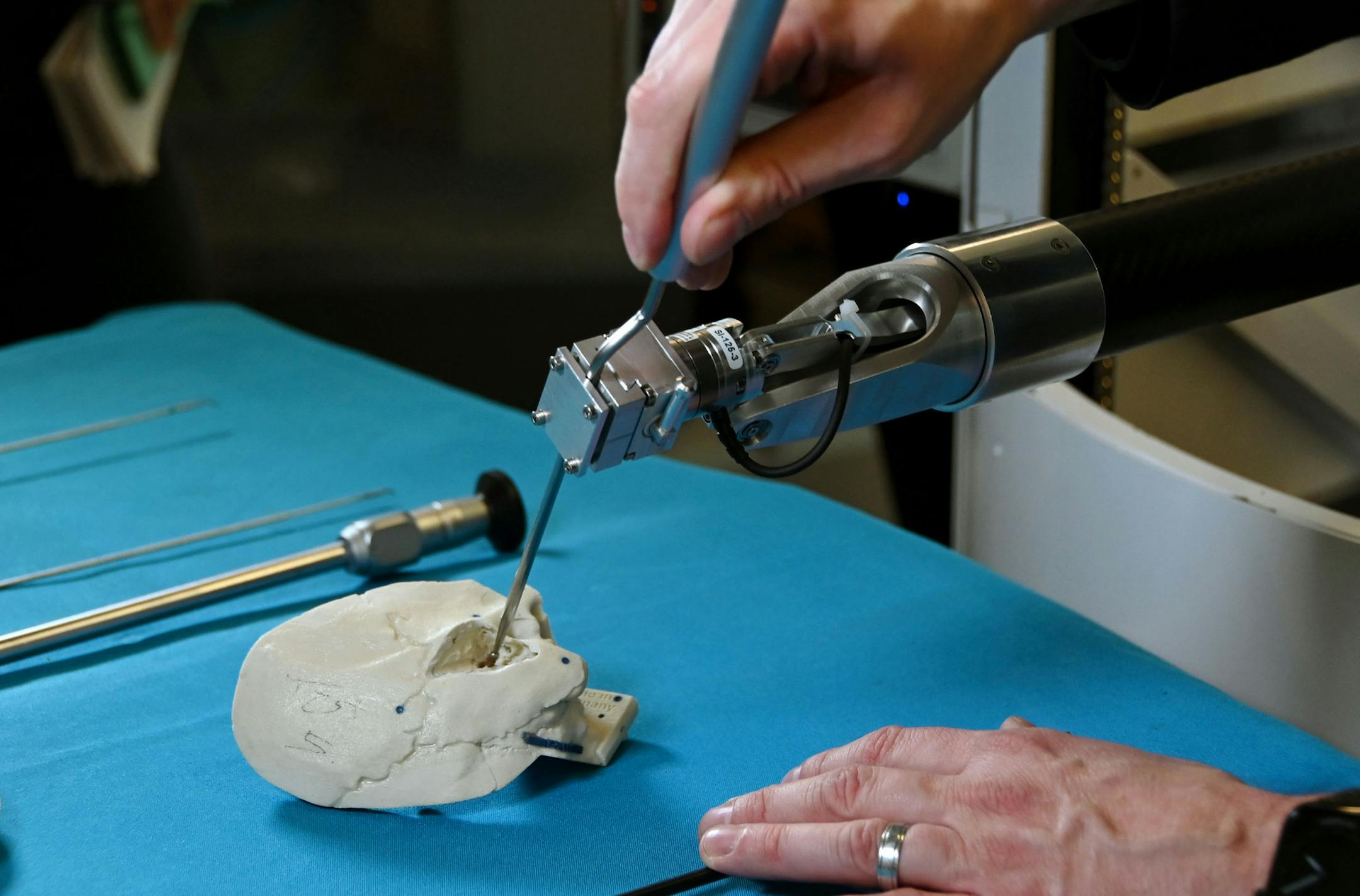
David Saunders, CTO and co-founder of Galen Robotics. demonstrates the Galen Robot using a model of a mastoid bone. The robot assists surgeons with microsurgeries by reducing hand tremors. The company, incubated at Johns Hopkins University, is poised for a big expansion in Pigtown. (Kim Hairston/Baltimore Sun/TNS) ORG XMIT: 1482018
David Saunders, CTO and co-founder of Galen Robotics. demonstrates the Galen Robot using a model of a mastoid bone. The robot assists surgeons with microsurgeries by reducing hand tremors. The company, incubated at Johns Hopkins University, is poised for a big expansion. (The Minnesota Star Tribune)
about the writer

about the writer

Meredith Cohn, Baltimore Sun

More from Business

See More
card image
Glen Stubbe/The Minnesota Star Tribune

State officials said higher premiums and diminished federal tax credits mean some people likely feel they can’t afford coverage.

card image
card image