

Eight years ago, at the dawn of the Obama era, pundits seriously debated whether the election of the nation's first black president would mark an end to the country's long history of racial inequality. Weeks after Obama was elected, Forbes Magazine jubilantly published an editorial headlined "Racism in America Is Over." While few others went quite so far, 7 out of 10 Americans did believe that "race relations" would improve as a result of the Obama presidency.
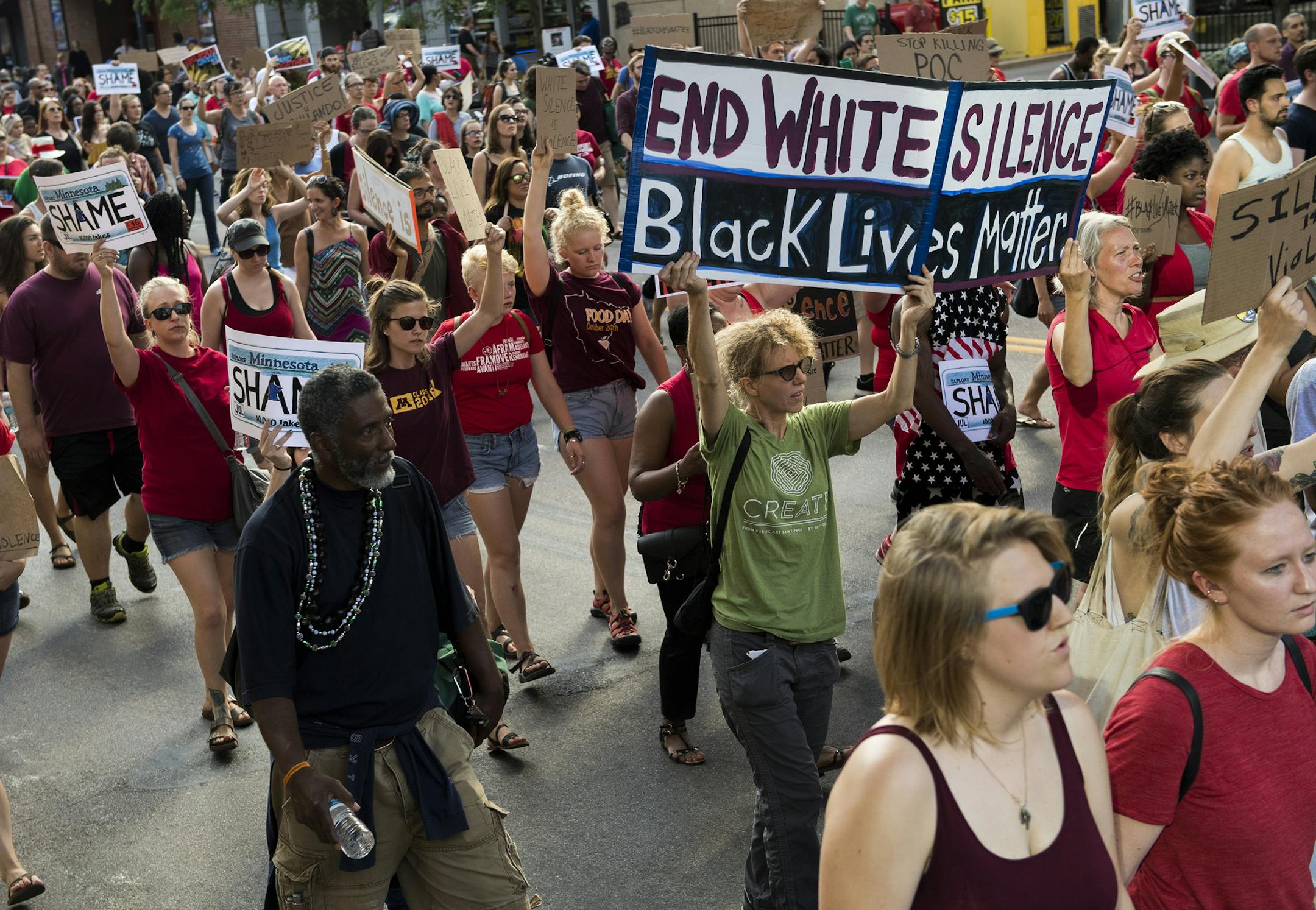
What happened? How did we get from the optimism of Barack Obama's presidential run to the eruption of a protest movement calling itself Black Lives Matter? Perhaps the optimism itself is to blame, or rather the contrast between Obama's promise and the reality of his tenure.
There were sky-high expectations for Obama when he became president. This was especially true of young black people who gave Obama an unprecedentedly high share of their vote, twice. Expectations were also high because the conditions were so poor. The Obama generation had come of age in the shadow of Hurricane Katrina, a decade of never-ending war in Iraq, and the instability of economic crisis, home foreclosures and growing student debt. In 2006, 52 percent of black people aged 18 to 25 described the U.S. government as "unresponsive" to black needs, while 61 percent said they experienced discrimination when looking for work.
But instead of championing government initiatives that could attend to poverty and under-resourced institutions in black communities, the president maintained that he was the president of the United States, not the president of Black America. When Obama did intervene, it was to champion a measly public-private partnership known as My Brother's Keeper that focused on poor and working-class black boys while ignoring the plight of their girl peers. More important, My Brother's Keeper was not public policy but a program based on the generosity of other nonprofits and corporations.
With each passing year, it became more obvious that Obama could not live up to the promises of change that animated his presidential campaign. Indeed, by the summer of 2012, in the heat of Obama's re-election campaign, black unemployment had risen to more than 14 percent, and 38 percent of black children were living in poverty.
Nor did Obama move to reform the criminal-justice system. Almost two years in to his administration, legal scholar Michelle Alexander published her bestselling book "The New Jim Crow," which provided a language to capture the effects of mass incarceration on the African-American population. Obama didn't run with it.
Indeed, two moments highlighted Obama's paralysis: his lackluster response to the Troy Davis campaign and to the George Zimmerman trial.
Davis, a black man, was convicted in 1991 of the 1989 murder of a police officer and sentenced to death. But Davis maintained his innocence, and many believed him. Leading up to his September 2011 lethal injection date, an international group of luminaries — including the pope, the head of the European Union and a former director of the FBI — pleaded for a retrial or clemency. Black college students marched on the White House and the Supreme Court. But Obama never even made a statement regarding Davis. Instead, he left it to his spokespeople to say that he had no jurisdiction over the matter. Davis was executed.


