

The stock market is dipping, inflation is on the rise and there is no end in sight to the war in Ukraine. But not all the news is bad: Our planet just got a bit safer, thanks to NASA.
In a feat previously relegated to the realms of science fiction, NASA scientists successfully deflected an asteroid from its path.
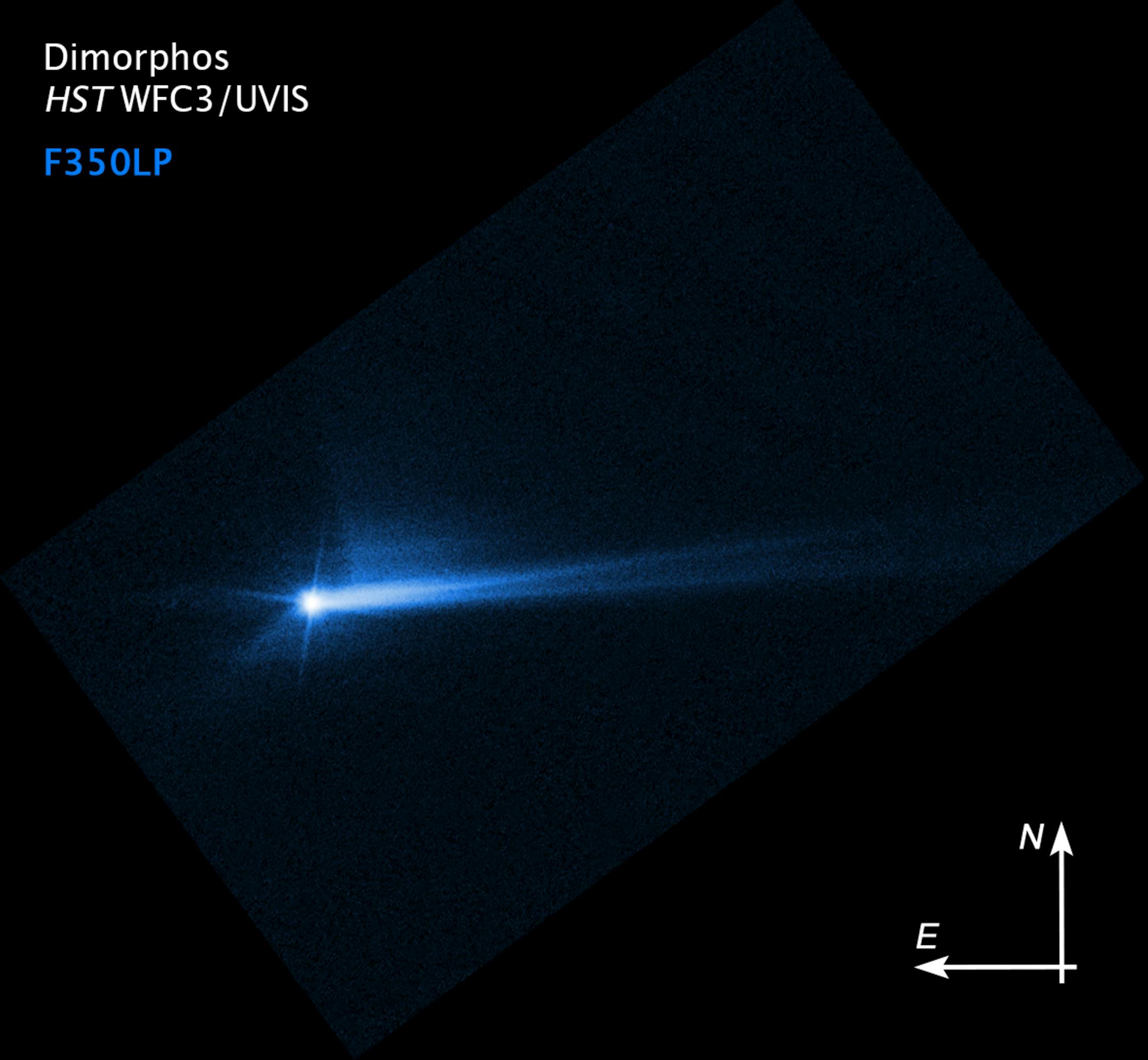
On Sept. 26, DART, a spacecraft the size of a commercial dryer, hit a nonthreatening asteroid called Dimorphos — and proved that we humans might be capable of mounting an Earthly defense, should a killer asteroid one day head our way.
Such a scenario is not far-fetched. Every school kid knows that the reason we don't see dinosaurs roaming the Earth is that the impact of a giant asteroid wiped them out some 66 million years ago.
In a modern example, an object — perhaps a rocky asteroid, perhaps an icy comet — the size of a 15-story skyscraper exploded over the Tunguska River in Siberia in 1908, releasing energy equivalent to approximately 12-15 megatons of TNT (about a thousand times as powerful as the atomic bomb that destroyed Hiroshima).
Most asteroids and comets that enter Earth's atmosphere vaporize quickly because of the heat produced by friction. The object in Siberia, however, got within 10 miles of the planet's surface. It flattened 80 million trees over 230 square miles. It left no crater, but the circular pattern of immense destruction is sobering.
Evidence of such events exists all over Earth. Scientists think an explosion similar to Tunguska destroyed Tall el-Hammam, an ancient walled city close to the Dead Sea, around 1650 B.C.
One telltale sign of a planetary asteroid impact is the presence of the mineral coesite, a variant of quartz that forms only under intense heat and pressure. Mile-wide Meteor Crater in Arizona contains a lot of coesite, as do other sites across the globe. Fortunately, collisions involving an asteroid of the size (about 100 to 170 feet across), makeup and speed that produced Meteor Crater are infrequent, happening once every few hundred years, and are much more likely to hit open ocean or empty territory than a population center.


