

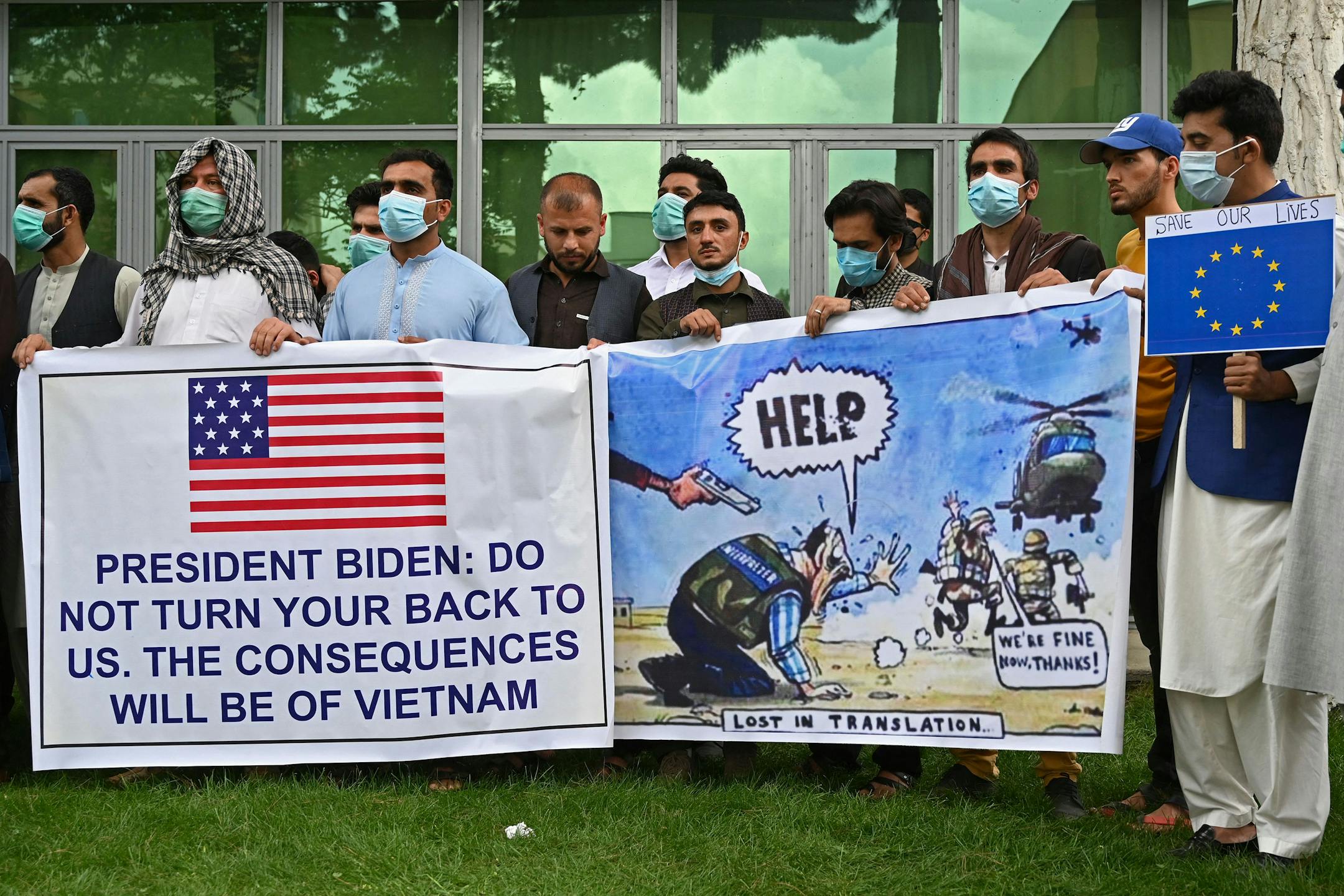
Regrettably for the United States, but more tragically for the people of Afghanistan, history is repeating itself.
When a great power commits to defending an ally, it assumes a moral obligation of faithful stewardship. If the great power fails, it may not in good conscience simply abandon those who stood by its side, placing their lives and futures at risk in reliance on the good faith of their protector.
Yet abandoning those who trusted in us is exactly what the U.S. did at the end of the Vietnam War — and what it is now doing to the Afghans.
Last week, President Joe Biden indignantly denied any comparison, telling reporters who suggested one that the Taliban insurgency is not "the North Vietnamese army. ... There's going to be no circumstance where you see people being lifted off the roof of [an] embassy ... of the United States from Afghanistan. It is not at all comparable."
This claim deserves closer examination.
In October 1954, President Dwight Eisenhower made a commitment to the people of South Vietnam to assist them in defending their country against conquest by the communist government in North Vietnam. Undeterred, Hanoi launched a campaign of violence in 1959, supporting the insurgency of a subsidiary known as the Viet Cong, and in 1965 sending its regular army into South Vietnam.
The U.S. responded. President John Kennedy sent military advisers and special forces, President Lyndon Johnson sent ground troops and began bombing North Vietnam to reduce the flow of men and supplies into South Vietnam. By 1968 over 500,000 Americans were fighting in South Vietnam.
After major attacks across South Vietnam during the 1968 Tet holiday, Johnson began peace talks with Hanoi and capped the American force commitment. In 1969 President Richard Nixon began a program of "Vietnamization" whereby American military forces would gradually turn the fighting completely over to the South Vietnamese.


