

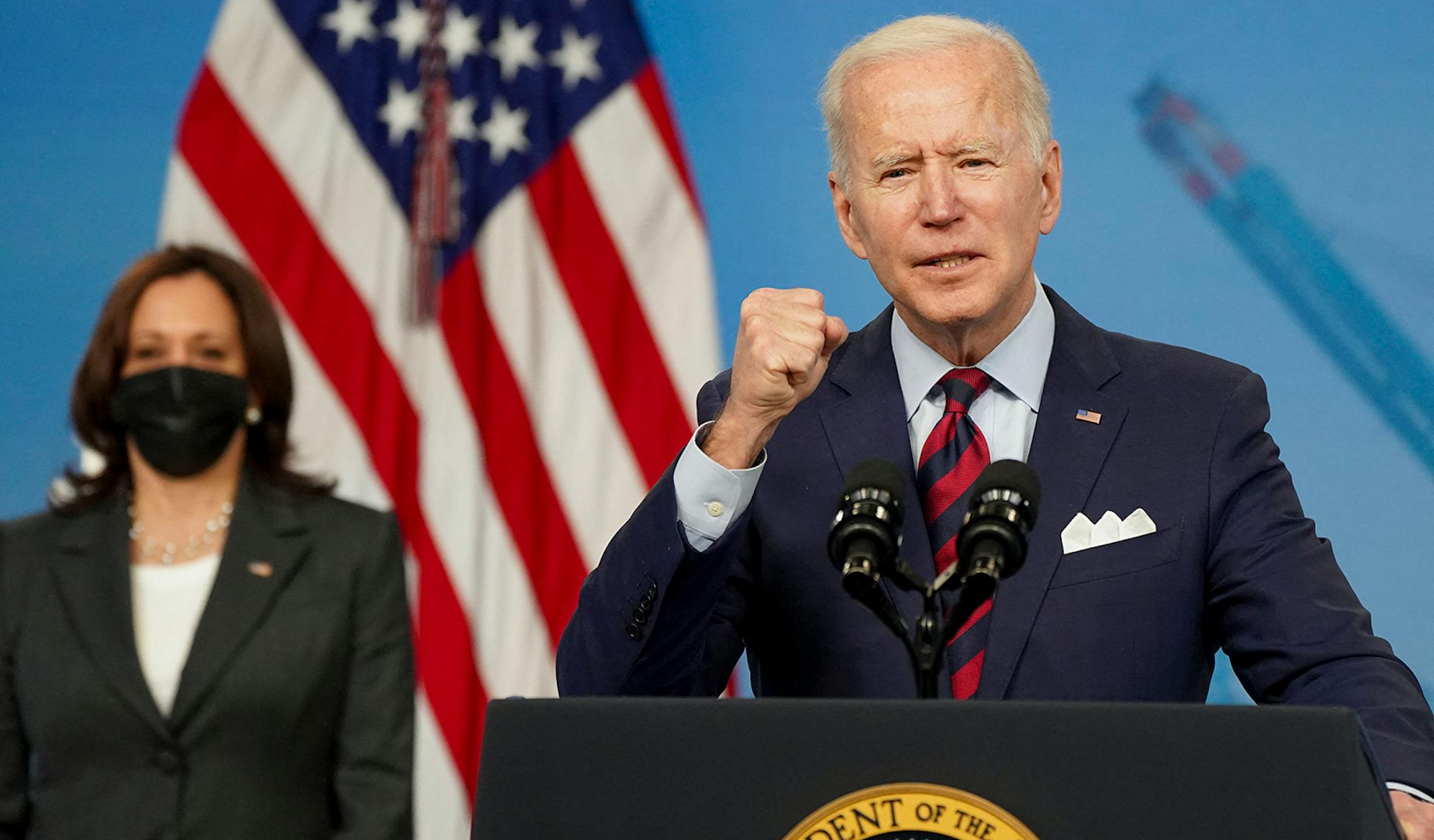
President Joe Biden is expected to unveil his plan for free community college in his address to Congress on Wednesday. That may sound like a good solution to soaring college costs and the growing burden of student debt, but it's an answer to the wrong question.
First, nothing about our education system is free and nothing will be. It's a great campaign slogan but, ultimately, it's political spin considering tax dollars are being used. It's like a round of drinks on the house: Just because you're not paying for the Jäger bombs doesn't mean no one is.
Second, post-secondary education is not a luxury for the middle class, it's access to it. In 2020, the median weekly income for those with a high school diploma was $781 while an associate degree brought in $938 and a bachelor's $1,305.
Third, and most important, over the last 50 years, inflation has outpaced wages and the cost of college has outpaced them both. Graduating class after graduating class is drowning in debt before they even set sail because there's a hole at the bottom of the ship.
Yes, the government should be removing barriers to post-secondary education; some 41% of community college students have to take out loans to get through school. But we should also be asking why it costs so much to go to college in the first place.
Between 1969 and 2019, the cost of college has increased a ridiculous 3,009%. The creation of federally funded Pell Grants by the Higher Education Act of 1965 was intended to help lower-income students pay for college, but clearly that hasn't been sufficient.
When my son was born in 1996, the average cost of a four-year public university was $2,810 a year. By the time he graduated from high school in 2015, it was $9,430. When he graduated from college in 2019, it was $10,230 when it should have been $4,581, according to the U.S. Bureau of Labor Statistics inflation calculator. So, before Biden and the good folks in Washington dive into who should foot the bill, maybe they should spend more time investigating that $5,649 gap between what it is and what it should be.
The year my son graduated from college, the maximum Pell Grant covered about 25% of the average college cost; in the 1970s, the maximum grant covered about 67% of the average cost. That's because the Pell Grants not only fell behind the rate of inflation, the program could not keep up with the skyrocketing costs of college.


