

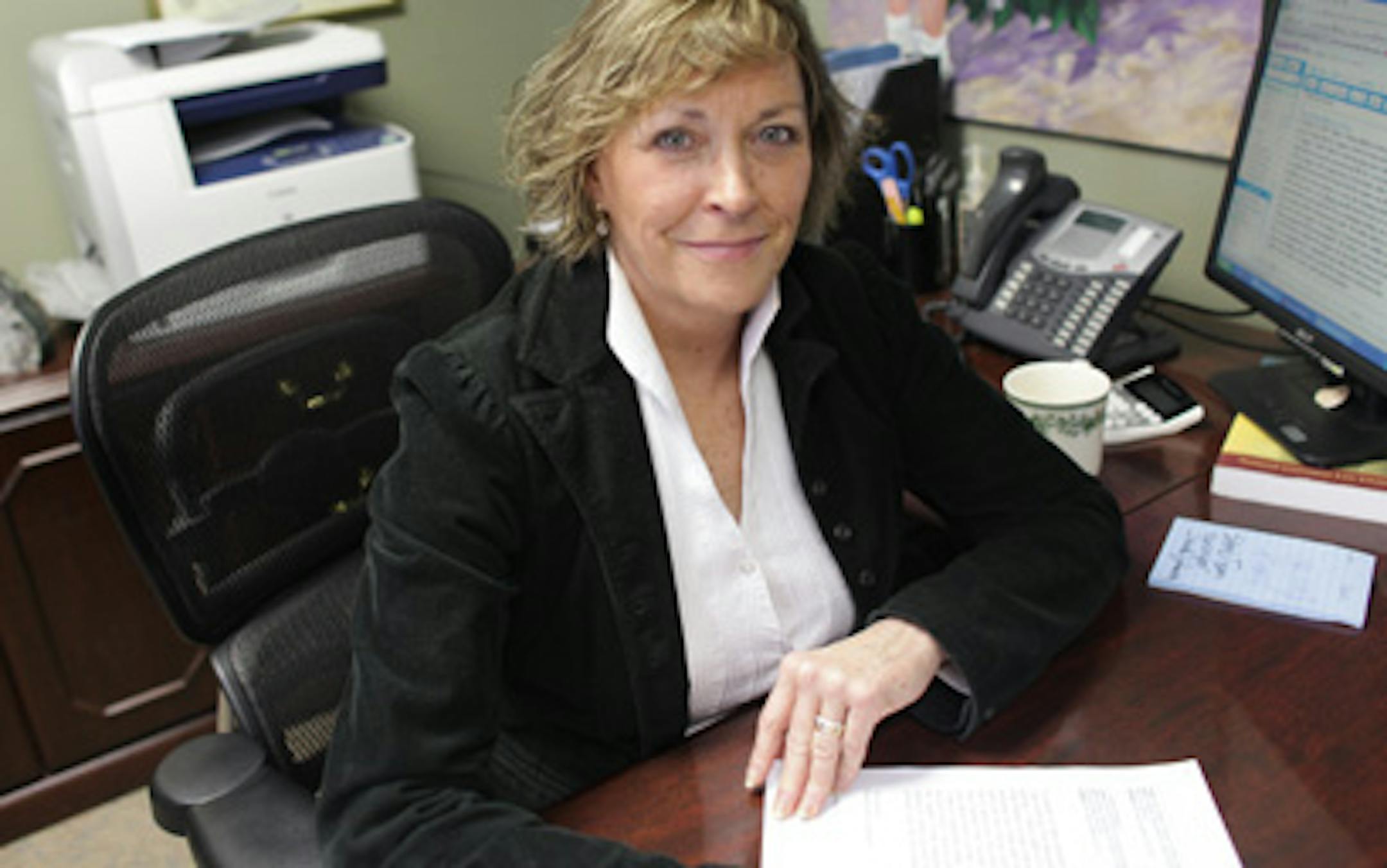
No one wants to be sitting across from Mary Hoben on a Thursday morning, but they are awfully glad she's there.
Hoben is one of 16 attorneys who donate their time and expertise to low-income Minnesotans at a free bankruptcy advice clinic. The new clinic, held at the U.S. Courthouses in Minneapolis or St. Paul, was set up on a trial basis this spring to assist people tackling the painful and mind-boggling task of filing for bankruptcy without an attorney's help. The walk-in clinic was made permanent this fall because demand is strong. In the worst recession since the Great Depression, is that surprising?
Bankruptcy filings in the state have surpassed levels last seen in 2004, the year before the law was overhauled in an attempt to reduce bankruptcy numbers. Filings are up 30.6 percent over last year, with 19,380 personal bankruptcies filed in Minnesota through November. Close to 1.3 million people have filed nationwide, an increase of 32.1 percent from 2008, according to the National Bankruptcy Research Center.
Bankruptcies filed after the 2005 reforms took effect are more expensive because they are more time-consuming, require fee-based financial counseling and place more liability on lawyers. "There are a lot of people who can't even afford to file," said Hoben, a bankruptcy attorney with Curtis K. Walker Law Firm in Minneapolis. Add the higher cost to the supersized recession, and you get more people filing for bankruptcy without an attorney.
About 2.5 percent of bankruptcy filers in Minnesota try to figure it out on their own. So far this year, 505 Minnesotans have filed bankruptcy pro se, or without representation.
For bankruptcy attorneys, the complex legal code is routine. But for the average person, the code is a minefield of minutiae. One misstep and a person's entire bankruptcy case can be thrown out for something as little as failing to file a form.
It's a dangerous problem, said Nancy Dreher, chief judge of the U.S. Bankruptcy Court for the Minnesota District. Sometimes the filer is so ill-informed or confused that Dreher will stop the hearing and tell the person to visit the free clinic. She hopes the clinic can convince the person to find a way to retain an attorney. At the very least, she hopes they return to court with corrected forms or a stronger case.
"The perfect way to deal with it would be to provide just about everybody who needs it with free lawyering," Dreher said.



