

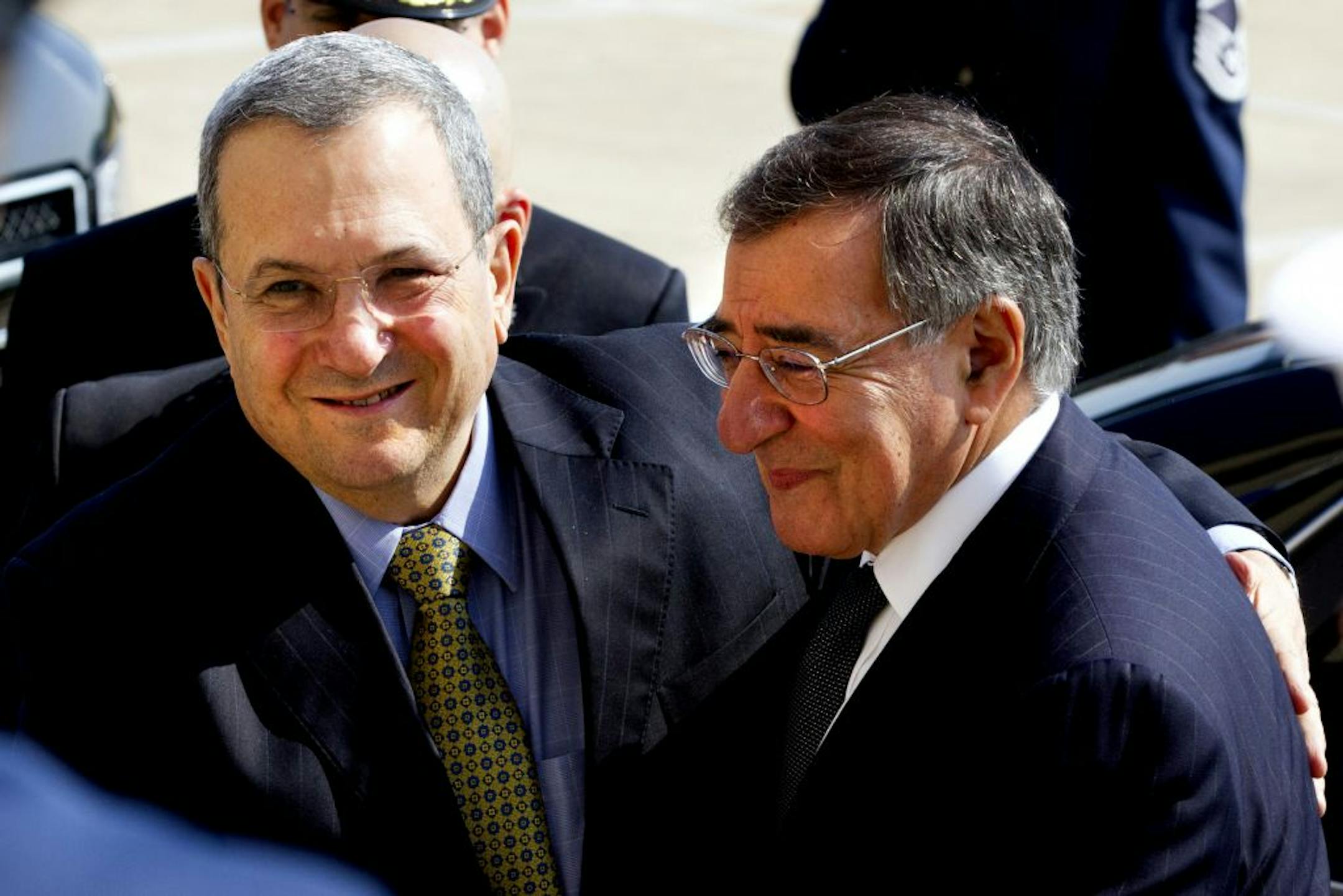
Secretary of State John Kerry continued his dogged frequent-flier diplomacy this week, meeting with Israeli and Palestinian leaders in a bid to prod the peace process. Kerry's effort comes just weeks after President Obama visited Israel and Palestine.
The president pressed leaders and citizens alike in a visit that was "extremely successful in creating a kind of 'eye contact' with the people of Israel," said Ehud Barak, former prime minister and defense minister of Israel.
Barak will be in St. Louis Park on Thursday night as part of Beth El Synagogue's National Speaker Series. In advance of his address he assessed the peace puzzle in a telephone interview Tuesday from New York.
Barak conceded that he is "not extremely optimistic about the peace process because many things have changed." Notably, "Hamas has gotten much stronger." Hamas is the Palestinian faction ruling Gaza, while the more moderate Fatah governs the West Bank.
And yet Barak believes that the peace process must move forward for the very future of Israel, lest demography become destiny and the Arab population supersedes the Jewish population. He fears "a gradual drift to a one-state solution, which is a major threat to Zionism, not just to a Palestinian state."
Part of what causes the drift, said Obama, is that settlement construction is not "constructive." But Barak said this isn't "the real issue," and that even when Israel froze construction "the Palestinian side sat idly waiting for more. ... The behavior of Hamas in Gaza is a much more severe danger for the future of a Palestinian state than settlements."
But Barak knows negotiations will require compromises. Yet peace, he said, "is not a zero-sum game. ... Both of us have a lot to win and a lot to lose."
Regarding Obama's observations in his key speech in Israel, Barak said, "It's not fully accurate ... that peace should emerge from the hearts of the people and not from leaders. In the Middle East it's more complicated — especially on the Arab side. People are not really ripe for it. So it should be in some contractual framework that was devised and decided by leaders. But the reality is created by those contracts, which is sometimes shallow and artificial at the beginning [but] will gradually change the nature of the street, the public approach to each other, because it will expose people with each other without the threat of violence."


