

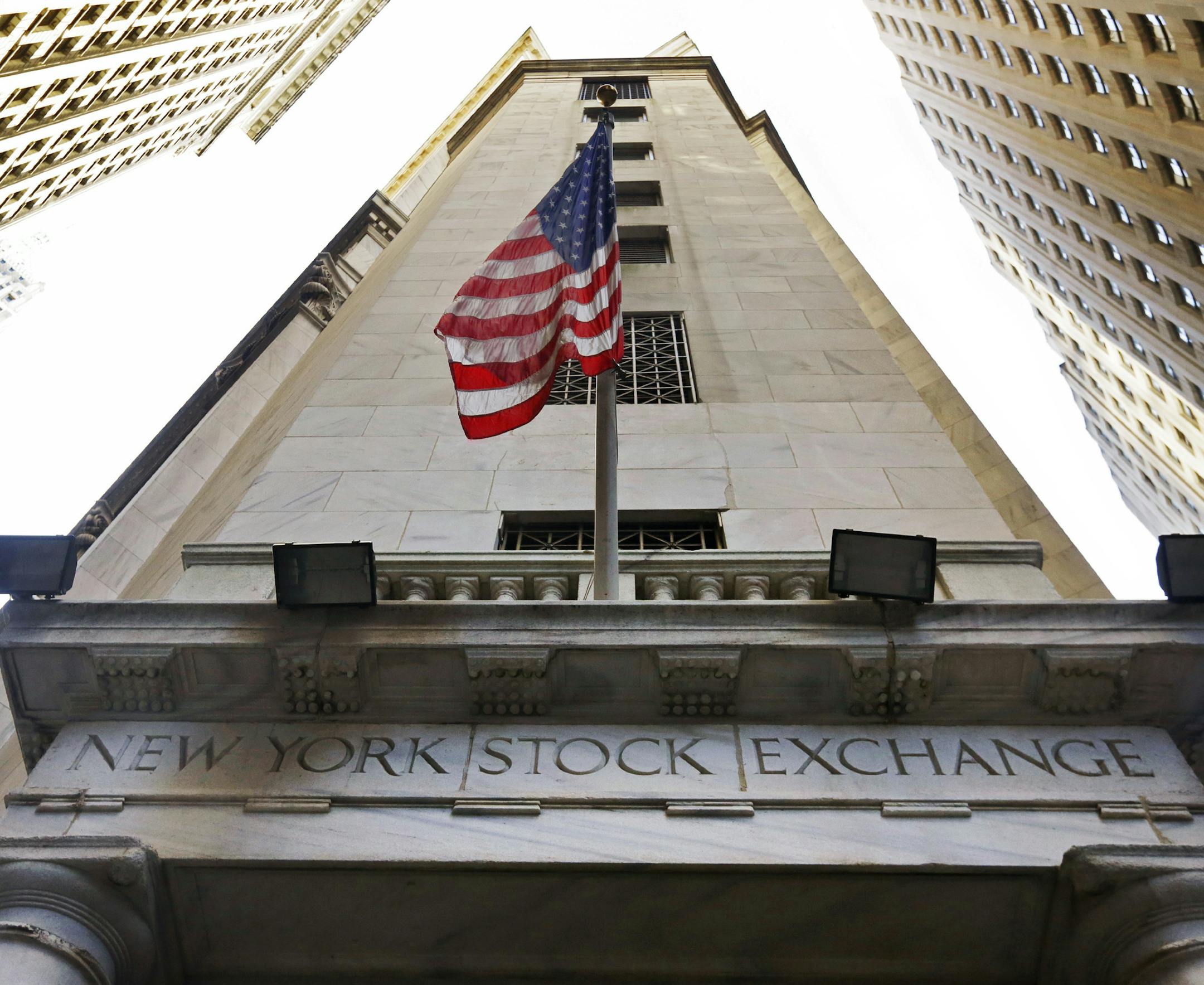
The stock market has been on a frustrating, dizzying roller-coaster ride to nowhere the last couple of years. It's still not over.
Stock strategists and mutual-fund managers are predicting minimal gains and big swings in price for the second half of the year. That's because many of the same challenges that yanked investments up and down in the first half are still hanging over the market, including falling profits at companies and the stubbornly slow global economy.
"Flat is the new up" is how strategists at Goldman Sachs described the market in a recent report. They are calling for the Standard & Poor's 500 index to end the year at 2,100, which would be about where it was last week. Other investment houses have similar forecasts.
A flat market may not be so painful on its own, but prognosticators expect sharp swings in prices also to continue.
Strategists say they wouldn't be surprised to see another 10 percent drop for stocks at some point this year. It would be the third such "correction" since 2015, a sharp turnaround from 2012 through 2014, when there were none.
Swings have become more common for stocks since the Federal Reserve ended its bond-buying stimulus program in October 2014, but they have followed a consistent pattern: A quick drop stirs up fear, only for a rally to ensue. The United Kingdom's vote late last month to leave the European Union was the latest example.
The dip-recovery-dip pattern has been so regular over the last 18 months that the S&P 500 is now almost exactly where it was at the end of 2014.
Some investors have reacted to the market's gyrations by fleeing stocks. Nearly $52 billion left U.S. stock mutual funds and exchange-traded funds in the 12 months through May, according to Morningstar.


