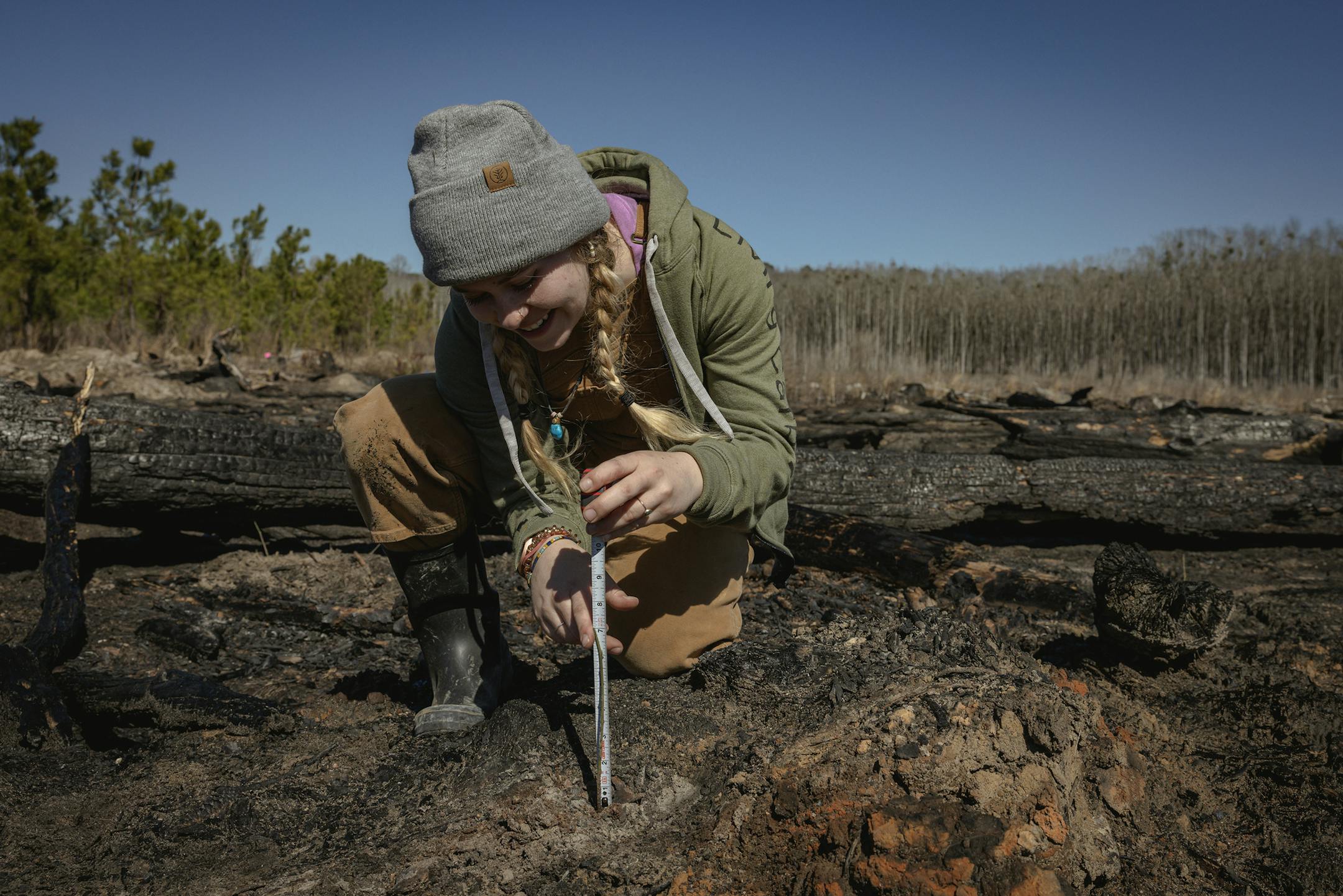
Last month, in a low-lying tract of southern Georgia's pine belt, a half-dozen workers planted row upon row of twig-like poplar trees.
These weren't just any trees, though: Some of the seedlings being nestled into the soggy soil had been genetically engineered to grow wood at turbocharged rates while slurping up carbon dioxide from the air.
The poplars may be the first genetically modified trees planted in the United States outside of a research trial or a commercial fruit orchard. Just as the introduction of the Flavr Savr tomato in 1994 introduced a new industry of genetically modified food crops, the tree planters hope to transform forestry.
Living Carbon, a San Francisco-based biotechnology company that produced the poplars, intends for its trees to be a large-scale solution to climate change.
"We've had people tell us it's impossible," Maddie Hall, the company's co-founder and CEO, said of her dream to deploy genetic engineering on behalf of the climate. But she and her colleagues have also found believers — enough to invest $36 million in the 4-year-old company.
The company has also attracted critics. The Global Justice Ecology Project, an environmental group, has called the company's trees "growing threats" to forests and expressed alarm that the federal government allowed them to evade regulation, opening the door to commercial plantings much sooner than is typical for engineered plants.
Living Carbon has yet to publish peer-reviewed papers; its only publicly reported results come from a greenhouse trial that lasted just a few months. These data have some experts intrigued but stopping well short of a full endorsement.
"They have some encouraging results," said Donald Ort, a University of Illinois geneticist whose plant experiments helped inspire Living Carbon's technology. But he added that the notion that greenhouse results will translate to success in the real world is "not a slam dunk."