

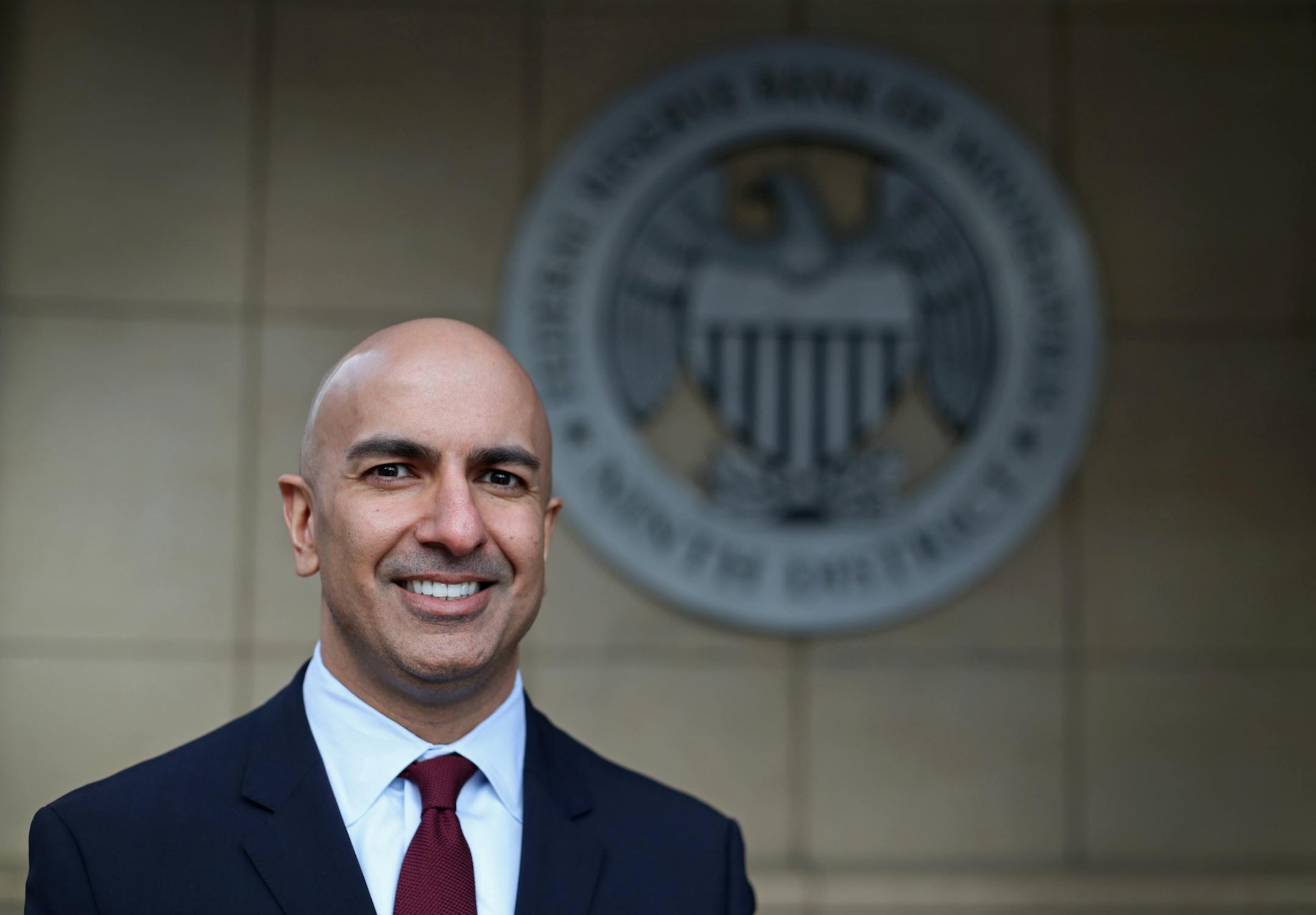
As he begins a second five-year term as president of the Federal Reserve Bank of Minneapolis, Neel Kashkari plans to continue to shake things up under both the central bank's brightest spotlight and in some overlooked corners.
Kashkari, a 47-year-old engineer who became a banker and then was brought into government, has become a distinctive figure among Fed officials as the most consistent and outspoken proponent of low interest rates — and for the way he developed his views.
In his first term, he made a point to meet with a wide variety of people, including people of color who hadn't encountered a central banker before, throughout the six states in which the regional bank operates. Even when the economy was flourishing before the pandemic, he learned many people were still looking for work. So when businesses leaders told him they couldn't find workers, he usually replied by suggesting they raise wages.
"I took a very different approach to monetary policy than basically anybody else in the Federal Reserve for the last five years," Kashkari said during an interview. "I said we're not at full employment. We shouldn't be raising interest rates. My views were shaped by the direct conversations I was having with communities around our region."
Building on that approach, Kashkari also recently committed that the Minneapolis Fed will reach out to include more diverse voices for its portion of the beige book, a product the central bank puts out eight times a year that provides anecdotes and snapshots of the economic conditions in each part of the country. It's one of many sources of information that the Fed's rate-setting committee may weigh in deciding whether to raise or lower interest rates.
"We're supposed to be assessing how the economy is doing and we're only talking to business," Kashkari said. "We're not talking to workers. It just feels like it's a very one-sided source of information."
The Minneapolis Fed's researchers have now widened their outreach for the Beige Book to include workers, employment agencies, nonprofits and minority-owned businesses. It's an idea, he added, that came out of one of the recent Racism and the Economy webinars, a series he launched with some of other regional bank presidents last year.
Evidence of the change can be seen in the most recent report from mid-January. The Minneapolis Fed's chapter includes voices of workforce development sources who address the constraints on the labor supply. They note that many of the available jobs don't pay enough or don't include health care benefits to make it worth it for workers to take jobs that would bring higher health risks amid COVID-19. They also nodded to challenges such as the availability of day care, transportation, and broadband internet.


