

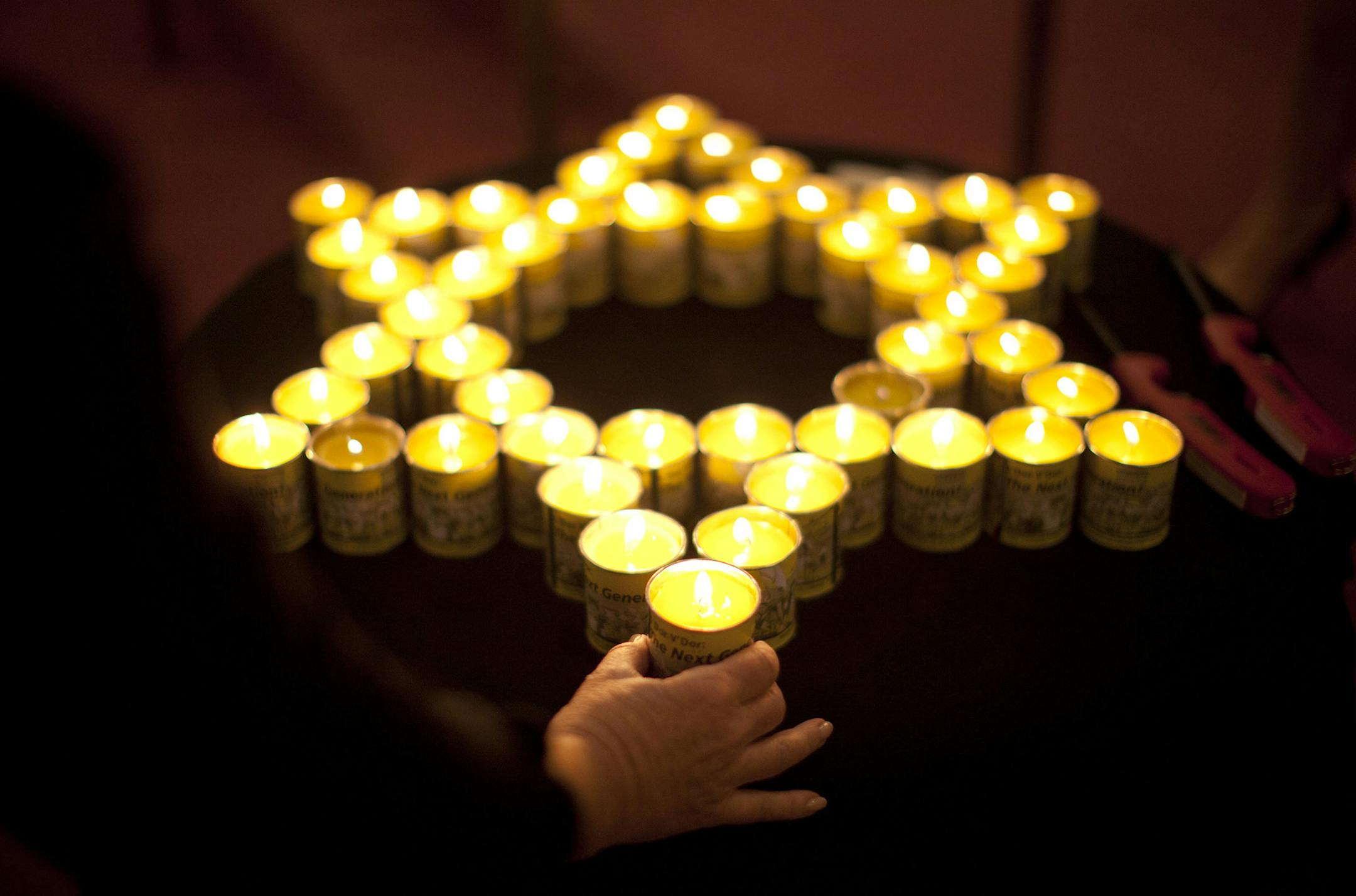
As Yom Hashoah, Holocaust Remembrance Day, approaches, the past and present merge …
Back in 1957, our neighbor Henry helped me overcome my terror of drowning by cradling me in his arms in the lake water and promising not to let go. It worked. Conquering my fear of a watery death might have made me jubilant. But not so, because while Henry swathed me in his burly arms, I was completely transfixed by the peculiar and unexplainably scary blue numbers tattooed near his wrist.
When I asked my father what were they for, he replied that "something bad happened to Henry once," which meant, "Don't ask any more questions. Ever." So I didn't, and over the decades the memory of those numbers faded — until the night before I entered Auschwitz.
More about that later.
Meanwhile, one day in 1964, I rushed home from school earlier than usual (eager to play my first Beatles record) and came upon Grandma Ida sitting, where she often did, on the edge of her bed. This time, she wasn't mending our socks and humming her songs; she was staring out the window, tears flowing. When I asked our normally stoic grandmother what was the matter, she waved me off harshly with the back of her hand, and without turning my way moaned in Yiddish, "Gehn avek" ("Get out of here").
Followed by an awful silence.
In her lifetime with us, Grandma Ida divulged almost nothing about her past to anyone, including her daughter — my mother — who in turn was unable (and maybe unwilling) to tell my sister and me much — except the one time when she took us aside after I had witnessed Grandma's anguish. She explained in a hushed voice that "Grandma gets very sad when she thinks about her brothers and sisters and her own mama and papa in Poland …" All of whom, Mom assumed, were shot — or worse — sometime after Grandma had acted on a nagging premonition by packing a steamer trunk, kissing her family goodbye and fleeing to America, alone.
But my mother didn't know any of this for sure; Grandma Ida grieved but didn't tell.


