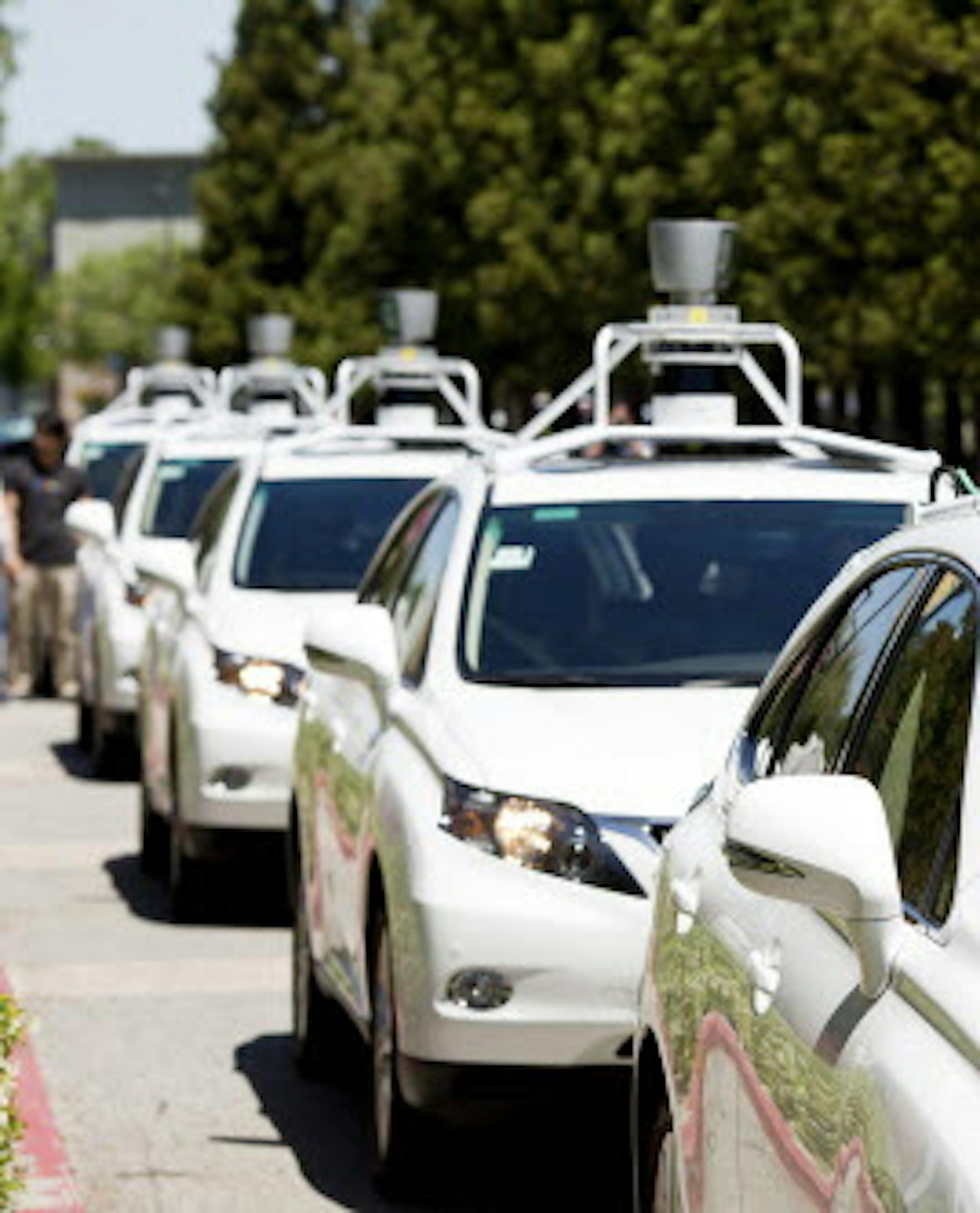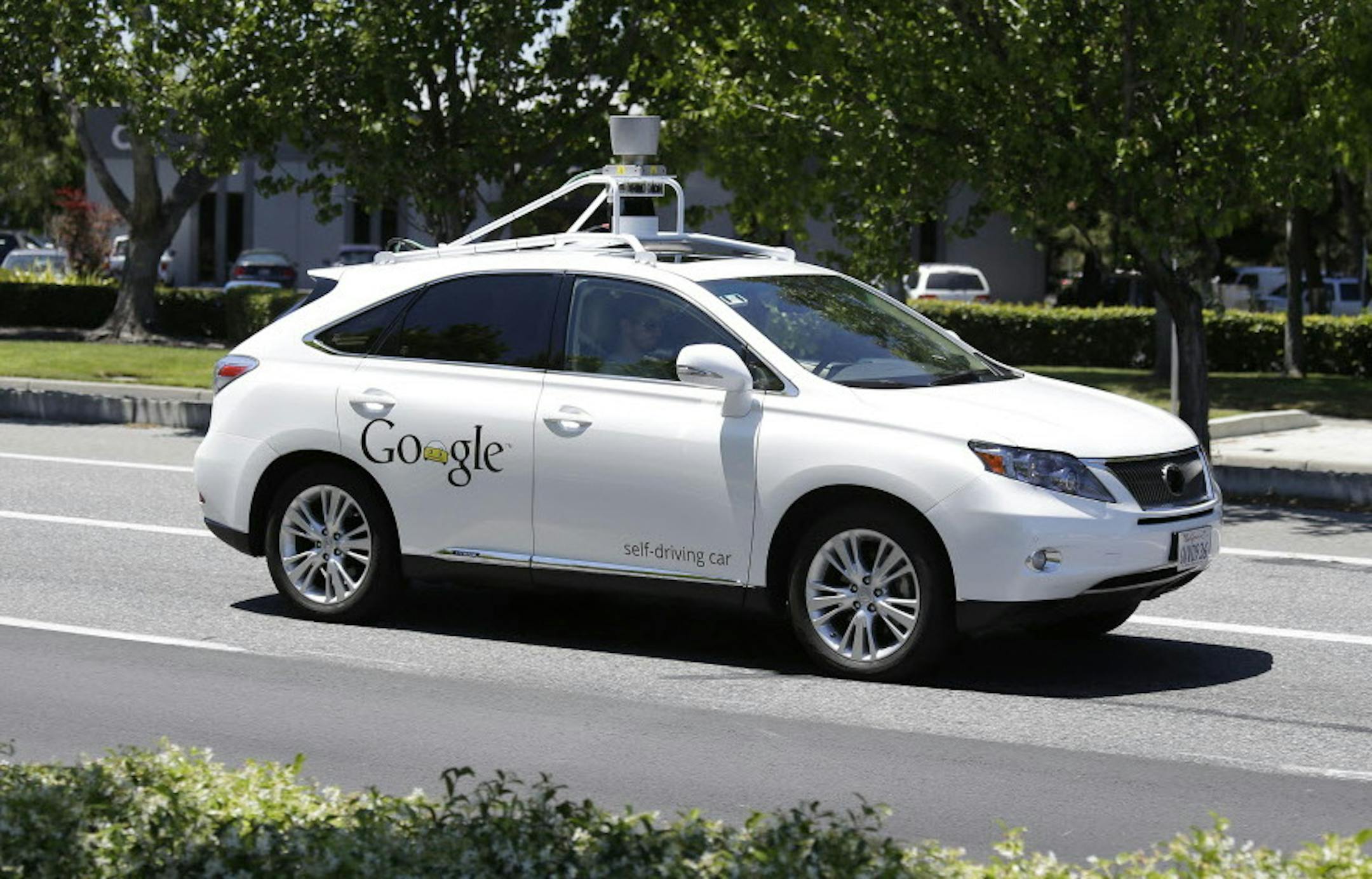
MOUNTAIN VIEW, Calif. – In 700,000 miles of navigating roads, Google's self-driving cars have encountered just about everything — including an elderly woman in a motorized wheelchair flailing a broom at a duck she was chasing around the street.
Apparently perplexed and taking no chances, the vehicle stopped and refused to go farther.
Through extensive testing covering nearly every street in Mountain View, the company's 20 or so autonomous vehicles have developed an abiding sense of caution. But Google researchers concede it will take more experience on the roads before the autos can learn to cope with every situation without becoming bewildered and shutting down, stranding passengers. When that happens now, researchers have to take the wheel and step on the gas.
One of the most surprising lessons: While hoping to make cars that are safer than those driven by people, Google has discovered its smart machines need to act a little human, especially when dealing with pushy motorists.
"We found that we actually need to be — not aggressive — but assertive" with the vehicles, said Nathaniel Fairfield, technical leader of a team that writes software fixes for problems uncovered during the driving tests. "If you're always yielding and conservative, basically everybody will just stomp on you all day."
As a result, he said, Google's cars on freeways tend to leave a shorter distance between themselves and the vehicles they follow than some driver-training manuals recommend, to discourage other motorists from darting dangerously into the space. And when it's their turn to proceed at a four-way stop, Fairfield added, Google's cars will inch forward decisively so other drivers don't try to beat them through the intersection.
When Google invited a reporter on a half-hour ride to see what the cars have learned, the vehicle carefully cruised through intersections, negotiated construction zones, skirted bicyclists and maneuvered past other motorists without leaving a scratch.
Driverless cars have been a dream for decades, largely as a way to reduce the carnage on the roads. About 35,000 people die in crashes in the U.S. annually, with 90 percent of the collisions due to human error, according to the National Safety Council. Google believes its autos could avoid many such mistakes.